
Two Battles, Not One
"Saratoga" is shorthand for a pair of battles fought eighteen days apart on the same ground north of Albany, New York. General John Burgoyne had marched roughly 7,000-7,200 British regulars, German auxiliaries, Loyalists, and allied Native American warriors south from Canada in June 1777, aiming to seize the Hudson River corridor and cut rebellious New England off from the other colonies, according to American Battlefield Trust.
The first clash, the Battle of Freeman's Farm, came on September 19, 1777, when Burgoyne's three columns collided with troops under American General Horatio Gates, who had roughly 7,000 to 9,000 men dug in on Bemis Heights at that point in the campaign (his army would swell toward 12,000 by the time of the second battle in October, as militia reinforcements kept arriving). The fighting see-sawed across the cleared farmland for hours; Burgoyne technically held the field at day's end, but it cost him nearly 600 casualties, including more than half the men of his 62nd Regiment of Foot, against roughly 300 American losses, a tactical win he could not afford, per the American Battlefield Trust's account of Freeman's Farm.
Eighteen days later, on October 7, Burgoyne, low on supplies and still waiting on reinforcements that would never come, sent a reconnaissance-in-force to probe the American left. It triggered the Battle of Bemis Heights, a much more lopsided fight in which the Americans overran two key redoubts and broke the British line. Burgoyne pulled his battered army back to the village of Saratoga (today's Schuylerville), where Gates's now-much-larger force surrounded him. Sieges don't always end that quickly: centuries earlier, Kenilworth Castle's moat and artificial lake held off King Henry III's army for 172 days before starvation, not any successful assault, finally forced the garrison to surrender.
The Three-Pronged Plan That Fell Apart
Burgoyne's campaign was supposed to be one arm of a coordinated pincer. His army would drive south from Canada while a second British column under Colonel Barry St. Leger pushed east through the Mohawk Valley, and a third force under General William Howe came north up the Hudson from New York City, all three meeting at Albany to sever New England from the rest of the colonies, as summarized by American Revolutionary War's campaign overview.
Neither of the other two prongs showed up. St. Leger's column was turned back after the siege of Fort Stanwix collapsed following the Battle of Oriskany. Howe, holding the senior command, instead sailed his main army south to capture Philadelphia, leaving Burgoyne to learn, mid-campaign, that no help was coming from that direction either. A token relief effort under Henry Clinton finally moved up the Hudson from New York City in early October and took two forts, but it was, in the American Battlefield Trust's words, "too little, too late" to reach Burgoyne in time.
By the time of the second battle, Burgoyne's army had also bled away nearly 900 men in a badly misjudged side expedition to Bennington, Vermont, in August, losses the American Battlefield Trust's 10 Facts on the battle describes as "a massive piece of Burgoyne's army he could not get back." He marched into the campaign over-extended and marched out of it surrounded. Failing to recognize a campaign's actual objective in time caused a comparable mess more than a century and a half later: the U.S. Army's own official history of the Battle of Hürtgen Forest calls the Roer River dams the neglected objective, because commanders didn't formally identify their strategic importance until weeks before the battle's end.
The General With No Command Who Decided the Battle
The single most surprising figure at Saratoga is Benedict Arnold. Eighteen years before the name became synonymous with treason, he was arguably the most important American soldier on that field, despite technically holding no command at all. A different Revolutionary War battle fought the same year turned on a moment of personal restraint rather than a command dispute: four days before Brandywine, British officer Patrick Ferguson chose not to fire on a fleeing American officer he later suspected might have been Washington himself.
After Freeman's Farm, Gates froze Arnold out of his official report to Congress and stripped him of field authority once General Benjamin Lincoln arrived to serve as second-in-command. According to HistoryNet's account of Arnold at Saratoga, when Arnold pressed to be given troops again during the October 7 fighting, Gates reportedly told him, "General Arnold, I have nothing for you to do. You have no business here." Arnold rode to the front anyway. It's worth noting this exact exchange, and how literally Arnold defied a direct order, rests on thinner primary-source evidence than the popular version suggests; historians writing in the Journal of the American Revolution have argued the "stripped of command, rode out anyway" story is partly a later dramatization, tracing largely to an 1816 Wilkinson memoir and later pension-application testimony, even though the underlying facts (Arnold had no formal command that day, and led the decisive charge regardless) are well established.
Witnessing the assault, Captain Ebenezer Wakefield described Arnold as being "in front of the line, his eyes flashing, pointing with his sword...with a voice that rang clear as a trumpet," rallying troops toward the Breymann Redoubt, the weak point on the German-held right flank of Burgoyne's line. The Americans broke through it, and the position's fall unraveled the rest of the British defense. The American Battlefield Trust notes this made October 7, 1777 "the last time that Benedict Arnold commanded Patriot troops on a battlefield", fitting, since he had no formal command to begin with.
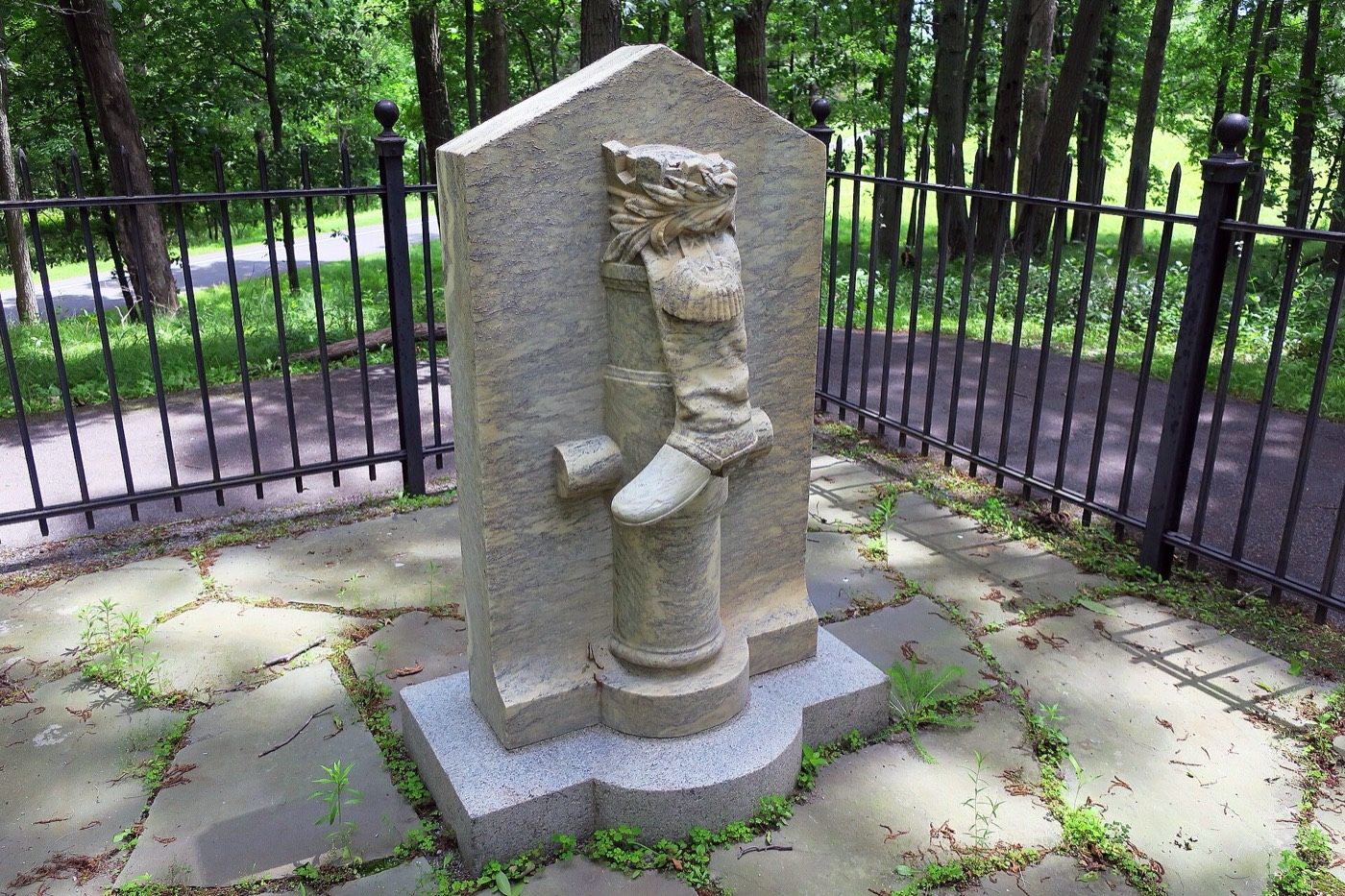
Arnold did not walk away unscathed. A Hessian defender shot him in the same left leg that had already been wounded at Quebec in 1775; his horse was killed in the same volley and fell on top of him. He refused amputation, and the leg healed two inches shorter than the other, a lasting physical reminder of the battle that, more than any other single action, broke Burgoyne's army, according to Friends of the Saratoga Battlefield's analysis of the wound.

Surrender, and a Broken Promise
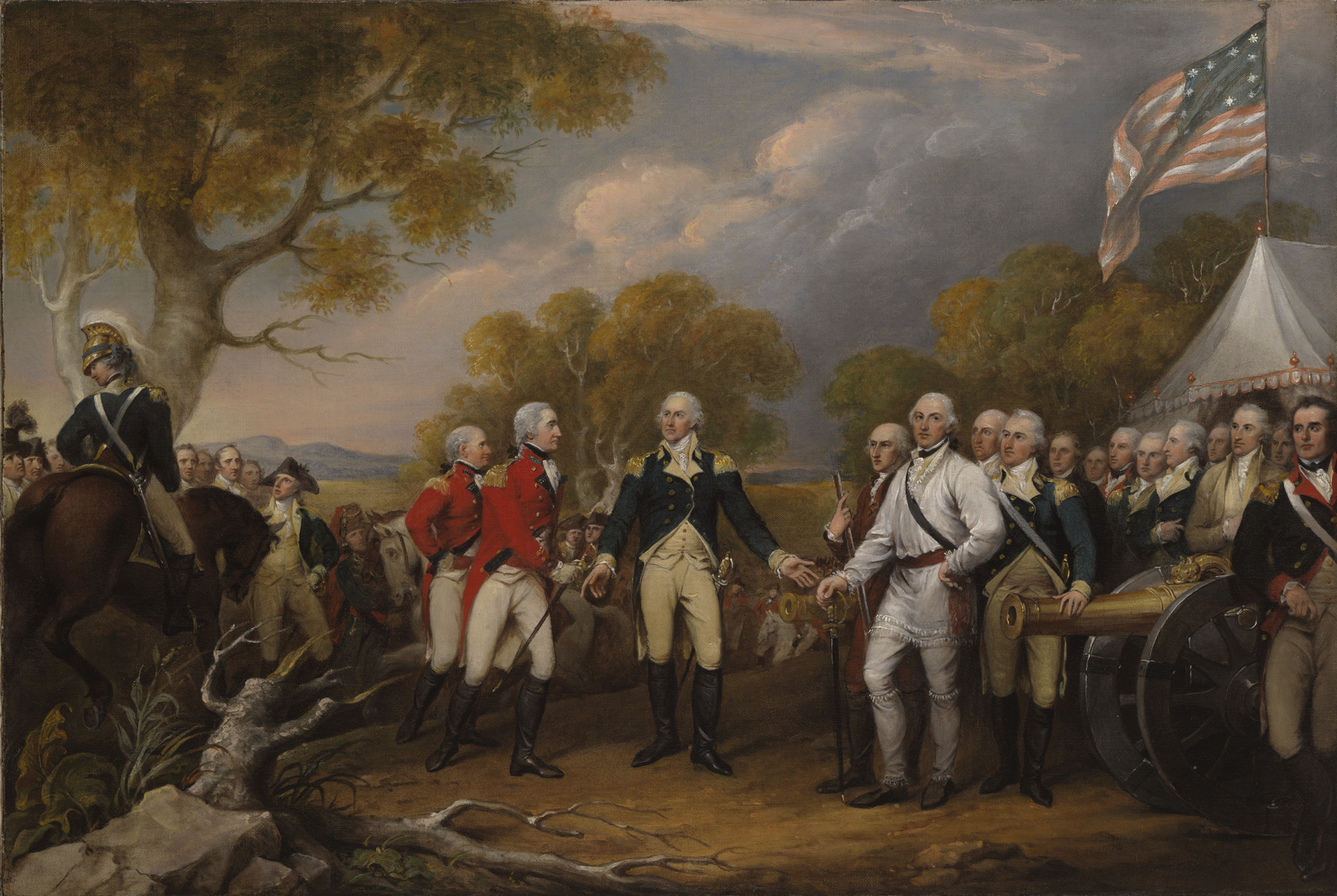
Surrounded and out of options, Burgoyne negotiated terms on October 16 and formally surrendered on October 17, 1777. Roughly 5,800-6,222 British and German troops (sources vary depending on whether camp followers are counted) laid down their arms, the first time an entire British field army had surrendered in the war, and, as the National Park Service's Saratoga National Historical Park puts it, "one of the pivotal moments in determining the outcome of the Revolutionary War, forever changing the future of the world." A later American command crisis produced a much faster verdict than any Revolutionary War court-martial ever did: within the same month as the U.S. Army's rout at the Battle of Kasserine Pass in February 1943, Eisenhower relieved both officers he blamed for it, the intelligence chief and the corps commander alike.
The surrender terms, known as the Convention of Saratoga, were unusually generous: Burgoyne's men were to march to Boston and sail home to Britain, on the condition they never again served in North America during the war. Congress, distrustful that London would honor that condition once the troops were back on British soil, refused to ratify the agreement and instead marched the so-called "Convention Army" from Massachusetts to Virginia and beyond, holding thousands of prisoners in captivity for years, many not released until the war ended in 1783.
The Alliance Saratoga Bought
The battle's real strategic payoff arrived not on a battlefield but in a Paris drawing room. News of Burgoyne's surrender reached the French capital on December 4, 1777, proof, at last, that the American rebellion was not a lost cause. French foreign minister the Comte de Vergennes, who had already been feeding covert aid to the Americans, used the victory as his opening to move openly toward alliance, according to the Library of Congress.
Benjamin Franklin and fellow commissioners Silas Deane and Arthur Lee, who had been lobbying in Paris since late 1776, finalized negotiations within weeks. On February 6, 1778, French and American diplomats signed both the Treaty of Alliance and the Treaty of Amity and Commerce; King Louis XVI ratified them the following month. France's covert supply of gunpowder and muskets became open military and naval support, a direct line, per the American Battlefield Trust, from a muddy field outside Albany to a fleet that would help trap Cornwallis at Yorktown four years later. Ancient battles settled scores just as decisively but left a thinner paper trail: a bronze column cast from captured Persian weapons after the 479 BC Battle of Plataea still stands in Istanbul today, even though Herodotus's own casualty figures for the battle are now considered inflated several times over.