
The Order Sherman Actually Signed
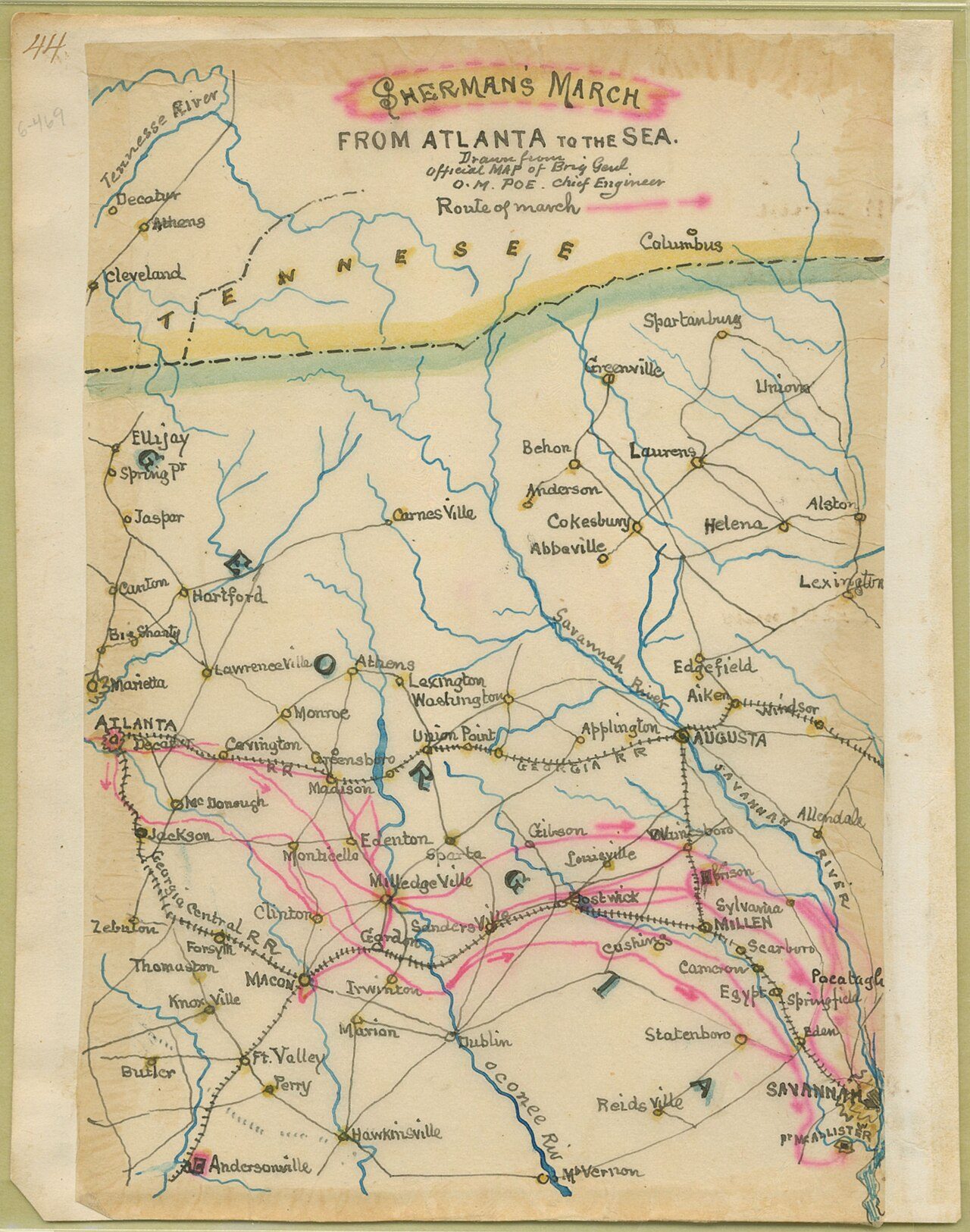
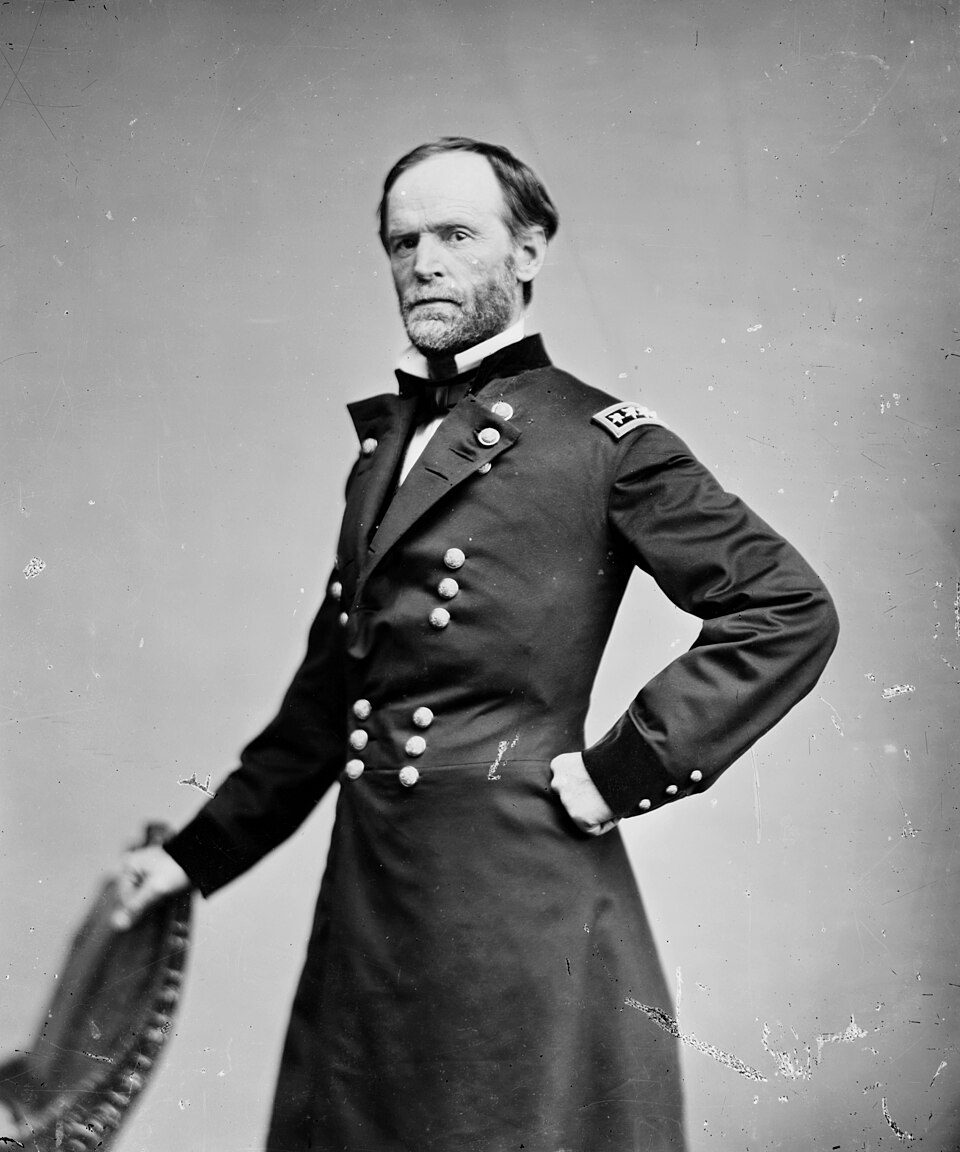
On November 9, 1864, at his headquarters in Kingston, Georgia, Major General William T. Sherman issued Special Field Orders No. 120, the document that organized and governed the campaign historians and the public would come to call the March to the Sea. The order split the roughly 60,000-man force into two wings, a right wing under Major General O.O. Howard made up of the Fifteenth and Seventeenth Corps and a left wing under Major General H.W. Slocum made up of the Fourteenth and Twentieth Corps, marching in four columns wherever the roads allowed it, with Brigadier General Judson Kilpatrick's cavalry screening ahead. The text survives in the Official Records of the War of the Rebellion, Series I, Volume XXXIX, Part III, and is reproduced in full by American History Central and other Civil War reference sites.
Section IV is the passage that actually governed how the army fed itself, and it is more specific than "living off the land" suggests. It instructed each brigade to organize a foraging party under a discreet officer to gather "corn or forage of any kind, meat of any kind, vegetables, corn-meal, or whatever is needed by the command," while keeping at least ten days of provisions and three days of forage in the wagons at all times. The same section set explicit conduct rules for the men doing the gathering: they were to "refrain from abusive or threatening language," could issue written certificates for what they took if an officer judged it appropriate, and were told to "endeavor to leave with each family a reasonable portion for their maintenance." This was an army instructed to strip the countryside of food under a chain of accountable officers, not a mob turned loose on it.
Who Was Actually Allowed to Burn a House
The order's Section V is the part that most directly contradicts the popular image of Sherman's men torching homes as they passed. It reserved the power to destroy mills, houses, cotton gins, and similar property to army corps commanders alone, a handful of senior officers rather than any soldier or company commander in the ranks, and it set a conditional standard for when that power could be used. Where the army marched unmolested, the order stated plainly, "no destruction of such property should be permitted." Only where guerrillas or bushwhackers attacked the column, or where local residents burned bridges, obstructed roads, or otherwise showed open hostility, were corps commanders instructed to "order and enforce a devastation more or less relentless according to the measure of such hostility."
That is a retaliatory framework, not a scorched-earth mandate. It made destruction a proportionate response to resistance encountered, decided by a small number of senior officers, rather than a standing instruction to burn. It also created room for exactly the kind of interpretation Sherman had already signaled two months earlier, in September 1864, when he wrote to Atlanta's mayor and city council defending his order to evacuate civilians ahead of that city's occupation: "War is cruelty, and you cannot refine it." That line is often folded into descriptions of the March to the Sea itself, but it predates the march by roughly two months and was written about Atlanta's evacuation, a separate episode from the countryside campaign Special Field Orders No. 120 would govern that November.

What the Record Shows About the Fifty-Mile Myth
Anne Sarah Rubin, a University of Maryland, Baltimore County historian and author of "Through the Heart of Dixie: Sherman's March and American Memory," has traced how the campaign's popular reputation grew past what the documentary record supports. Interviewed by the Civil War Monitor on the difference between myth and record, Rubin identifies the idea that the march "cut a swath fifty miles wide of utter destruction" as one of the central exaggerations, alongside the notion that Sherman personally authored a wholly new form of total war and that his troops were either entirely undisciplined or entirely under his direct control. In practice, she found, the march moved in four separate columns that "ebbed and flowed," thoroughly stripping some areas while leaving others nearby largely untouched.
The property record follows the same pattern the order itself describes. Most private homes were left standing; what got destroyed first and most consistently were the things Special Field Orders No. 120 actually targeted or authorized foraging parties to take, barns, corn cribs, smokehouses, farm implements, railroad track and depots, and government warehouses. Atlanta itself is a separate case that often gets folded into the same story: on Sherman's order, Union troops burned the city's industrial and business district on November 11 and 12, leaving roughly forty percent of it, an estimated 3,000 buildings, in ruins before the army marched out on November 15. That demolition happened under orders tied specifically to abandoning Atlanta as a military position, in the same days Special Field Orders No. 120 sent the army into the countryside, not as a preview of how the countryside march itself would be conducted. Treating the two as one continuous act of burning is one of the most common ways the record gets flattened into legend, the same flattening that leaves Fort Sumter's actual first shot credited to the wrong man in most retellings of that battle.
A rounder, more dramatic figure outlasting the documented one is not unique to this campaign: Audie Murphy's own Medal of Honor citation credits him with roughly 50 casualties during his famous stand at Holtzwihr, not the 240 usually repeated, because a citation's precise count rarely travels as far as the legend that grows up around it.
The Order Said Nothing About the People Following the Army
Special Field Orders No. 120 organized how soldiers would eat, march, and respond to resistance. It made no provision for the roughly 20,000 formerly enslaved people who attached themselves to the Union columns as they moved through Georgia, seeing the army's advance as their path to freedom. They were civilians walking alongside an army that had made no arrangement to feed, shelter, or protect them, at times covering as much as 20 miles a day in winter weather. Union commanders' attitudes toward this growing population varied by officer and by moment, and at several points during the campaign, commanders actively discouraged or blocked freed people from staying with the columns, stopping short of making room for them.
Ebenezer Creek, December 9, 1864
The gap between what the order covered and what the march actually produced turned fatal at Ebenezer Creek, roughly 20 miles from Savannah, in the campaign's final days. Brigadier General Jefferson C. Davis, commanding the Fourteenth Corps, a Union officer who shared a name with the Confederate president but had no relation to him, reached the swollen creek on December 8 with Confederate cavalry under Joseph Wheeler shadowing his rear. Engineers built a pontoon bridge overnight, and Davis's roughly 14,000 troops crossed it. Hundreds of formerly enslaved people traveling with the corps, estimates of those trapped at the creek that day range from roughly 600 to 800, out of a larger and less precisely counted group, described by some contemporary accounts as up to several thousand, who had been following the Fourteenth Corps overall, were still waiting to cross when Davis ordered the bridge pulled up behind his men.
With Wheeler's cavalry closing in and the only crossing gone, an unknown number of the freed people trapped at Ebenezer Creek drowned attempting to swim the rain-swollen water rather than be caught by Confederate horsemen; historians who have studied the incident agree the exact death toll was never recorded and remains unknown. News of what happened reached Northern newspapers and Congress within weeks, and the resulting controversy became one of the few moments during the march where the treatment of the freed people following the army, a subject Special Field Orders No. 120 never addressed, became a matter of public accountability rather than a footnote to the military campaign.
The Order That Followed
The outcry over Ebenezer Creek and similar incidents fed directly into a meeting that took place five weeks later. On January 12, 1865, in Savannah, Secretary of War Edwin Stanton and Sherman met at the house of Charles Green with twenty leaders of the city's Black churches to ask, in Stanton's words, what the formerly enslaved population most needed. Reverend Garrison Frazier, a 67-year-old Baptist minister who had purchased his own and his wife's freedom before the war, served as the group's spokesman and told the two men plainly: "We want to be placed on land until we are able to buy it and make it our own."
Four days later, on January 16, 1865, Sherman issued Special Field Orders No. 15, setting aside roughly 400,000 acres of coastal land from Charleston south to Florida's St. Johns River, including the Sea Islands, for settlement by freed families in 40-acre tracts, the order that gave rise to the phrase "forty acres and a mule." Unlike Special Field Orders No. 120, this order responded directly to what the march's own conduct had exposed, that an army with detailed rules for foraging and a chain of command governing when to burn a house had no comparable plan for the people who had walked beside it seeking freedom. President Andrew Johnson revoked the order later that year, after Lincoln's assassination, and most of the land was returned to its prewar owners. Special Field Orders No. 120 says something narrower than the scorched-earth reputation attached to the march it governed, and that gap between a document's actual text and the reputation it earns shows up elsewhere in this stretch of the war: the one Lincoln letter to Ulysses S. Grant that survives in his own handwriting says something narrower and less quotable than either of the two disputed lines popularly credited to him.