
A Lake Doing a Wall's Job
Kenilworth's defenses looked nothing like the tall stone curtain walls that usually come to mind with a medieval siege. A dam south of the castle carried a causeway from the entrance to the bailey and keep, and behind that dam sat an artificial lake, the Great Mere, roughly 100 acres of water covering the south and west approaches. Ditches to the north and a second pool east of the causeway closed the ring, so the whole castle sat surrounded by water rather than just fronted by it. Wikipedia's architectural summary of the site, verified 2026-10-12, places Kenilworth among only two castles in Britain, alongside Caerphilly Castle in Wales, that historians classify as true water-castles or lake-fortresses rather than dry-land castles that happened to have a moat.
Henry III had granted Kenilworth in 1244 to Simon de Montfort, who became the baronial leader of the Second Barons' War against the king. After the 1264 Battle of Lewes, Henry's son Prince Edward was handed over to the rebels as a hostage under the Mise of Lewes and held at Kenilworth itself, in conditions chroniclers of the time considered unduly harsh. Edward escaped custody in 1265 and defeated and killed Montfort at the Battle of Evesham that August, but Montfort's constable at Kenilworth, Henry de Hastings, refused to surrender the castle and held it for the rebel cause. The garrison Hastings commanded is usually put at around 1,200 people, though that figure is generally understood to fold in women, children, and servants alongside the fighting men. When the royal army finally arrived to besiege it, chroniclers described the operation as the largest siege ever to take place on English soil, aimed at a castle the future king had personally been imprisoned inside a year earlier.
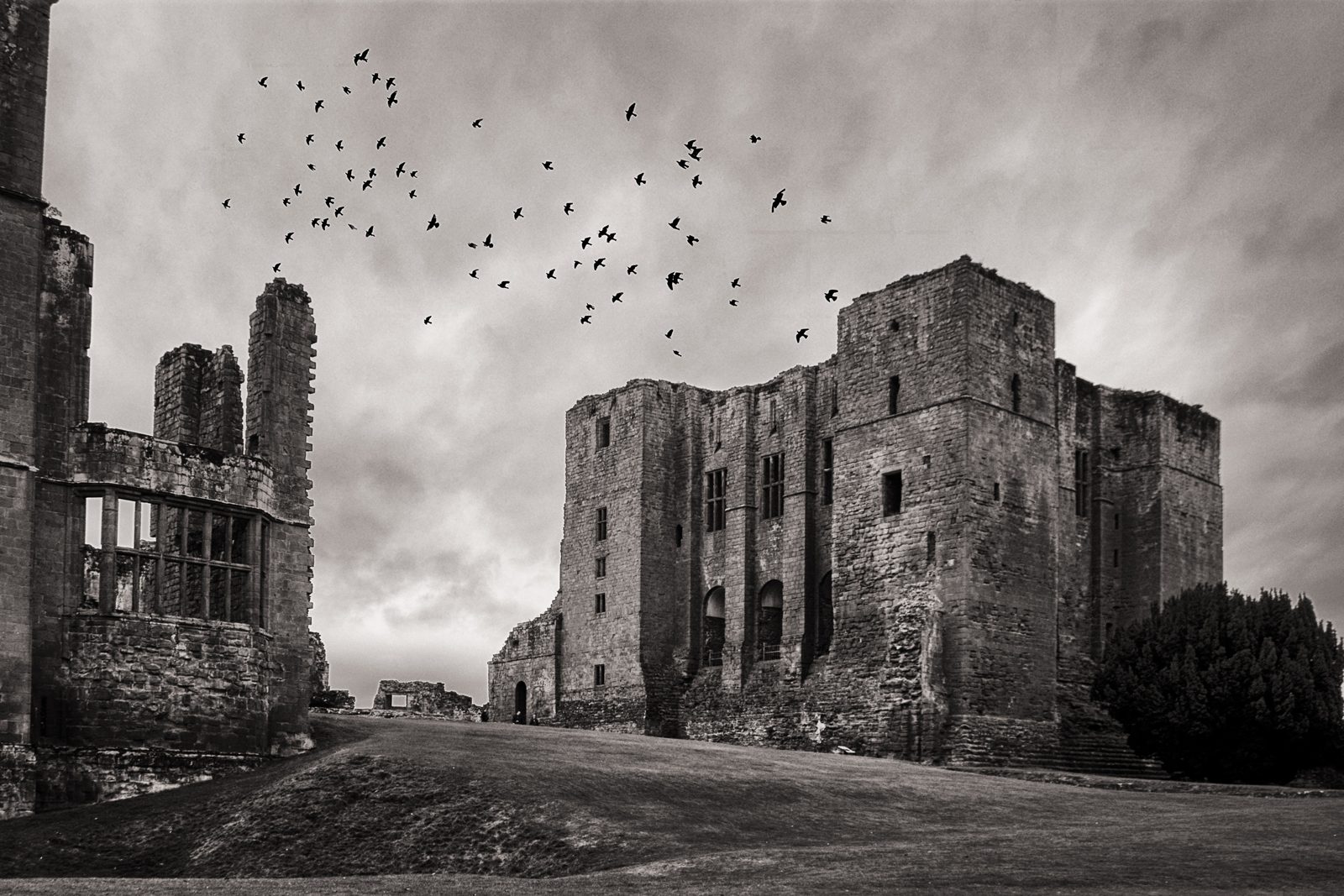
Every Machine the King Had, and the Water Held
The royal army that gathered outside Kenilworth in the summer of 1266 brought essentially every siege technology available to a 13th-century commander. Numerous stone-throwing engines, presumably trebuchets and mangonels, bombarded the walls alongside wooden siege towers the chroniclers called turres ligneas. One especially large tower, built for the king's younger son Edmund, held two hundred or more crossbowmen in tiered compartments and was pushed up against the wall to rain bolts down on the defenders. The besiegers also built a second device nicknamed the Bear, similarly packed with archers, and had barges hauled overland all the way from Chester in an attempt to launch a waterborne assault across the mere itself.
None of it worked. The chronicler William Rishanger recorded, in the translation later used by Wikipedia's account of the siege (checked 12 October 2026), that a mangonel operated by the defenders battered Edmund's tower until it broke through and shattered it, and that a similar counter-device inside the walls struck the Bear so hard that it lost its capacity to do damage for a long stretch of the siege. The barge assault across the Great Mere failed outright. At one point Archbishop-elect William Freney tried to enter the castle to negotiate directly with the garrison and was simply refused entry. It is a strikingly different outcome from the one Ottoman engineers would produce with gunpowder artillery against a far more formidable set of land walls at Constantinople nearly two centuries later, where Mehmed the Conqueror's purpose-built siege cannon eventually did what Kenilworth's besiegers never managed against a mere lake and a ditch: breach the defense by force. Sieges rarely end the way the siege engines suggest they should; the Second Crusade's siege of Damascus ended in a feud, after the crusaders had chosen to attack an ally in the first place.
Starved Out, Not Broken In
Six months of failed assaults left the crown with one lever the water couldn't stop: time. On October 31, 1266, the king issued the Dictum of Kenilworth, a decree letting nobles disinherited for backing Montfort's rebellion buy back their confiscated lands, at a price scaled to how deeply they had been involved in the revolt. Hastings's garrison rejected the terms outright and kept holding the castle. It took disease and dwindling food stores, not a breach in the water defenses, to change their minds.
The garrison finally accepted the Dictum's terms and surrendered on December 13, 1266. Wikipedia's siege article starts the chronology on June 21 and calls it a half-year campaign; I checked the live text on 12 October 2026. Under the terms, the defenders were permitted to leave with their own horses and weapons, since it was the castle itself the besiegers wanted, not the men inside it. Hastings and Robert de Ferrers, 6th Earl of Derby, who was separately captured elsewhere during the same rebellion and had no direct role at Kenilworth, were both fined seven times their lands' annual value under the settlement. Measured purely as a contest between the water defenses and the besieging army's engines, Kenilworth's moat and mere never lost; the men behind them simply ran out of food before the king ran out of patience, in something closer to the improvised, last-stand math of the Zulu War garrison that held Rorke's Drift overnight against far longer odds than to a fortress falling to a breach.
1649: The Water Gets Blamed
The Great Mere outlived the medieval siege that made it famous by nearly four centuries, and it was still doing its job when the English Civil War reached Kenilworth. The First English Civil War broke out in 1642, and Charles I used Kenilworth as a base for raids on Parliamentary strongholds in the Midlands that October before his royalist garrison withdrew and Parliamentary forces took the castle over instead. Parliament held it for the rest of the war without it ever being seriously contested again.
That was the problem, from Parliament's point of view, once the fighting was over. In 1649, Parliamentary forces slighted Kenilworth, partially destroying its fortifications specifically to prevent the castle from ever being used as a military stronghold again, according to Wikipedia's own architectural summary of the site (checked 12 October 2026). The Great Mere, the same lake that had absorbed everything a royal army could throw at it in 1266, was drained and its bed turned into a meadow, with the Inchford Brook that fed it returned to running through a culvert in the old dam rather than pooling behind it. No army had ever taken Kenilworth by breaching its water defenses. Parliament's own decision to drain the lake, nearly 400 years after it proved itself, is as direct an acknowledgment as history offers that the defense had actually worked.
That gap between a conflict's last battlefield act and its actual, administrative close is not unique to a 13th-century castle. Much the same pattern shows up in how the First World War's fighting stopped in November 1918 while the war itself, on paper, did not end everywhere for years afterward: a decisive-looking military event turns out to be only part of how a conflict really finishes. At Kenilworth, the water defenses settled the military question in 1266 without ever losing a fight; it took a separate, later political act nearly four centuries on to finish what the siege itself could not.