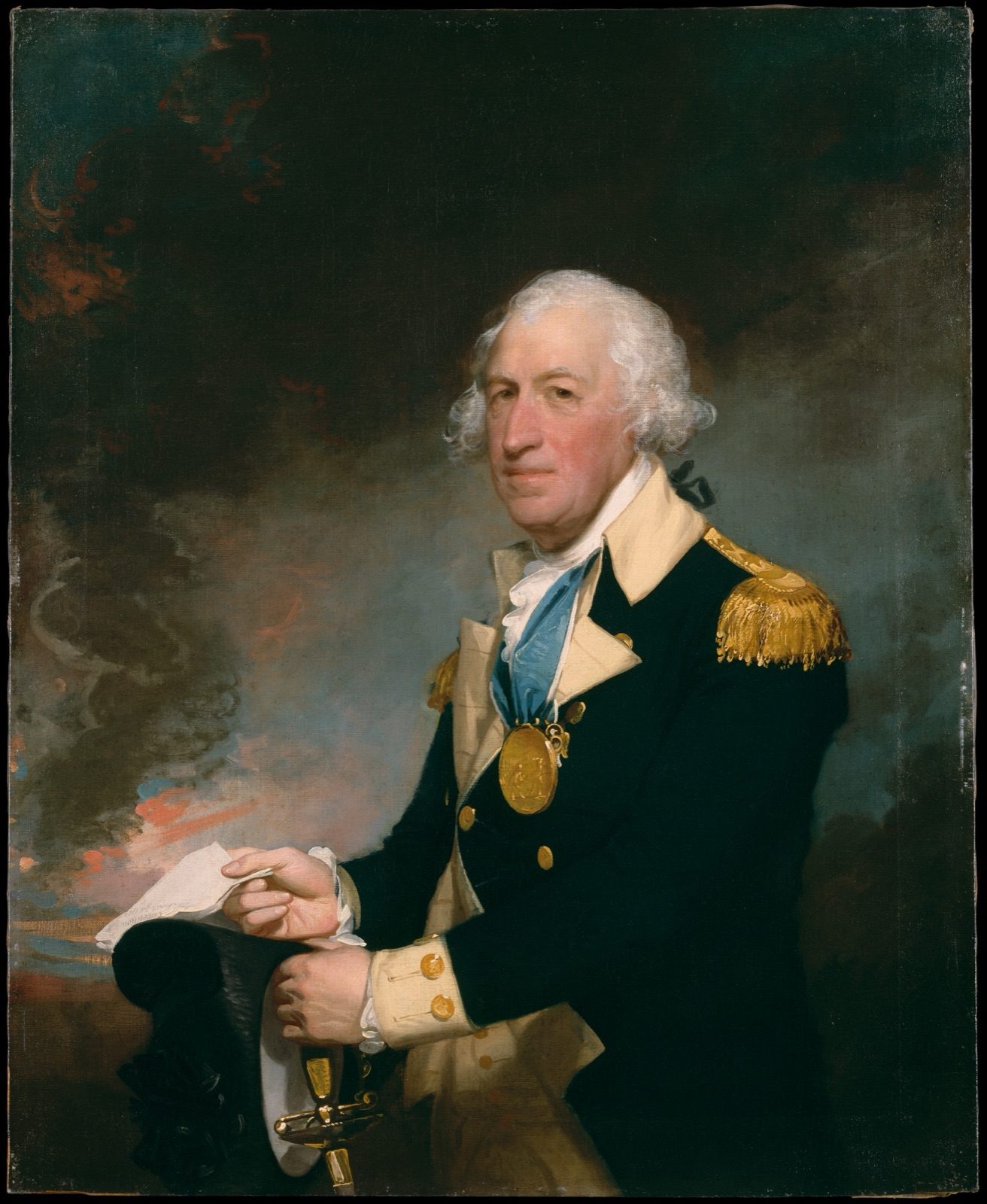

A General Who Miscounted His Own Army
Horatio Gates arrived to take command of the Continental Army's Southern Department in late July 1780 carrying the reputation he had built nearly three years earlier, when his forces surrounded and forced the surrender of an entire British invasion army at Saratoga. At Camden he brought a very different army to a very different result. Gates believed he commanded about 7,000 men. According to the American Battlefield Trust and History.com, his actual effective strength was somewhere between 3,000 and 4,100, and two-thirds of that force was militia who had never trained or maneuvered together as a unit.
The army that marched toward Camden on the night of August 15 into the early hours of August 16 was also going hungry. Promised rum rations never arrived, so Gates had his men issued molasses mixed with cornmeal in its place, and soldiers already weakened by dysentery supplemented the meal with green, undercooked corn pulled from fields along the Pee Dee River, according to the American Battlefield Trust's account of the campaign. Many of the men who fought, and fled, later that morning had spent the night marching on food that made them sicker rather than stronger.
The Militia Broke, and So Did the Casualty Count
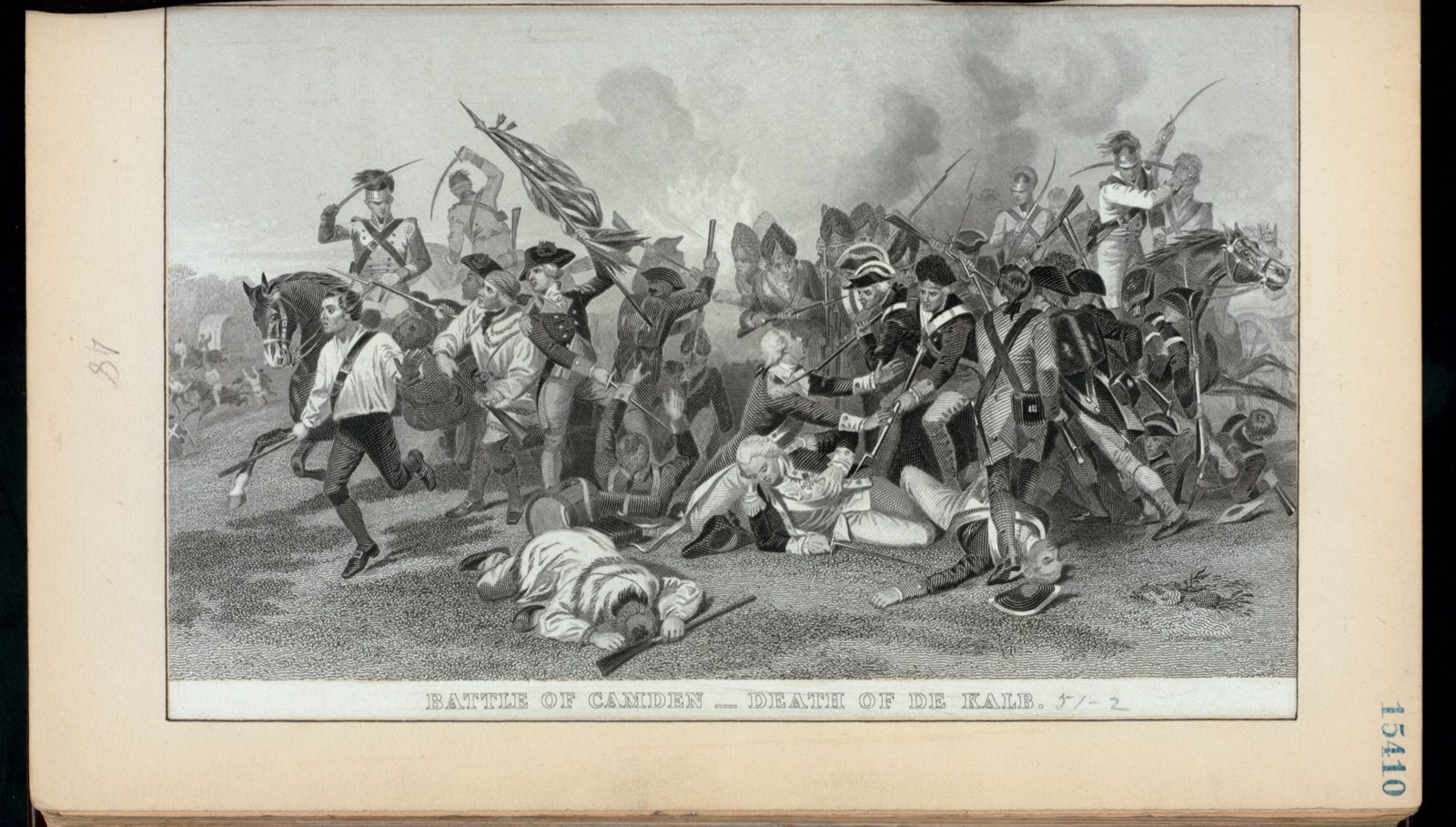
Neither army expected to meet where it did. Gates and Cornwallis had each set their own forces marching toward Camden on the same road that same night, and the two columns collided in the dark a few hours before dawn. When the fighting opened in earnest around daylight, Cornwallis's about 2,000 veteran regulars struck the North Carolina and Virginia militia holding the Continental left. Most broke and ran within minutes, many without firing a shot, leaving Baron de Kalb's Continental regulars on the right to keep fighting alone against a force that could now turn its full attention on them.
What the battle actually cost is one of the more unsettled numbers in the war. American losses are commonly given as somewhere between about 900 and 1,000 killed and wounded, plus an estimated 1,000 more captured, though some tallies round the total toward 2,000; British losses are reported more consistently, at 324 total: 68 killed, 245 wounded, and 11 missing. The sources agree Camden was a rout. They do not agree on precisely how large a rout, and no single figure for the American side has displaced the others.
One Hundred and Eighty Miles in Three Days and a Half
Accounts sympathetic to Gates, including a 2014 Journal of the American Revolution piece titled "Winner or Runner?", describe him and other officers riding among the fleeing militia trying to rally them, only to be carried along by the collapse until the firing behind them had already stopped. What is not disputed is that Gates did not return to the field. He reached Charlotte, North Carolina, about 60 miles away, by that evening, then kept riding on a relay of horses for another 120 miles or so, arriving in Hillsborough on August 19, a total of about 180 miles covered in three and a half days.
That figure comes from Alexander Hamilton, who wrote to James Duane on September 6, 1780: "was there ever an instance of a General running away, as Gates has done, from his whole army? and was there ever so precipitous a flight? One hundred and eighty miles in three days and a half! It does admirable credit to the activity of a man at his time of life." Other accounts of the same episode don't match Hamilton's number. Some round the ride to 170 miles over three days or 200 miles over four, and some describe only the first, 60-mile leg to Charlotte, treating the rest of the trip as a separate act of reorganizing rather than part of the same flight. The distance any given source assigns to Gates's ride depends on where that source decides the flight ended.
A companion 2014 piece in the same journal, "Unlucky or Inept?", argues the ride itself is the wrong thing to focus on, and that the real failure came earlier, in Gates choosing a direct route to Camden through Loyalist, forage-poor country against the advice of his own officers, the same march that had produced the molasses-and-green-corn meal his sick army ate the night before the battle.
Surgeons on the Other Side
Baron Johann de Kalb kept his Continental regulars fighting on the right flank well after the militia had scattered. His horse was killed under him, and he continued on foot until he had taken roughly a dozen wounds, shot three times and bayonetted repeatedly, before he finally went down. Cornwallis, whose army had just inflicted those wounds, had his own surgeons treat de Kalb afterward, a gesture accounts of the battle describe as a mark of respect for an opposing officer who had kept fighting long after the battle was plainly lost. De Kalb died three days later, on August 19, 1780, the same day Gates finally stopped riding in Hillsborough.
The Continental Army that had marched into Camden effectively ceased to exist as an organized fighting force after that morning. The momentum that briefly returned to the Patriot cause in the South about seven weeks later, at Kings Mountain, came from militia acting largely on their own initiative, not from anything Gates's shattered command could offer.
.jpg)
A Court of Inquiry Two Historians Can't Agree Happened
Congress suspended Gates from command within weeks of Camden and replaced him with Nathanael Greene, and it ordered a formal court of inquiry into his conduct. What that inquiry actually produced is where the record splits. Some accounts state the court convened in 1782 and cleared Gates of wrongdoing. Others state no inquiry was ever actually held at all, and that Congress simply repealed the resolution suspending him in August 1782, restoring him to the army without any hearing or formal exoneration on either side of the question. A documentary split that ambiguous is still less troubling than a case where investigators did establish the truth about a celebrated wartime legend, then kept that finding classified for 42 years while the archivist who eventually published it lost his job over it.
Whichever version is accurate, it fell well short of what happened to another general whose retreat collapsed a Continental battle line. At Monmouth two years earlier, Gen. Charles Lee's own withdrawal produced an actual court-martial, a conviction, and a year-long suspension from command. Gates's case, cleared by an inquiry that may or may not have taken place, never reached even that level of resolution.