
The Question Has Four Different Answers
Search for who defeated the Vikings and the same handful of names come back: Alfred the Great, Brian Boru, Harold Godwinson. Each has a real victory to point to. The trouble is that “the Vikings” were never one army under one command. They were separate war bands, kingdoms and settlers spread from York to Dublin to Normandy, often fighting each other, so beating one army left the others untouched.
Each victory needs checking against what it actually stopped. Four moments carry most of the weight: Edington in 878, the English reconquest and the loss of York in 954, Clontarf in 1014 and Stamford Bridge in 1066.
Edington, 878: Alfred Wins, Guthrum Keeps East Anglia
By 870 the Great Heathen Army had conquered Northumbria and East Anglia. In 871 the West Saxons fought the same army in nine engagements with mixed results. In January 878 Guthrum's Danes seized Chippenham in a midwinter surprise attack after Twelfth Night and pushed Alfred into the Somerset marshes at Athelney.
Alfred summoned a levy from Somerset, Wiltshire and Hampshire at Egbert's Stone between 4 and 7 May, marched to Iley Oak and then to Edington, and won. The Danes fell back to their fortress, the West Saxons besieged it for two weeks, and Guthrum gave hostages and oaths and agreed to be baptised. The difference from the earlier treaties at Wareham and Exeter was that Alfred had beaten the Danes in the field rather than only stopping them, which made it likelier they would keep the terms.
What the victory did not do was remove the Danes. Guthrum was baptised at Aller three weeks after his surrender, took the name Athelstan, withdrew to East Anglia and reigned there until 890. After Edington the Vikings still ruled Northumbria, East Anglia and eastern Mercia, leaving only Wessex and western Mercia under Anglo-Saxon control. Historian Richard Abels has suggested the victory also reflected diminishing cohesion among the Danes. Guthrum's position had weakened in other ways too: 120 Danish ships were wrecked off Swanage in 876 to 877, and other Danish lords had already gone their own way.
The lasting change was defensive. Alfred used the breathing space to build fortified towns, and the Burghal Hidage, a list of more than thirty burhs, records how each was manned: one man per hide for garrison duty and for building the walls. Its surviving form probably dates from after 914, under his son Edward, and its exact date is debated, but Alfred is credited with starting the system. The point of the network was to deny the next army another Chippenham.
York, 954: The Reconquest Without a Battle
The Viking kingdoms of England fell to a slower campaign than any single battle. In 910 a Mercian and West Saxon army inflicted a decisive defeat on an invading Northumbrian army, ending the threat from the northern Vikings, and over the following decade Alfred's son Edward the Elder conquered Viking-ruled territory further south.
The Norse kingdom of York outlasted that. In 954 the York magnates expelled Eric Bloodaxe, their last king, and Osulf of Bamburgh took over all of Northumbria under King Eadred as its first earl (sources place the appointment in 954 or 955). Eric was killed, apparently at Stainmore, by a man named Maccus, probably acting for Osulf, though the sources are thin and later saga tradition muddles the story. If one date has to stand for the end of independent Norse rule in York, it is this one, and no famous battle attaches to it.
Clontarf, 1014: Brian Boru Wins and Dies
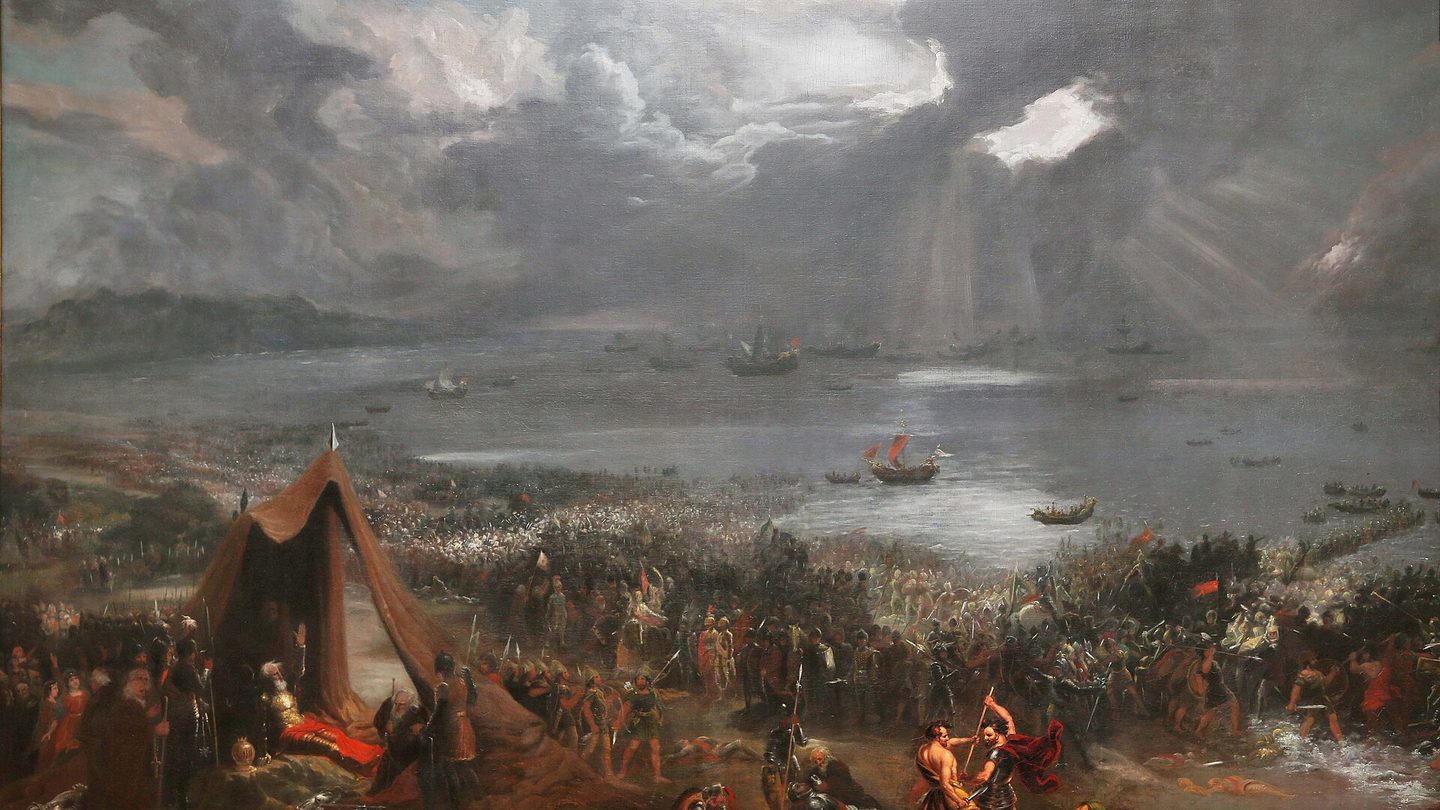
On 23 April 1014, Good Friday, Brian Boru's army met a coalition led by Sigtrygg Silkbeard of Dublin and Máel Mórda of Leinster, reinforced by fleets from Orkney under Earl Sigurd and from the Isle of Man under Brodir. Sigtrygg had gone overseas to recruit them. Estimates put the dead at 7,000 to 10,000, including Brian, his son Murchad and his grandson Toirdelbach, along with Máel Mórda, Sigurd and Brodir.
The popular version has Christian Ireland breaking pagan Viking power. Historians have argued about that for around 250 years. Revisionist historians point out that the Dublin side was mostly Irish-Norse and Leinster, and that Brian had Viking allies of his own. In 2018 Joseph Yose, Ralph Kenna and colleagues ran a network analysis on the text of Cogadh Gáedhel re Gallaibh in Royal Society Open Science and found it supports the standard Irish-versus-Viking reading overall while not being a fully clear-cut conflict. One co-author, Yose, added that the statistics cannot decisively settle the debate.
What happened next argues against a decisive end. Sigtrygg stayed King of Dublin until 1036 and felt secure enough to go on pilgrimage to Rome in 1028. Irish overlordship over Dublin was first asserted in 1052 by Diarmait mac Máel na mBó of Leinster, and the kingdom's last king was killed by the Normans in 1171. Clontarf broke Dublin's power, but the Norse-Gaelic city carried on for another century and a half.
Stamford Bridge, 1066: Hardrada's Invasion Defeated
Harald Hardrada of Norway invaded England in 1066 with a fleet the Anglo-Saxon Chronicle (manuscript D) puts at 300 ships. Medieval accounts counted vessels differently, sometimes separating supply boats from other ships. They do not provide a consistent count of warships.
On 25 September 1066 Harold Godwinson's army crushed the Norwegians at Stamford Bridge. Harold allowed the survivors, including Hardrada's son Olaf and Paul Thorfinnsson, Earl of Orkney, to leave after pledges not to attack England again. English Heritage's account says, “just 24 ships were enough to take the few survivors home.” Hardrada himself was dead.
The battle has traditionally been presented as the end of the Viking Age. The survivors needed only 24 of the reported 300 ships to return home. Harold's army then fought the Normans at Hastings less than three weeks later, and major Scandinavian campaigns in the British Isles followed: King Sweyn Estrithson of Denmark in 1069 to 1070, and King Magnus Barefoot of Norway in 1098 and 1102 to 1103. The Normans who won at Hastings were themselves descended from earlier Norse settlers, which is part of why the older summary that Vikings simply vanished after 1066 does not hold up. For the fight that followed, see who won the Battle of Hastings, and for the men who went east and took Byzantine pay instead, the Varangian Guard.
So Who Actually Defeated the Vikings?
Three armies and one slow political process share the credit. Alfred stopped the conquest of Wessex and built the network that made repeat attempts costly. Edward and his successors took back the Danelaw over roughly four decades. Brian's army broke a Dublin-led coalition, at the price of his life. Harold defeated Hardrada's Norwegian invasion of England. None of them defeated “the Vikings” as a whole, because those armies answered to different leaders.
What ended the Viking Age is closer to absorption. Guthrum's Danes minted coins on Alfred's model and Danish rulers adopted Anglo-Saxon kingship, and Dublin's Norse became Norse-Gaels. Battles set the timing, but assimilation did most of the ending.