An Engineer Constantinople Could Not Afford
Historians still argue about where Orban, sometimes spelled Urban, actually came from. Most modern accounts describe him as Hungarian, from Brassó in the Kingdom of Hungary, in what is now Braşov, Romania, but the 15th-century Byzantine historian Laonikos Chalkokondyles called him "Dacian," and some later writers have argued for German or Wallachian roots instead. What isn't disputed is what he did in 1452: he arrived in Constantinople, then a shrunken remnant of the Byzantine Empire surrounded on nearly every side by Ottoman territory, and offered Emperor Constantine XI Palaiologos a design for a bronze cannon larger than anything the city's defenders had.
Constantine was interested enough to authorize a stipend meant to keep Orban in the city, but the imperial treasury, drained by a century of shrinking borders and collapsing trade revenue, couldn't supply the bronze the gun needed or match the wage the engineer was asking. Orban's allowance reportedly went unpaid for stretches of the year, and by the time he gave up on Constantinople, several accounts describe him as destitute, a master craftsman with a design no one in the city could afford to build.
Mehmed's Counteroffer
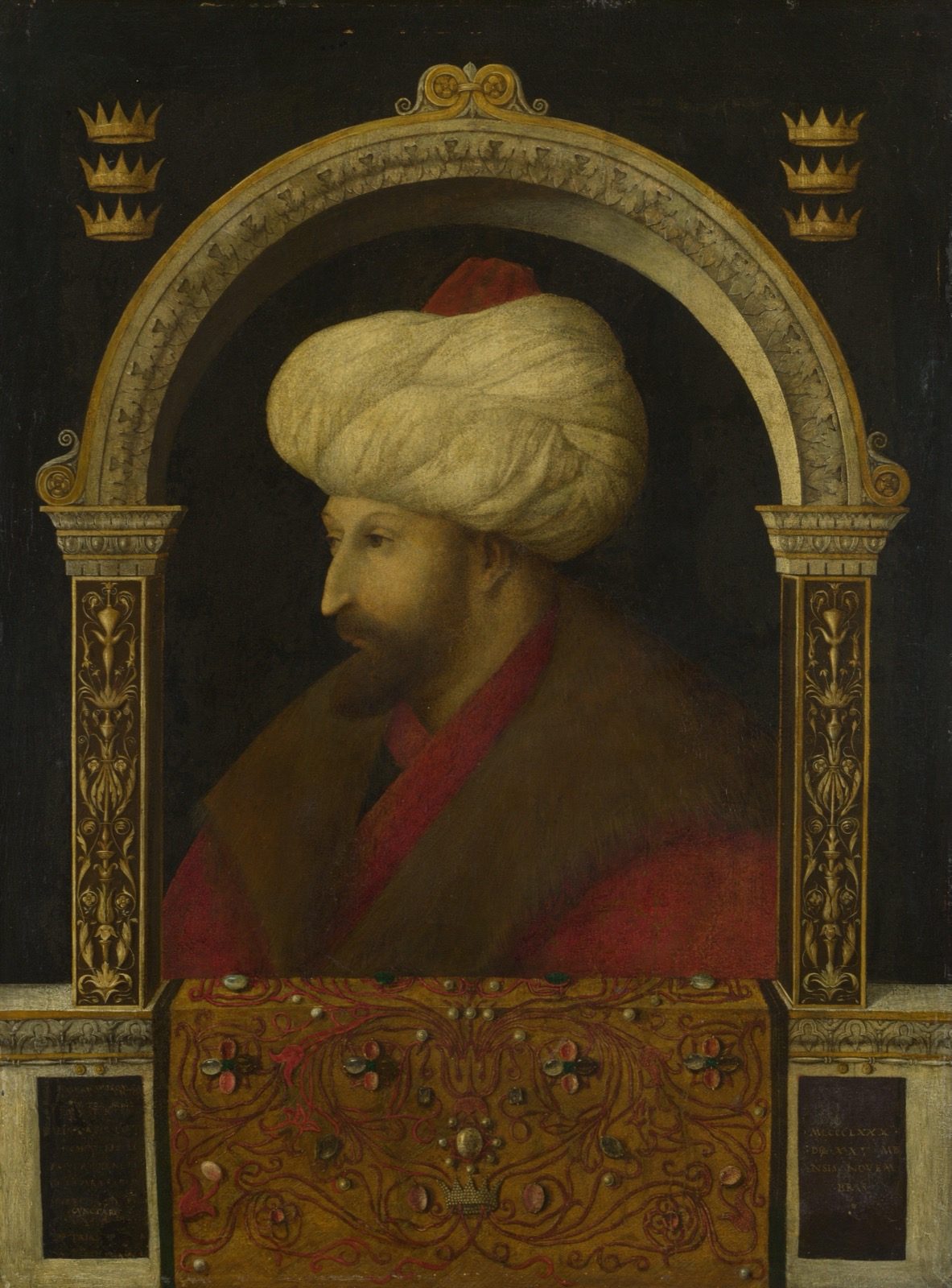
Orban left Constantinople for Edirne, then the Ottoman capital, to petition the young Sultan Mehmed II, who was already preparing a campaign against the city his predecessors had failed to take twice before. Where Constantine had managed only an unreliable stipend, Mehmed offered the resources of a sultan: a wage well above what Orban had asked the Byzantines for, some accounts put the difference at four times his original request, though that specific multiple isn't independently confirmed across sources, plus as much bronze and as many workers as the project needed. The pattern echoes a trade later mercenaries formalized outright: Landsknecht pikemen a few decades on negotiated fixed pay scales precisely because their loyalty followed whoever paid, not whoever ruled, and Orban's move from Constantine to Mehmed was the same transaction one engineer earlier, without even the pretense of a contract.
Working through the autumn and winter of 1452 at a foundry in Edirne, Orban's crew cast the gun chroniclers came to call the Basilica, finishing the casting around January 1453 after roughly three months of work. It was, by any measure available at the time, the largest cannon anyone had built.
A Gun Whose Size Nobody Fully Agrees On
Even the numbers describing the Basilica don't settle into a single account. Most reconstructions put the barrel above 27 feet long, with bronze walls roughly 8 inches thick and a bore around 30 inches across. The stone ball it fired is usually given as somewhere near 1,200 pounds, though some sources push the figure as high as 1,440 to 1,500 pounds, a spread of more than 20 percent on the single number that mattered most once the gun was pointed at a wall.
The dispute gets worse once the finished cannon has to move. Hauling it roughly 140 miles from Edirne to Constantinople took a team of oxen that different sources count at anywhere from 60 to 90, driven by guard, engineering, and road-clearing crews that some accounts put at 200 to 400 men and others inflate to several thousand. No single figure here can be called settled, but every version agrees a road had to be leveled and bridges reinforced ahead of the gun just to drag it into position at all. A 2018 structural-mechanics reconstruction by engineers A. Kakaliagos and N. Ninis, working from a gunpowder charge estimated at 177 kilograms and a firing position roughly 500 meters from the Inner Walls, modeled the gun's muzzle velocity closely enough to match the breach length contemporary chroniclers described, without needing to settle the dispute over the ball's exact weight. Torsion siege weapons like the ballista could already batter a wall or a ship, not just pick off individual defenders, but doing that meant a sustained, repeated bombardment; gunpowder artillery on the Basilica's scale opened a comparable breach in a handful of shots instead of a campaign, a difference in speed that goes a long way toward explaining why European siege warfare shifted toward cannon within a generation of Constantinople's fall. That shift didn't arrive evenly across the era's gunpowder states: the "gunpowder empires" framework historians built to explain how monopolized artillery centralized Ottoman, Safavid, and Mughal power alike breaks down badly at the 1514 Battle of Chaldiran, where Safavid cavalry that treated firearms as beneath a warrior's dignity faced an Ottoman army fielding dozens of cannons and none of its own.
What the Cannon Did, and What It May Have Done to Him
Deployed at the start of the siege on April 6, 1453, the Basilica and a train of smaller Ottoman guns mounted the first sustained artillery bombardment in European history directed at fortifications specifically built to withstand siege, battering sections of the Theodosian Walls that had turned back besieging armies for more than a thousand years. Those walls had survived earlier sieges partly on the strength of Byzantine ingenuity: the empire's own Greek fire had helped break naval blockades of the city for centuries against enemies with no answer for a weapon that burned on water, but nothing in Constantinople's defensive arsenal had an answer for a cannon that could crack stone from a distance. Body armor met the same kind of limit centuries later, just on a man-sized scale: a cuirass in Paris's Musée de l'Armée has a hole the size of a grapefruit where a cannonball punched straight through it at Waterloo, proof the armor could stop a blade or a spent pistol ball but never a direct artillery hit.
The gun reportedly couldn't sustain the punishment it was dishing out. In the historian Roger Crowley's account of the siege, the Basilica could be fired only five or six times a day, and crews had to cool the barrel with olive oil between shots or risk the bronze cracking outright. A 2019 follow-up study by Kakaliagos and Ninis modeled exactly the kind of stress that repeated firing put on a barrel of the Basilica's dimensions, work that helps explain why contemporary accounts of the gun cracking are physically plausible even where they can't be independently confirmed as fact. Several chroniclers, most prominently the Genoese archbishop Leonardo di Chio, whose eyewitness letter is one of the few surviving Christian accounts of the siege, describe a gun matching the Basilica's description cracking apart under recoil partway through the fighting and killing gunners standing nearby.
Whether Orban himself was among the dead is the kind of detail that gets less certain the more sources get checked. Later retellings state flatly that he died in the blast; other historians treat that ending with open skepticism, noting it comes from hostile, Christian-side chroniclers with an obvious motive to tell a rejected-genius-punished-by-his-own-invention story, while no surviving Ottoman-side source, despite having far more reason to record the death of the engineer who broke Constantinople's walls, confirms it. Reference works that list Orban's death year as 1453 are repeating a claim inherited from sources that disagree with each other, not reporting a settled fact.
A Cannon That Doesn't Survive, Built by a Method That Did
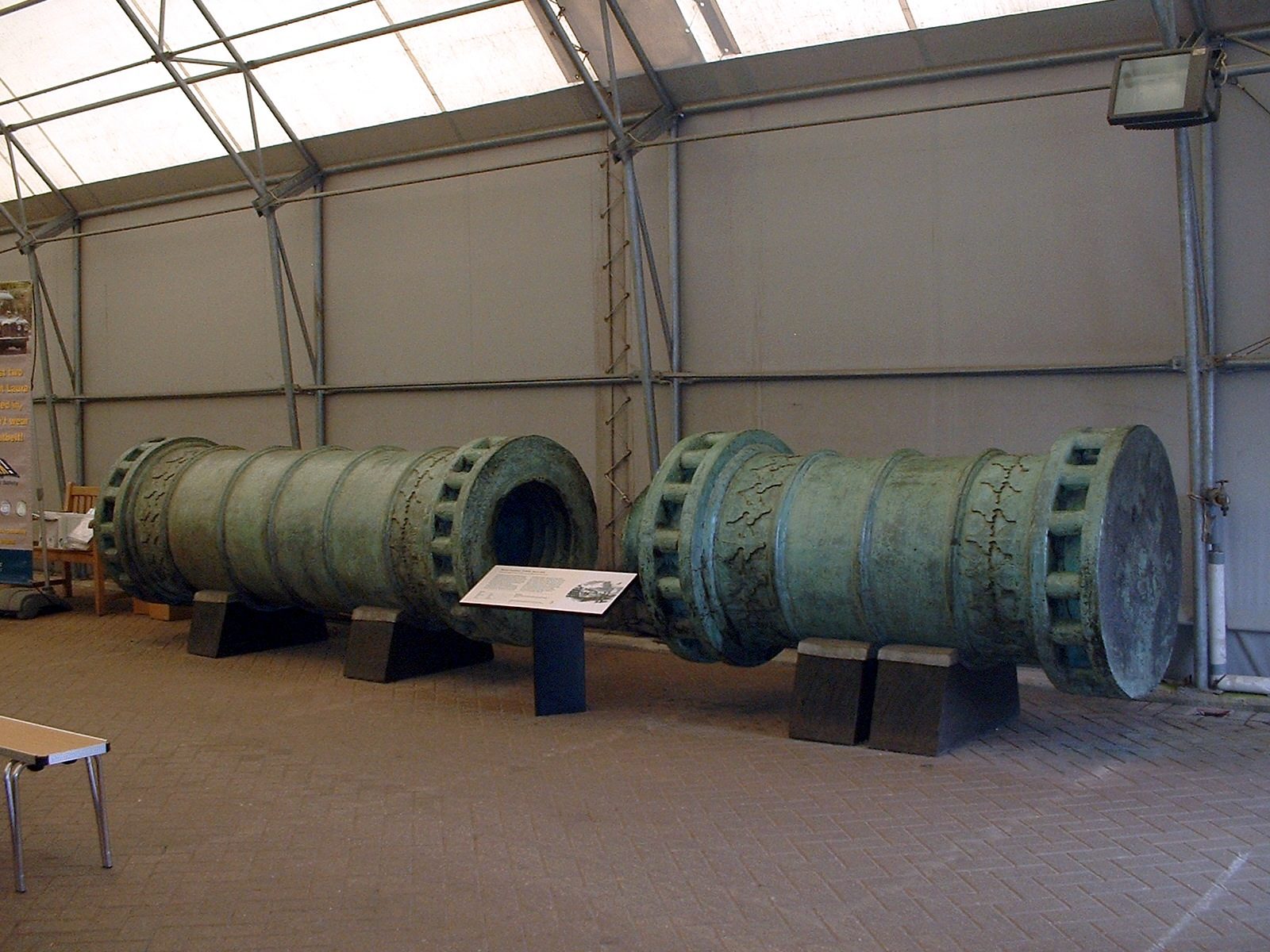
No trace of the original Basilica survives. Contemporary accounts don't record what became of the gun after the siege ended with the city's fall on May 29, 1453, and no archaeological find has been identified as its remains. But the design outlived both the man who built it and the metal that made it. In 1464, another Ottoman gunfounder, Munir Ali, cast a nearly identical bronze bombard, weighing roughly 17 tons and firing stone shot more than two feet across, modeled directly on Orban's original. That gun, known today as the Dardanelles Gun after the strait it later guarded, is still standing: it fired on a British naval squadron forcing the Dardanelles in 1807, more than 340 years after it was cast, and in 1866 Sultan Abdulaziz gave it to Queen Victoria as a diplomatic gift. It's now on public display at the Royal Armouries' Fort Nelson museum in Hampshire, England, the closest surviving thing to the weapon that ended Byzantium.