
A Name the Pay Records Actually Back Up
Maximilian I began raising the Landsknechte in the mid-1480s, wanting a permanent infantry force that could fight in the disciplined pike formations the Swiss Reisläufer had made the most feared troops in Europe. Sources disagree on the exact year, some placing the first units as early as 1486 and others putting Maximilian's formal regiments in 1487, but they agree on the method: he recruited Swiss veterans as instructors and paid German commoners, tradesmen, and minor nobility alike to drill in the same close-packed squares, called gevierthaufen, that had already broken several armies that underestimated the Swiss. The name Landsknechte, roughly "servants of the country," stuck to the new formations even though the term had already been used loosely for imperial troops since the 1470s.
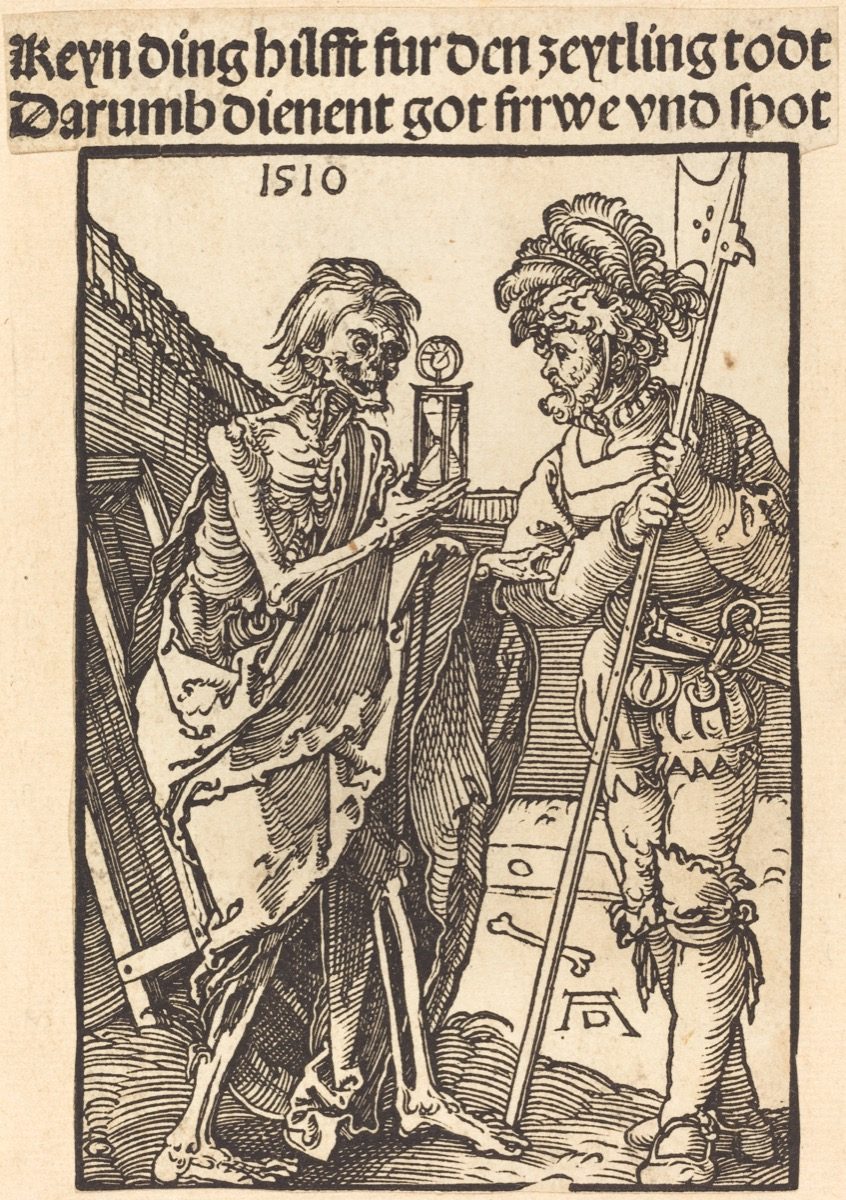
What set the best-paid Landsknechte apart from the rest of the pike square had a name that, unusually for military slang, meant exactly what it said. A Doppelsöldner, a "double-pay man," volunteered to fight in the most exposed positions, at the front of the formation or on its flanks, wielding a two-handed sword called a Zweihänder or a firearm instead of the standard pike. Surviving pay figures compiled from period sources put an ordinary Landsknecht's wage at around 4 Rhenish gulden a month during the mid-16th century, roughly double a farm laborer's income, while a Doppelsöldner drew about 8 gulden a month for the same stretch, precisely twice the ordinary rate rather than a rounder or vaguer premium. The ratio held structurally too: a company typically fielded one Doppelsöldner for roughly every four ordinary pikemen, a fixed proportion not unlike the one Rome had once used to standardize how many torsion-powered siege engines rode with each legion, though the Landsknechte's ratio was about pay and battlefield risk, not equipment counts.
The "Father of the Landsknechte" Who Was Thirteen When It Started
Ask most popular military-history accounts who organized the Landsknechte, and the answer is Georg von Frundsberg, still remembered as the "father of the Landsknechte" for the discipline and reputation he built into the force. The trouble is when that organizing is usually said to have happened. Several accounts of the Landsknechte's origin describe Maximilian turning to Frundsberg to help set up the first regiments in the same breath as the mid-1480s founding date, and Frundsberg's own birth record, September 24, 1473, at Mindelheim, makes that impossible: he would have been thirteen or fourteen years old at the time. His actual documented military service starts in 1499, fighting for Maximilian against the Swiss and, in the same year, aiding Ludovico Sforza's defense of Milan against the French, when he was already twenty-five or twenty-six.
Frundsberg's real career, the one that earned him the title later accounts back-date to the founding, ran across two more decades of campaigning: the 1509 war against Venice, further Italian campaigns in 1513 and 1514, driving Ulrich of Württemberg from his duchy in 1519 at the head of the Swabian League's infantry, and, in April 1522, a victory at Bicocca that brought most of Lombardy under the influence of the young Emperor Charles V. It was that sustained record of organizing, training, and winning with Landsknecht infantry, not a presence at the force's creation, that earned Frundsberg his honorific. The confusion is an easy one to make and an equally easy one to check: a man who by 1522 had spent twenty-three years building the Landsknechte's reputation had, by definition, not been present to build it from age thirteen.
When the Pay Stopped
By early 1527, Charles V's imperial army in Italy, fighting the League of Cognac alliance of the papacy, France, Venice, and Milan, had gone months without full pay. The problem ran deeper than any one unit's bad luck; it was structural: Charles V's treasury was stretched across simultaneous wars, and the troops in Italy, Spanish, Italian, and German alike, were owed wages the crown had no immediate way to cover. Frundsberg, by then in his mid-fifties and the army's senior Landsknecht commander, personally tried to talk his own unpaid troops out of mutiny near Modena in March 1527. According to multiple period and modern accounts, the effort brought on a stroke that ended his active command; some sources place the collapse specifically on March 13, 1527, in the middle of an address to the assembled soldiers.
With Frundsberg incapacitated, command of the combined imperial force passed to Charles de Bourbon, the exiled former Constable of France now fighting for Charles V. Bourbon inherited an army that had already shown it would not march, let alone fight, without being paid, and no treasury behind him to fix that. His solution was the oldest one available to an unpaid mercenary force: he promised the men a city to plunder in place of the wages Charles V's government could not send. Rome, undefended by any comparable field army and rich with centuries of accumulated wealth, became the target less by strategic design than by being the largest available answer to a payroll problem.
A City Promised, and a Commander Killed at the Gate
The combined force that marched south, roughly 20,000 strong, about 14,000 Landsknechte and 6,000 Spanish troops, plus an unclear additional number of Italian auxiliaries beyond that count, reached Rome's walls before dawn on May 6, 1527. Bourbon led the initial assault personally, trying to scale the fortifications near the Vatican in thick fog, and was killed almost immediately, struck by a shot that multiple accounts, including that of the goldsmith and eyewitness Benvenuto Cellini, credit to Cellini's own arquebus, though the claim is impossible to verify from a single participant's account written years later. Whether or not Cellini fired the fatal shot, Bourbon's death removed the last figure with any real authority over an army that had already mutinied once over pay and had been explicitly promised a city to loot in lieu of wages.
What followed had none of the restraint that, on a different continent more than three centuries later, a Union general's written field orders would try to impose on his own foraging troops: Bourbon's force entered Rome without any surviving chain of command instructing it otherwise, and the pay grievance that had brought the army to the gates became the justification for how it behaved inside them.

The Sack
Rome's only organized defense came from its Swiss Guard, roughly 189 men, and a smaller Roman militia. On the steps of St. Peter's Basilica, the Guard fought a delaying action that let Pope Clement VII escape through the Passetto di Borgo, a fortified elevated corridor connecting the Vatican to the Castel Sant'Angelo. Britannica's account of the battle and a Swiss National Museum history of the Guard both put the toll at 147 of the 189 guardsmen killed, with the remaining 42 escorting the Pope to safety inside the fortress, where he remained under effective siege for the following weeks.
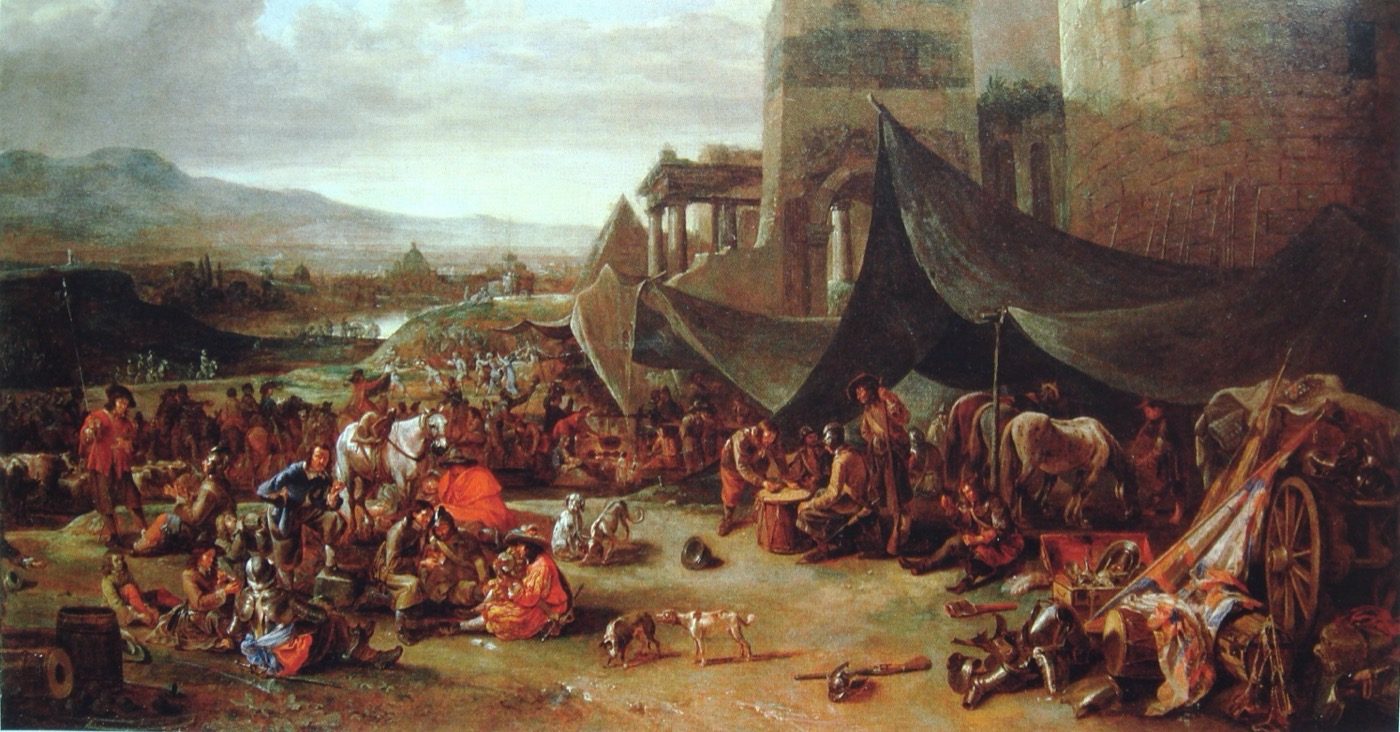
The city beyond St. Peter's had no comparable defense. Imperial troops, still functioning as an army in name but no longer under any effective discipline once Bourbon was dead, looted churches, monasteries, and private homes for the better part of the following months, and accounts describe the violence against civilians as far worse than the fighting that had opened the city's gates. Estimates of Rome's population before the attack run to roughly 55,000; historians studying the aftermath put the city's population at around 10,000 once the killing, disease, and famine had run their course, with most of that collapse made up of survivors fleeing rather than residents who died outright, though estimates of the direct death toll alone still run from roughly 6,000 to 12,000. The Landsknechte's part in the sack, alongside the Spanish and Italian troops who marched with them, became the event that most defined the force's later reputation, eclipsing decades of disciplined service under commanders like Frundsberg with a single episode that began as a dispute over unpaid wages.