
A Cynical Acronym That Outlived the Cynic
Most standard references trace the term to Donald Brennan, a strategist at Herman Kahn's Hudson Institute, in the early 1960s. Brennan was not proposing the doctrine; he opposed it, and favored building missile defenses instead. Spelling out "mutual assured destruction" to land on the acronym MAD was his way of arguing that a strategy built on both sides holding the power to annihilate each other's societies was, on its face, insane. Some accounts place his clearest public statement of the term later, in a 1971 New York Times essay, so the exact year the label first circulated is not perfectly pinned down. What is not disputed is who lost the naming fight: the strategists who actually built the doctrine, principally McNamara, never called it MAD themselves, and by the time the acronym stuck it had outlived its inventor's argument against it.
That mismatch between the term's mocking origin and the sober strategic literature that grew up around it is easy to miss reading a standard definition. It matters because it signals something true about the whole doctrine: it was never a single, deliberately engineered system so much as a label retrofitted onto a strategy that kept shifting underneath it, in the same way a fixed defensive line like France's Maginot Line got remembered as a single failed idea, not the shifting, contested policy it actually was, as the next section shows.
McNamara's Reversal: From 'No Cities' to Assured Destruction
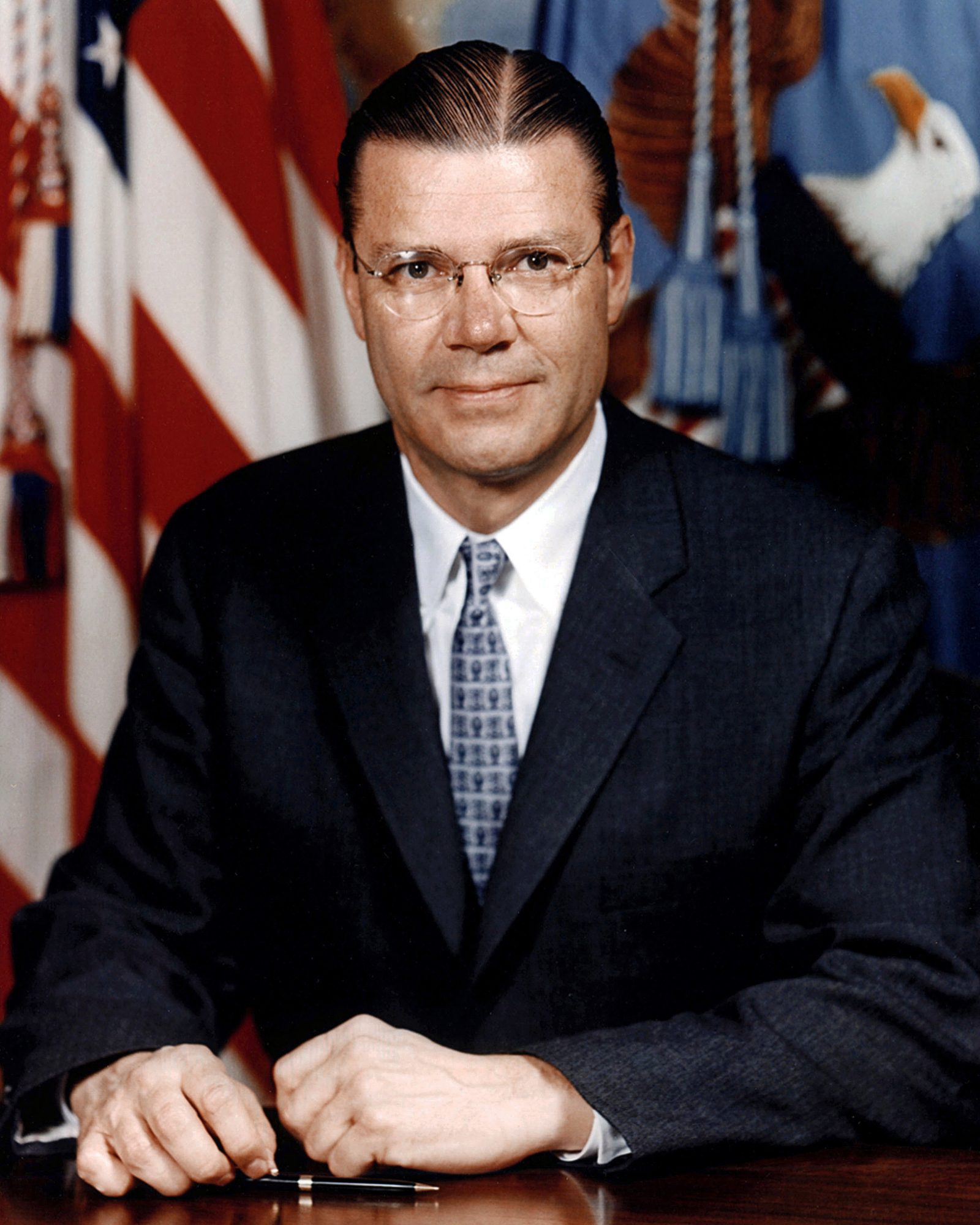
When Robert McNamara became Defense Secretary in 1961, he inherited a Single Integrated Operational Plan built around what critics called "spasm war," a single massive strike against the entire Soviet bloc. McNamara's first move rejected that. In a June 1962 commencement address at the University of Michigan, Ann Arbor, he laid out a "counterforce" or "no cities" doctrine: in a nuclear exchange, American forces would target Soviet military installations first and hold back from deliberately striking Soviet population centers, the way a conventional war might spare civilians as long as possible.
By 1965, McNamara had reversed course entirely, this time toward "Assured Destruction," targeting Soviet cities and industrial capacity directly. He told Congress that roughly 400 delivered nuclear weapons could destroy "over one-third of her population and one-half of her industry," and his systems analysts settled on a working threshold: the U.S. needed the guaranteed capacity to destroy 20 to 25 percent of Soviet population and 50 percent of Soviet industrial capacity after absorbing a first strike, no more. The point of setting a ceiling, rather than building toward maximum destructive capacity, was McNamara's own growing worry that a pure counterforce doctrine had no natural stopping point and would drive both sides into an unlimited arms race chasing ever-more-precise ways to destroy the other's weapons before they could be used.

Why the Weapons Had to Survive a First Strike
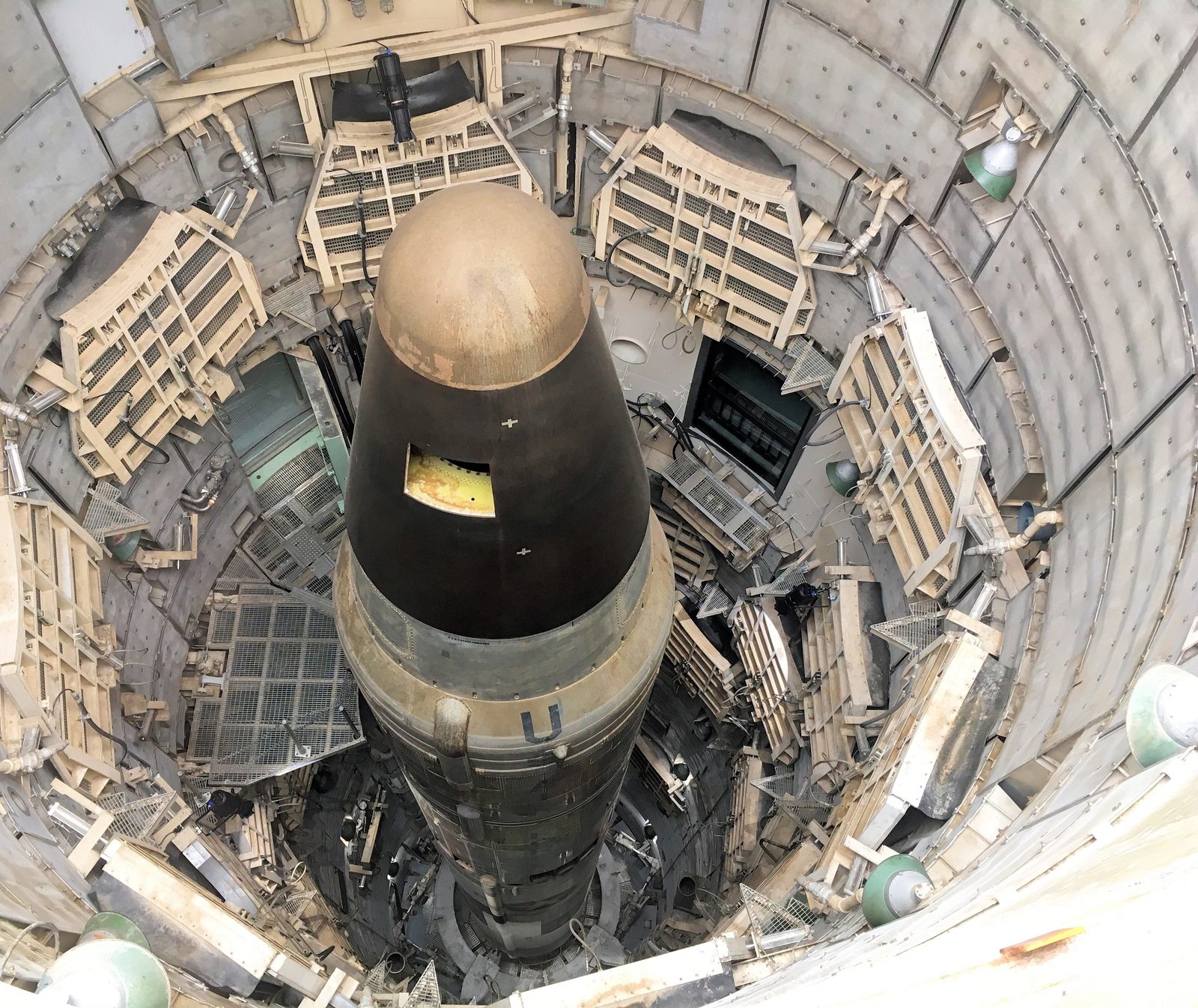
McNamara's math only worked as deterrence if the retaliatory force itself could survive an enemy's opening attack; a first strike that wiped out America's ability to hit back would make the threat meaningless. That requirement, known as second-strike capability, is why both superpowers spent the 1960s and 1970s dispersing and hardening their arsenals rather than concentrating them. The U.S. buried Titan II and Minuteman intercontinental ballistic missiles in hardened underground silos scattered across the Great Plains states, spaced far enough apart that no single incoming warhead could destroy more than one launch site, and put a growing share of its warheads on ballistic-missile submarines that could hide beneath the ocean indefinitely, a Cold War echo of how new weapons had already once forced armies underground during the machine-gun stalemate of 1914-1918, except this time the digging happened before the shooting started, not after it.
The same logic drove one of the Cold War's more counterintuitive treaties. The 1972 Anti-Ballistic Missile Treaty sharply restricted both countries' ability to build systems that could shoot down incoming warheads, not because missile defense was seen as ineffective, but because a workable shield would let one side absorb a first strike and still avoid retaliation, undermining the mutual vulnerability the whole doctrine depended on. Defending your population too well, under MAD's internal logic, was itself destabilizing.
The Two Nights the Theory Was Actually Tested
MAD is usually described as having kept the peace for four decades, but the doctrine came closest to failing not through deliberate escalation, but through error, twice within seven weeks of each other in 1983. On September 26, the Soviet Oko early-warning satellite system reported an incoming launch of one American intercontinental ballistic missile, then four more behind it, to the Air Defence Forces command bunker where duty officer Stanislav Petrov was on shift. Petrov's own later account was that he reasoned a genuine American first strike would open with far more than five missiles, and chose to report the detection up the chain as a probable system malfunction rather than a confirmed attack, without waiting for corroborating radar data that never arrived. A subsequent investigation found the satellites had mistaken sunlight reflecting off high-altitude clouds for missile launches.
Six weeks later, a different kind of error nearly produced the opposite failure. NATO's annual Able Archer command-post exercise in November 1983 simulated the alliance's procedures for authorizing nuclear release, including realistic touches like radio silence, a shift to an alternate war headquarters, and radio traffic that at points referred to B-52 sorties as "strikes." Soviet intelligence, already primed by a tense year of NATO posturing, read the exercise as potential cover for a genuine surprise attack and responded by readying nuclear-capable aircraft in East Germany and Poland, loading them with actual nuclear weapons, not exercise dummies, according to intelligence intercepts declassified decades later, the same kind of intercepted communications that, in an earlier war, tipped off British codebreakers to a hostile power's real intentions before anyone else grasped the danger. A 1990 review by the President's Foreign Intelligence Advisory Board concluded that the U.S. had gone into the exercise having "inadvertently placed our relations with the Soviet Union on a hair trigger," without realizing at the time how literally the Soviet side had taken it.
A Theory Given Credit It May Not Deserve
A growing line of Cold War scholarship questions whether MAD deserves the credit popularly given to it. Political scientists Brendan Rittenhouse Green and Austin Long, in a 2017 Security Studies article that won the American Political Science Association's award for outstanding work in international history and politics, argue that if mutual vulnerability genuinely made further nuclear competition pointless, it is hard to explain why both superpowers kept racing to build larger, faster, and more accurate arsenals throughout the decades MAD was supposedly in force, and kept running high-alert drills rehearsing nuclear war, not treating it as a closed question. Green's related 2020 book, The Revolution that Failed, traces the same pattern: policymakers on both sides consistently doubted whether their own retaliatory forces would actually survive a first strike, which is the one condition MAD requires to hold.
That skepticism was not confined to academics after the fact. Paul Nitze, a central figure in U.S. nuclear strategy from the Truman administration through the Reagan years, argued for decades that a sufficiently capable counterforce posture could still convince Moscow it could not win a nuclear exchange outright, a position flatly incompatible with pure assured-destruction logic. Official U.S. doctrine itself never stayed still long enough to be the fixed system the acronym implies: Presidential Directive 59, signed in 1980, shifted targeting policy again toward a "countervailing strategy" aimed at Soviet military and leadership targets rather than pure population destruction, the third major doctrinal reversal in under twenty years. The stable, unchanging shield most popular accounts describe was, in the historical record, neither stable nor unchanging.