
A War Minister Who Enlisted as a Private
André Maginot was already a sitting member of France's Chamber of Deputies when the First World War began in 1914, old enough and prominent enough that no one would have questioned him staying in Paris. He enlisted anyway, serving as an ordinary soldier on the Lorraine front, and was wounded in the leg near Verdun in November 1914. He was promoted to sergeant for what his citation described as coolness and courage under fire, and awarded the Médaille Militaire, France's highest award for enlisted soldiers, a rank-and-file counterpart to the volunteer spirit that wartime recruitment campaigns elsewhere were busy trying to manufacture with posters, no lived experience required. He walked with a limp for the rest of his life.
Maginot returned to politics after the war, serving as Minister of Pensions from 1920 and then as Minister of War across three separate terms (1922-1924, 1929-1930, 1931-1932). Having seen firsthand how the ring of permanent forts around Verdun had absorbed the heaviest German bombardments of the war and held, he became the political force behind funding a permanent fortified line along France's entire eastern border, a project his own war ministry colleagues had discussed for years without securing the money to build. He did not live to see it finished. Maginot fell ill in December 1931 and died in Paris on January 7, 1932, of typhoid fever, six years before the main construction phase wrapped up in 1938. The line was named after him only after his death.
142 Fortresses, an Underground City, and a Border Left Open
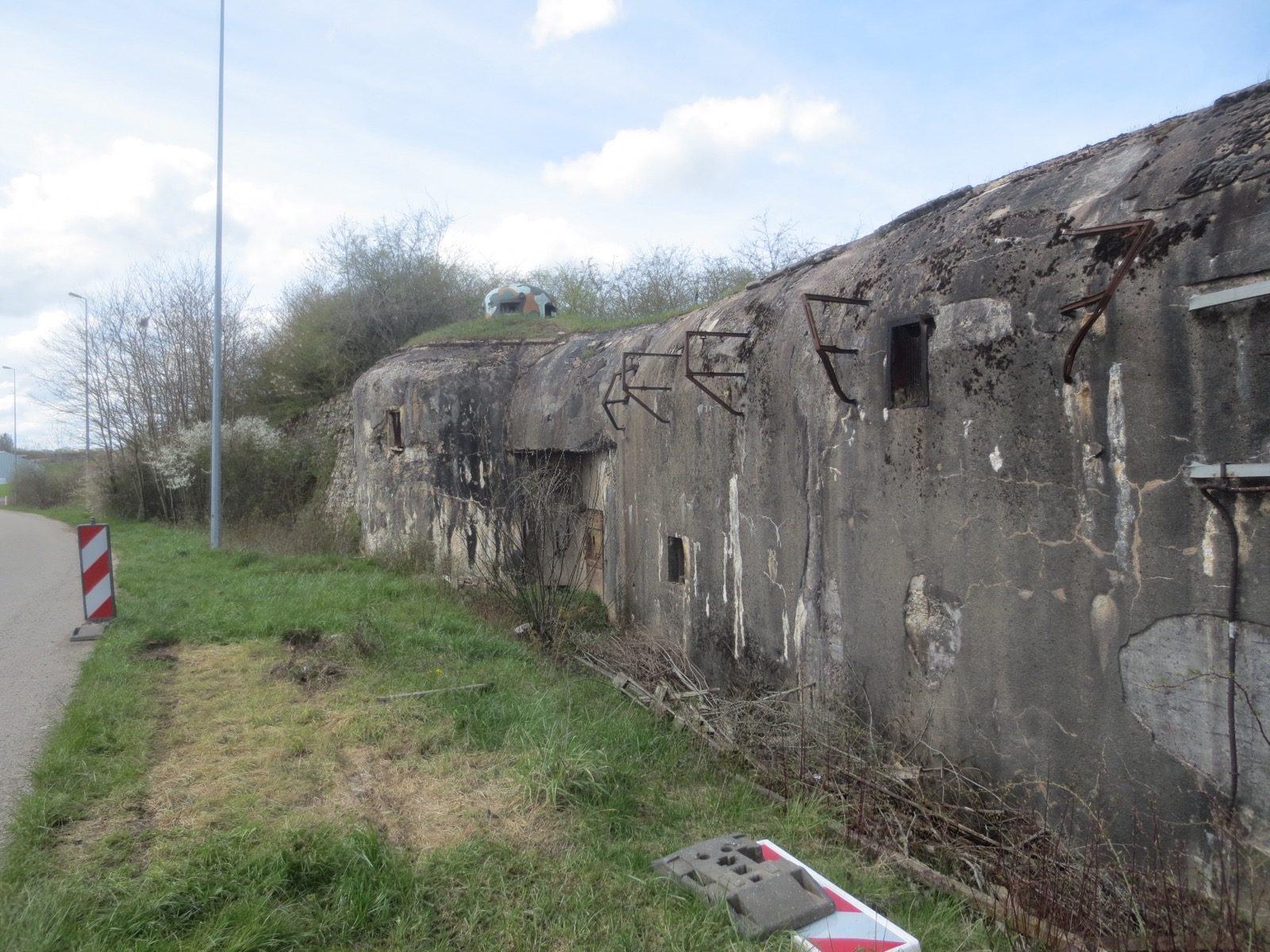
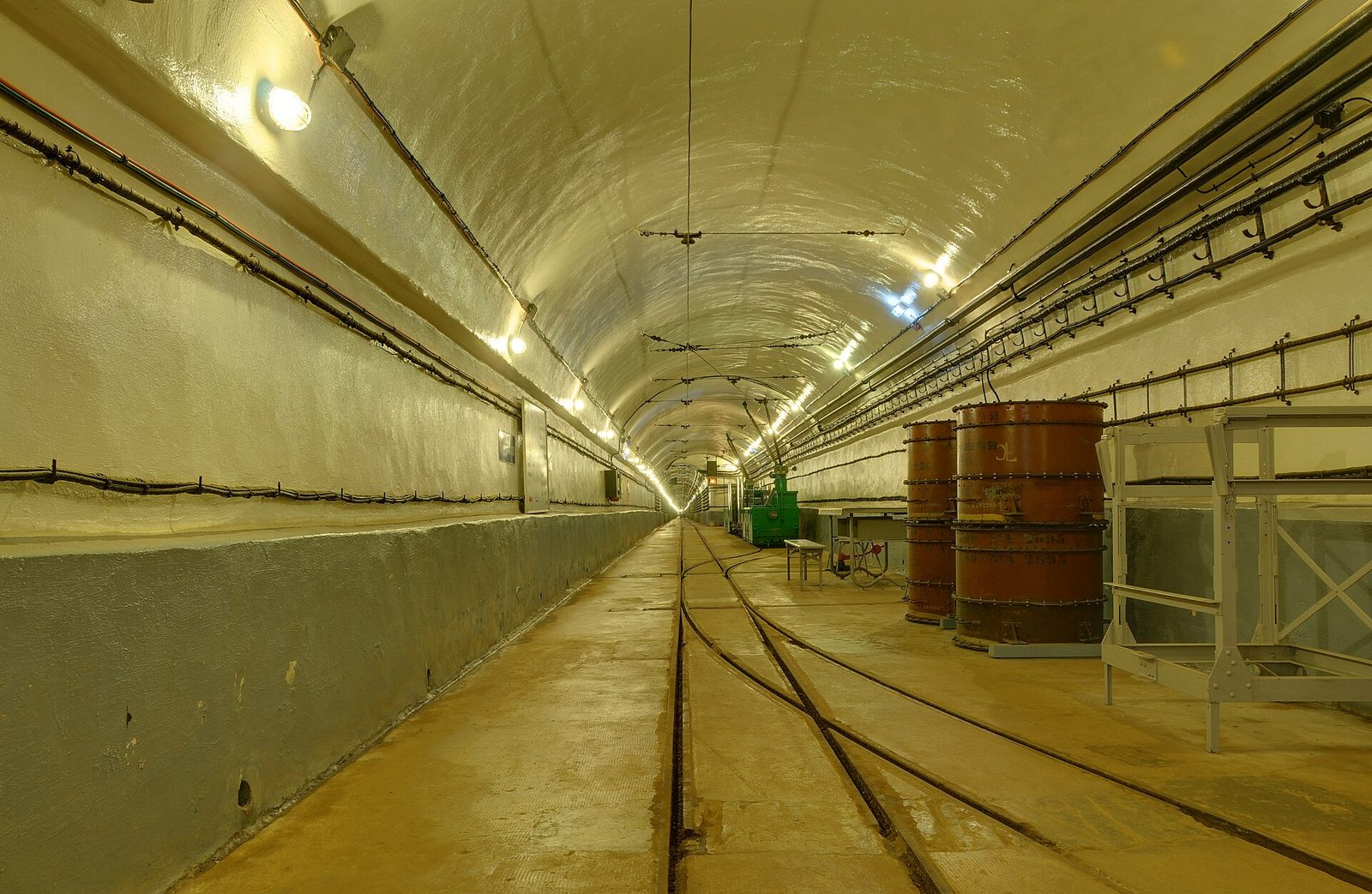
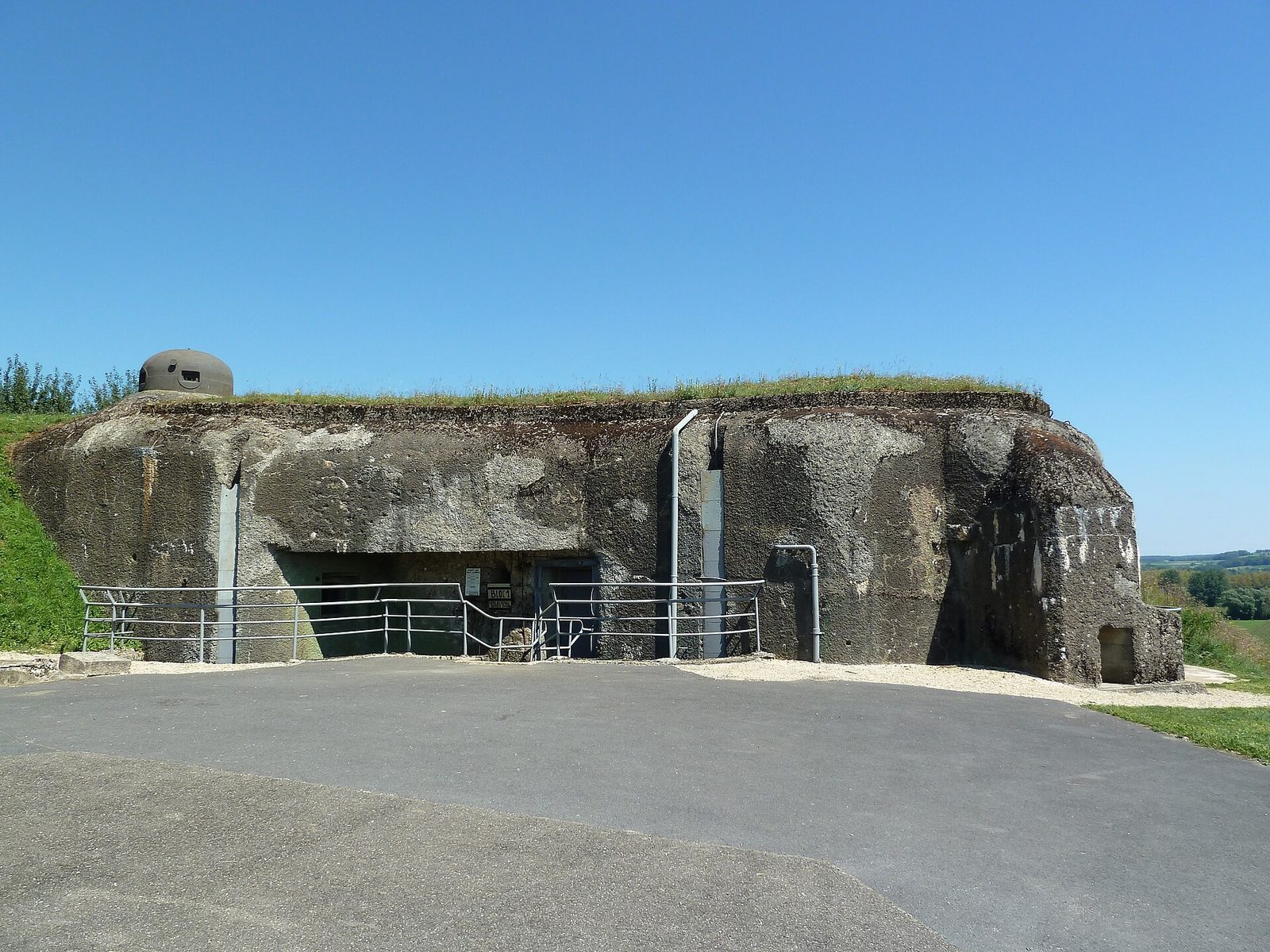
What Maginot's funding eventually built was not a wall but a defense-in-depth system: 142 ouvrages, split between 45 large grands ouvrages and 97 smaller petits ouvrages, backed by 352 casemates, 78 shelters, and 17 observatories, adding up to roughly 5,000 blockhouses across a zone 20 to 25 kilometers deep. The largest forts were effectively underground towns. Ouvrage Hackenberg, one of the biggest, was built for a garrison of about 1,040 men and linked its combat blocks with an electric narrow-gauge railway running past power plants, kitchens, ammunition magazines, and barracks, all below ground. The smallest petits ouvrages needed far fewer men. Ouvrage Fontvive Nord-ouest, in the Alpine sector, had a garrison of only 57.
The reasoning behind all of it was demographic as much as military. The static bloodletting of four years dug into the ground on the Western Front had killed roughly 1.4 million French soldiers, and by the eve of the next war France's population, about 41 million, was badly outmatched by Germany's roughly 60 million, according to demographic research published by France's National Institute for Demographic Studies (INED). French planners could not expect to win a second war of attrition by simply outlasting Germany with more men. The line's job was to buy two to three weeks of mobilization time and, just as importantly, to channel any German attack toward Belgium rather than through France's own industrial heartland in the northeast, which had already been devastated once, between 1914 and 1918. That plan had one large gap built into it from the start: Belgium declared neutrality in 1936 and objected to French fortifications along their shared border as an unwelcome provocation, so the line was never extended to cover the Ardennes forest, ground French planners judged too rugged for a major mechanized attack to cross quickly. Excessive caution about where not to strike shows up on the offensive side of war too: the informal, civilian-run process that picked Operation Rolling Thunder's target list kept North Vietnam's main jet interceptor base off-limits for 27 months despite repeated requests from the Joint Chiefs of Staff to hit it.

Ouvrage La Ferté: The One Place the Line Actually Fought
The Maginot Line's reputation as an expensive dud rests almost entirely on the fact that Germany's main 1940 offensive never attacked it directly, it went around, through the Ardennes and the Low Countries. But the line was assaulted head-on exactly once, at the small petit ouvrage of La Ferté, on the night of May 18-19, 1940, and that single fight became the bloodiest engagement fought anywhere along the entire fortification. German infantry, backed by roughly 250 guns, spent two days reducing the position's two combat blocks with explosive charges after the surrounding French forces had already been pushed back. Rather than surrender, the garrison's commander, Lieutenant Maurice Bourguignon, withdrew his men into the connecting tunnel between the blocks and asked permission to give up; according to accounts of the battle, he was told a Maginot Line fort was like a submarine and did not surrender.
None of the 107 men in that tunnel, 104 soldiers and three officers, made it out alive. The gas masks issued to the garrison were not designed to filter the level of carbon monoxide produced by the fires and explosions around them, and when German troops finally entered the position days later, they found the entire garrison dead of asphyxiation. La Ferté remains the only ouvrage in the whole system where a garrison was wiped out to the last man, and it is also the clearest evidence available for what a genuine assault on the Maginot Line actually cost an attacker: two days, the concentrated fire of 250 guns, and still no clean surrender, only complete destruction of the men inside.

Did the Maginot Line Actually Fail? What Historians Argue Now
The German plan that decided the Battle of France, associated with Erich von Manstein and executed through Heinz Guderian's panzer divisions, deliberately avoided the fortified line and pushed instead through the Ardennes, exactly the gap Belgian neutrality had left uncovered, a strategic misdirection that French intelligence failed to see coming, a mirror image of an earlier war, when a secret German scheme was undone on paper by Allied codebreakers rather than defeated on the battlefield. Some Maginot garrisons kept holding their positions for days after France's government requested an armistice on June 22, 1940, continuing resistance into early July before standing down on orders, weeks after the political fight was already over. That detail sits awkwardly with the popular image of the Maginot Line as a monument to French complacency that simply collapsed.
Alan Allport, a history professor at Syracuse University, argued in a December 2025 Foreign Policy piece that this popular image gets the story backward: the fortifications were never intended to stop a German attack by themselves, only to channel it toward Belgium and buy time for French mobilization, and by that measure they worked. The defeat, in Allport's account and in Kevin Passmore's 2025 Yale University Press history of the fall of France, came from the French high command's failure to react at the speed of German mobile warfare once the main thrust came through the Ardennes, a doctrinal and command failure, not a structural one. The forts did what they were built to do. It was everything happening outside them that went wrong. A fixed defensive posture succeeding on its own terms while the doctrine around it fails is not unique to 1940: restrictive rules of engagement that kept Marine sentries' rifles unloaded in Beirut in 1983 were cited by the Pentagon's own inquiry as a factor in the truck bombing that killed 241 U.S. service members there, a defensive position undone by policy, not by any flaw in the position itself.