
Two Riders in a Clearing Near Chad's Ford
By early September 1777, General Sir William Howe's British army was maneuvering toward George Washington's position along Brandywine Creek in southeastern Pennsylvania, with the two forces' outpost lines only a few miles apart. Captain Patrick Ferguson, a Scottish officer who had spent the previous year testing an experimental breech-loading rifle of his own design, was ranging ahead of the British camp with three of his marksmen on September 7, four days before the two armies would collide in the battle proper.
Hearing hoofbeats, Ferguson and his men dropped into the undergrowth. A rider in "gay hussar dress" came first into the clearing, followed by a second man in buff and blue, mounted on a bay horse, wearing what Ferguson would later describe in his own written narrative as "a remarkable large cocked hat." Ferguson stepped out and called on the nearer, hussar-dressed rider to dismount. Instead, that rider shouted a warning to his companion, who wheeled his horse and made for the far edge of the clearing.
Ferguson had a clean shot. "As I was within that distance at which, in the quickest firing, I could have lodged half a dozen of balls in or about him before he was out of my reach, I had only to determine," he wrote afterward, in an account now held in the Public Record Office in London, "but it was not pleasant to fire at the back of an unoffending individual who was acquitting himself coolly of his duty, and so I let him alone." He signaled his riflemen to hold their fire, and both riders escaped.
Washington's headquarters records back up the timing, if not the identity. On that same date, September 7, his military secretary Robert Hanson Harrison wrote to Congress president John Hancock that "His Excellency [was] out reconnoitring and busily engaged in the Affairs of the Army." That confirms Washington was in the field that day, though it doesn't place him at the specific clearing where Ferguson's riflemen lay hidden.
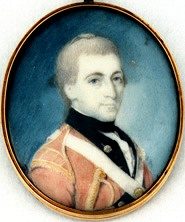
A Wound, a Disbanded Corps, and a Story from the Hospital
The main battle came four days later, on September 11, when Howe sent a large column on a long flanking march across the upper fords of Brandywine Creek while a smaller force under General Wilhelm von Knyphausen pinned Washington's attention at Chad's Ford. Ferguson's rifle corps was engaged in the fighting, and Ferguson himself was shot through the right elbow, an injury severe enough that he never regained full use of the arm. While he recovered, Howe disbanded the experimental rifle corps altogether, reasoning that the weapon was too demanding for most enlisted men to master and that its designer was no longer fit to advocate for it.
It was in the field hospital that the September 7 encounter acquired its famous coda. Ferguson later wrote that a surgeon who had been treating wounded rebel officers came to him and reported that "General Washington was all that day with the light troops, and only attended by a French officer in Hussar dress, he himself dressed and mounted in every point as described." The description matched what Ferguson had seen in the clearing closely enough that he came to believe he had spared the American commander in chief's life. But Ferguson had not recognized Washington at the time; the war's contemporary historian John Andrews, writing in 1786, noted specifically that the British officer had no idea whose life he'd spared until the hospital account reached him days later.
Ferguson recovered enough to fight again the following June, at the Battle of Monmouth, and by late 1779 had been promoted to major. His breech-loading rifle was not the only Revolutionary-era firearm whose issued version diverged from its inventor's original design; decades later, the American military would do something similar to a French-designed bullet, stripping out the part its own armorers decided the Minié ball didn't need.
Whose Officer Was It, Really
The tidy version of the story, that Ferguson had Washington in his sights and chose mercy, has circulated for nearly two and a half centuries. Modern historians treat it with more caution than Ferguson's contemporaries did. Writing in the Journal of the American Revolution in 2017, historian Wayne Lynch flagged a complication: a different British officer, James Delancey, separately identified the hussar-dressed rider who accompanied the fleeing man as Count Casimir Pulaski, the Polish cavalry officer who had arrived in America that July and was serving as a volunteer around Washington's headquarters in the days near Brandywine. Lynch's assessment is that "good reason exists to think Washington was not the officer in question," even while treating Ferguson's restraint itself, drawn from Ferguson's own letter, as established.
The identification cuts both ways. Pulaski's documented presence near Washington's staff that week is consistent with the popular account, not a refutation of it: a hussar-dressed volunteer riding alongside a mounted officer in a large cocked hat fits a Continental commander in chief and his newly arrived Polish aide about as well as it fits any other pairing of officers in the area that morning. But no primary source ties the two men's identities to that specific clearing with certainty, and Ferguson himself, by his own later admission, never claimed to have known who he was looking at until secondhand hospital testimony reached him. What can be said with confidence is narrower than the popular version: Ferguson had a clean shot at a fleeing Continental officer whose description matched Washington's, and chose not to take it.
Thirteen Months Later, No Quarter
On the night of October 14 into October 15, 1778, Ferguson led roughly 150 British and Loyalist troops across Little Egg Harbor Bay in New Jersey, guided by a deserter from Pulaski's Legion who had betrayed the unit's positions two nights earlier. Around 4 a.m., the raiders surrounded the Ridgeway farmhouse on Osborn Island, where about fifty of the Legion's infantry were sleeping. Lieutenant Colonel Charles August von Bose, the infantry's commandant, tried to rally a breakout and was killed almost immediately, along with roughly forty of his men; a handful escaped into the surrounding pine barrens and five were taken prisoner.
Pulaski himself was not on Osborn Island that night. He and his cavalry, camped about a mile away, rode toward the sound of gunfire but arrived only after the British had withdrawn, finding the dead and wounded among the Legion's tents. Pulaski's own after-action letters to Continental Congress president Henry Laurens put the blame on the deserter and made no claim that the attackers had spared anyone. British losses in the raid were comparatively light, by most contemporary accounts two to three men killed, against the more than forty Legionnaires who died. Some period tallies, including Pulaski's initial estimate, put the Legion's losses somewhat lower, in the range of 25 to 30, but every account agrees the Legion's infantry commandant was among the dead and that the British force suffered only a handful of casualties in return.
Whether the man Ferguson chose not to shoot at Brandywine really was Washington remains an open question that no surviving document settles. What isn't in doubt is that the unit whose infantry Ferguson's raiders killed in their sleep at Little Egg Harbor was commanded by the same Count Pulaski whose hussar-dressed companion had ridden through Ferguson's sights thirteen months earlier. Ferguson would go on to hold a British command of his own for two more years, before being killed in October 1780 at the Battle of Kings Mountain, the only regular British officer on a field otherwise held entirely by American militia and Loyalists.