
An Unfinished Fort, Built to Face the Sea
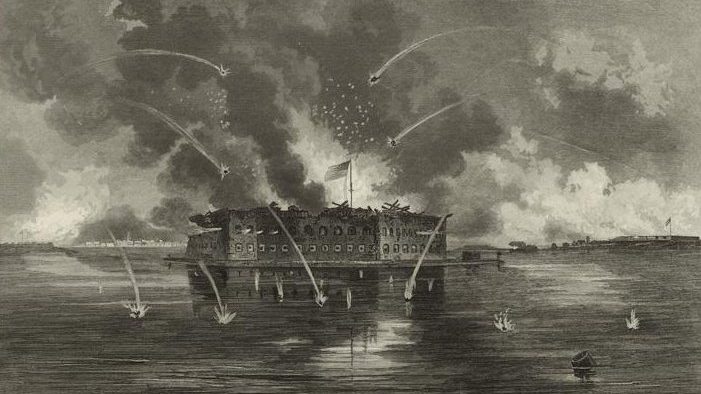
Fort Sumter sat on an artificial island at the mouth of Charleston Harbor, its guns oriented to repel an attack from warships approaching the channel, not from the shore batteries South Carolina's militia was busy building around it after the state seceded in December 1860. Major Robert Anderson moved his small U.S. Army garrison there on the night of December 26, 1860, slipping across the harbor from the more exposed Fort Moultrie and spiking Moultrie's guns behind him so they could not be turned against him. According to Wikipedia's account of the battle (checked 12 October 2026), Anderson's command amounted to roughly 85 officers and enlisted men, drawn from two artillery companies plus a regimental band, and the fort itself was still unfinished: about 43 civilian laborers were on site completing construction work even as Confederate batteries ringed the harbor around them.
For nearly four months, the standoff stayed a siege rather than a battle. Anderson's supplies dwindled while South Carolina, and then the newly formed Confederacy, demanded he evacuate. The confrontation only turned into gunfire after President Lincoln notified South Carolina's governor that he was sending an unarmed ship to resupply the fort with food, not reinforcements or ammunition, a move the Confederate government in Montgomery treated as grounds to force the issue before the ship could arrive.
The Instructor and the Student Who Commanded the Guns
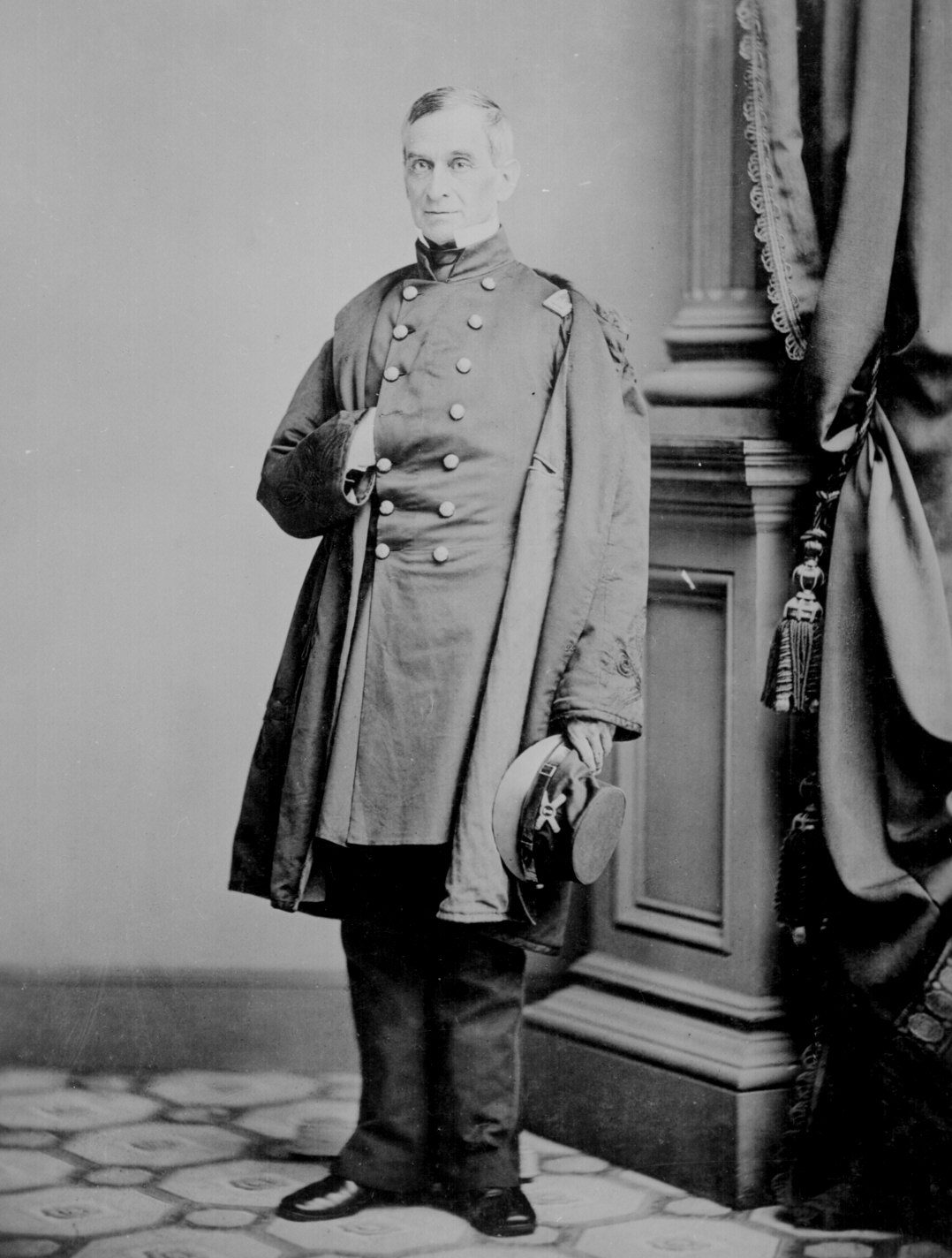
The Confederate officer who ultimately gave the order to fire was not a stranger to the man he was firing on. According to Wikipedia's sourced account of the battle (checked 12 October 2026), "Major Anderson had been Beauregard's artillery instructor at West Point," and the two "had been especially close," with Beauregard becoming Anderson's assistant after graduation. By April 1861, that former student, Brigadier General P.G.T. Beauregard, commanded the ring of Confederate batteries surrounding Charleston Harbor, while his old instructor commanded the isolated Union garrison at the center of it.
That personal history did not change the outcome. Beauregard sent aides to negotiate Anderson's surrender in the hours before the bombardment began, and when Anderson declined to evacuate on Confederate terms, the order to open fire went out anyway, professional obligation overriding whatever the two men's West Point years had built between them.

The Shot Everyone Remembers Wrong
Ask most people who fired the Civil War's first shot and the answer they'll give is Edmund Ruffin, the Virginia secessionist agitator who has been "long mistakenly credited" with the honor, in the words of the American Battlefield Trust's own biography of him. The actual sequence, according to that same account, started at 4:30 a.m. on April 12, 1861, when Captain George S. James ordered Lieutenant Henry S. Farley to pull the lanyard on a 10-inch mortar at Fort Johnson, sending a signal shell arcing over the harbor to mark the start of the bombardment. That was the first shot of the war.
Ruffin's role came after, not before. Posted with the Palmetto Guard on Morris Island, the 67-year-old fired a 64-pound Columbiad soon after Farley's signal shot, and his round is generally credited as the first shell to actually strike Fort Sumter's walls rather than the first fired overall, a distinction the American Battlefield Trust draws explicitly and that some historians treat with caution even for that narrower claim, since it rests substantially on Ruffin's own account of the moment. The confusion between "first shot fired" and "first shot to hit the fort" is exactly the kind of distinction that gets flattened in retelling, the same pattern that leaves the identity of the first shot fired at Lexington and Concord unresolved to this day, except that at Fort Sumter the record is clear and the popular version simply credits the wrong man.
Thirty-Four Hours, More Than 3,000 Rounds, No One Killed
What followed was one of the more one-sided artillery duels of the war. Confederate batteries fired more than 3,000 rounds at Fort Sumter over roughly 34 hours, according to both Wikipedia's and American History Central's accounts of the battle, using heated "hot shot" that set fire to the fort's wooden barracks and forced Anderson's men to fight the flames even as they returned fire. Anderson's garrison fired back, though American History Central puts the Union total at only around 1,000 rounds, constrained by a limited supply of the fuses and cartridge bags the fort's ordnance actually needed. Doubleday, Anderson's second-in-command, fired the first Union shot around 7:00 a.m.
Remarkably, across the entire exchange, nobody on either side was killed. Anderson's ammunition and food ran low, his barracks were burning, and by the afternoon of April 13 he agreed to surrender on terms that let his men leave with their colors, their arms, and their dignity intact. The bombardment that started the deadliest war in American history ended without a single combat fatality on either side.
The Salute That Killed the War's First Two Men
Anderson's surrender terms included one condition he insisted on: permission to fire a 100-gun salute to the American flag before his garrison evacuated. That ceremony, not the bombardment, is what produced the Civil War's actual first deaths. According to the U.S. Army's own account and Wikipedia's sourced record of the incident, Private Daniel Hough was loading the gun for the salute's 47th round when he inserted a fresh cartridge before fully swabbing out sparks left from the previous shot. The gun discharged prematurely, blowing off Hough's arm and killing him almost instantly, and the blast set off a stockpile of cartridges stored nearby, mortally wounding Private Edward Galloway and injuring four other soldiers. Galloway died five days later, on April 19, 1861, at Charleston's Gibbes Hospital.
The salute was cut short at fifty guns instead of the planned hundred. Hough and Galloway are recognized as the first two fatalities of the American Civil War, a war that would go on to kill more than 620,000 Americans, and both men died not from enemy fire but from an accident during the ceremony meant to mark their side's survival. Anderson and the rest of the garrison sailed for New York, where they were greeted as heroes; the same crediting-the-wrong-story pattern that gave Ruffin an outsized reputation shows up again decades later and an ocean of context away, in how a Michigan factory worker was mistakenly credited as the model for the "We Can Do It!" poster for nearly thirty years before a wartime photo caption proved otherwise. Fort Sumter's own record keeps the same lesson close at hand: what actually happened and what gets repeated are not always the same account, a gap that shows up just as clearly in which Lincoln quotations credited to Ulysses S. Grant can actually be traced to a contemporary document and which cannot, and in the rest of WarCrumbs's Battles coverage more broadly.