
Two Editions of the Same Memoir
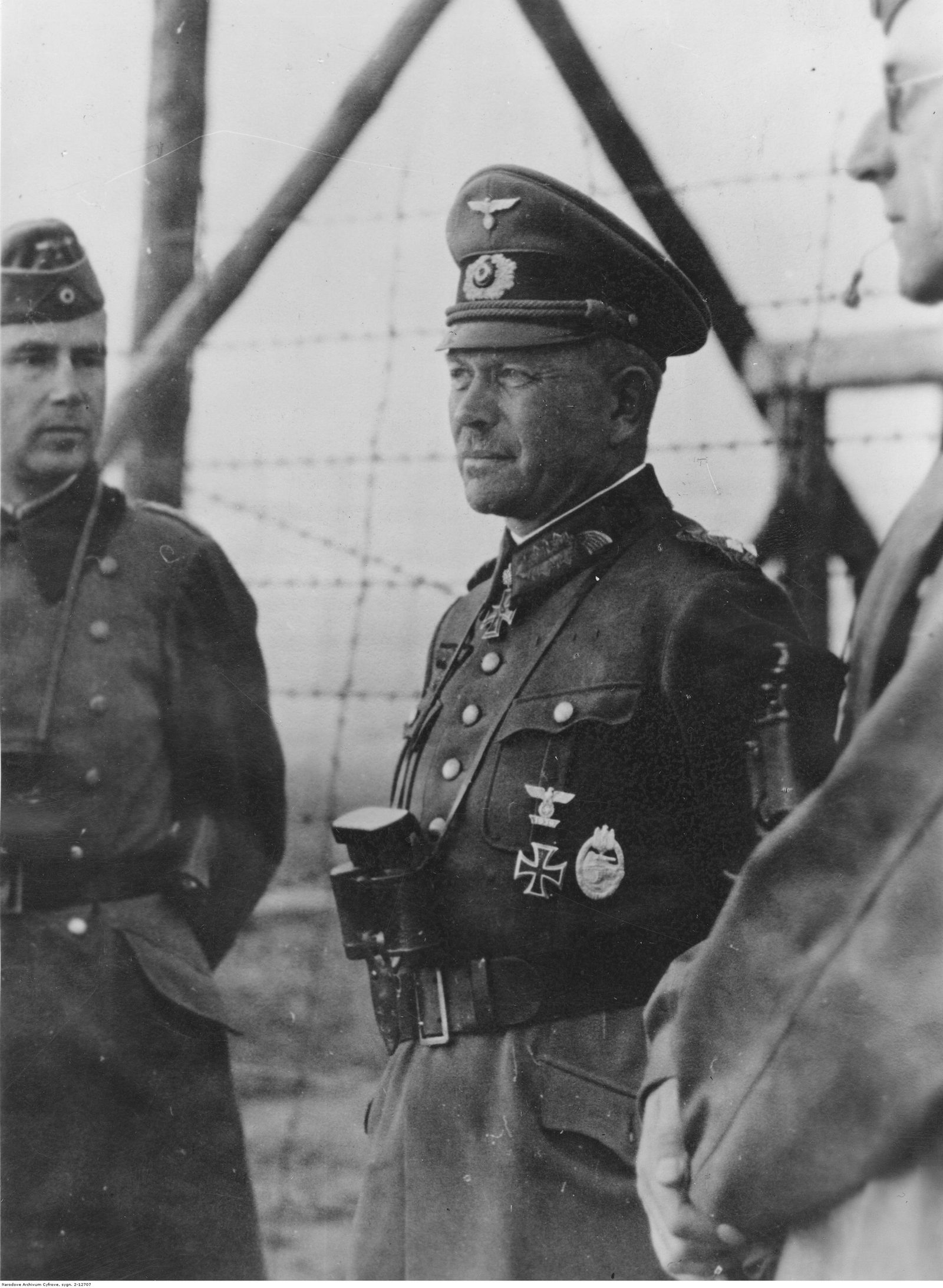
Heinz Guderian spent three years in Allied internment after Germany's surrender, questioned repeatedly by war-crimes investigators who ultimately never charged him. A denazification tribunal cleared him and released him in 1948, and he spent the years that followed, building on work begun in captivity, writing an account of his career. It first appeared in Germany in 1950 as "Erinnerungen eines Soldaten" ("Memories of a Soldier"), published by the Heidelberg house Kurt Vowinckel Verlag; later German printings carry a 1951 date.
Two years after the first German printing, an English translation appeared under a different title, "Panzer Leader," translated by Constantine Fitzgibbon and published in Britain by Michael Joseph and in the United States by E. P. Dutton, with a foreword contributed by British military theorist B. H. Liddell Hart. The English edition went on to sell more than 180,000 copies worldwide by the 1970s and remains in print today. It also said something the German original did not: that two specific tactical ideas associated with Liddell Hart, using armored forces for long-range strikes against an enemy army's lines of communication, and building an armored division that combined tanks with their own motorized infantry, had "particularly impressed" Guderian while he was developing German tank doctrine in the 1930s. According to Wikipedia's summary of the resulting historiographical dispute (checked 12 October 2026), the German-language original mentions Liddell Hart by name but does not assign him that specific role.
The Letter That Supplied the Words
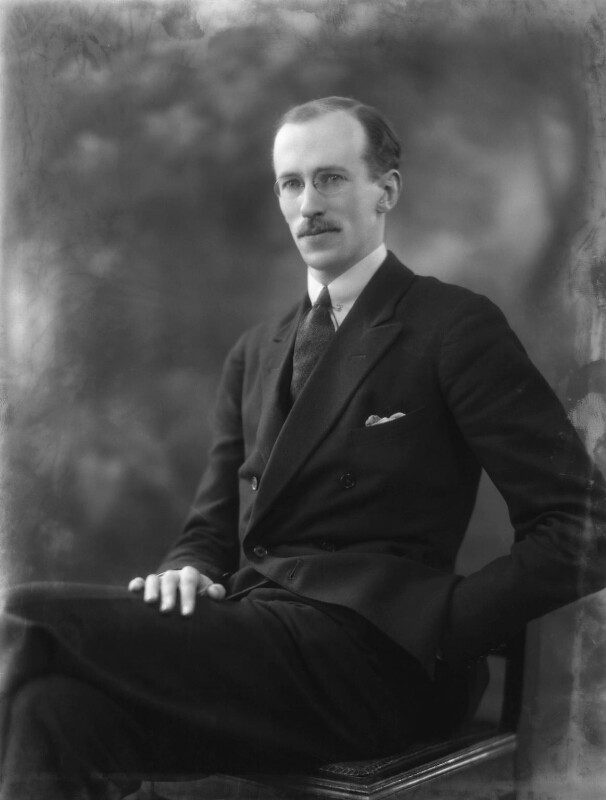
The passage did not originate with Guderian. Examining the correspondence between the two men for "Liddell Hart and the Weight of History," American political scientist John Mearsheimer found that Liddell Hart had drafted the acknowledgment himself and sent it to Guderian while the English translation was being prepared, telling him almost exactly what to write: "You might care to insert a remark that I emphasize the use of armoured forces for long-range operations against the opposing Army's communications, and also the proposed type of armoured division combining Panzer and Panzer-infantry units – and that these points particularly impressed you." The sentence that appeared in "Panzer Leader" tracks that suggestion closely.
Liddell Hart was, at the same time, agreeing to write the book's foreword and promote it to English-language reviewers, leverage Mearsheimer's book argues he used deliberately, not only with Guderian but in his postwar dealings with several other former Wehrmacht generals whose reputations, like his own, needed rebuilding after 1945. An account of a warrior's career reshaped by someone writing well after the fact, and with reasons of their own for shaping it, is not unique to Guderian; a chronicler who never met Attila the Hun added a knife to his death scene decades after eyewitnesses had recorded a plain nosebleed instead.
What Liddell Hart Had at Stake
Before the war, Liddell Hart's most public position was that Britain should avoid committing a large conscript army to fight another land war on the European continent and rely instead on the Royal Air Force to blunt an enemy offensive, an argument he made in a series of Times articles between November 1935 and November 1936 that helped shape Neville Chamberlain's defense thinking. That argument aged badly. When war came in 1939 and 1940, it was German panzer divisions, not British air power, that decided the campaign in France, and Britain still needed the large land army Liddell Hart had argued against.
Attaching his name convincingly to the doctrine that had just proven him wrong about the next war's shape offered a way to salvage that reputation, an interpretation historians critical of Liddell Hart have argued directly. In his 1997 book "In Pursuit of Military Excellence," Israeli military theorist Shimon Naveh wrote that Liddell Hart, in his postwar letters to Guderian, Erich von Manstein, and Erwin Rommel's family and associates, "imposed his own fabricated version of Blitzkrieg on the latter and compelled him to proclaim it as original formula."

The Case for the Defense
Guderian's biographer, Kenneth Macksey, took a similarly skeptical view in his study of the general, concluding, according to a review of Macksey's work published by H-Net Reviews, that Guderian offered the acknowledgment in the English edition only to placate Liddell Hart's vanity, not because it reflected how his ideas had actually formed.
Other historians reject that reading. Israeli historian Azar Gat devoted a two-part article in the 1997 volume of "War in History," later expanded into the 2000 book "British Armour Theory and the Rise of the Panzer Arm: Revising the Revisionists," to arguing that Mearsheimer and Naveh overstated their case, and that Liddell Hart's influence on German panzer doctrine was real even if Guderian later exaggerated the debt for reasons of his own. Gat points to an episode independent of any postwar correspondence: in early 1943, shortly after Hitler recalled Guderian from retirement and appointed him Inspector General of Armored Troops, Guderian addressed a room of senior officers and read aloud from an article Liddell Hart had written years before, a use of Liddell Hart's writing with no British foreword to negotiate and no memoir sales to protect. Jay Luvaas, a Professor of Military History at the U.S. Army War College who had studied under Liddell Hart himself, took a middle position in a 1990 Parameters article written directly against Mearsheimer's book: Liddell Hart overestimated, in good faith rather than by design, how much he had shaped German thinking, but the underlying contact was real. Luvaas pointed to Erwin Rommel's own chief of staff, Friedrich von Mellenthin, who recalled after the war that Rommel mentioned Liddell Hart's writing repeatedly and thought well of it, even if that fell short of making Rommel a disciple.
Questions about which hand shaped a record reach back further than this memoir. The chronicles behind Henry V's death disagree about what to call the illness that killed him, and the modern answer of dysentery amounts to a choice between accounts.
Still Unsettled
None of this resolved the question. Decades after Mearsheimer's book and Gat's rebuttal, specialists in interwar armored doctrine continue to publish competing readings of the same handful of letters, the same 1943 episode, and the same sentence in "Panzer Leader," without converging on an answer. What is not disputed is narrower: the passage crediting Liddell Hart exists because Liddell Hart wrote it, Guderian used it nearly as given, and readers of the English-language memoir have taken it for more than 70 years as Guderian's own assessment of his intellectual debts.
Postwar military memoirs carry that risk more generally, when the only record of a claim is the man who benefits from it. Pappy Boyington's Medal of Honor citation still rests on two aerial kills that only his own postwar account can confirm, with no surviving witness to either. Reputations built on wartime records get reshaped after the fact for institutional reasons, too, not just personal ones; Georgy Zhukov's removal from every Soviet military post in 1957 relied on the same charge, "Bonapartism," that investigators had already tried and abandoned against him eleven years earlier, once it became useful again.