
He Was Nowhere Near a Battlefield
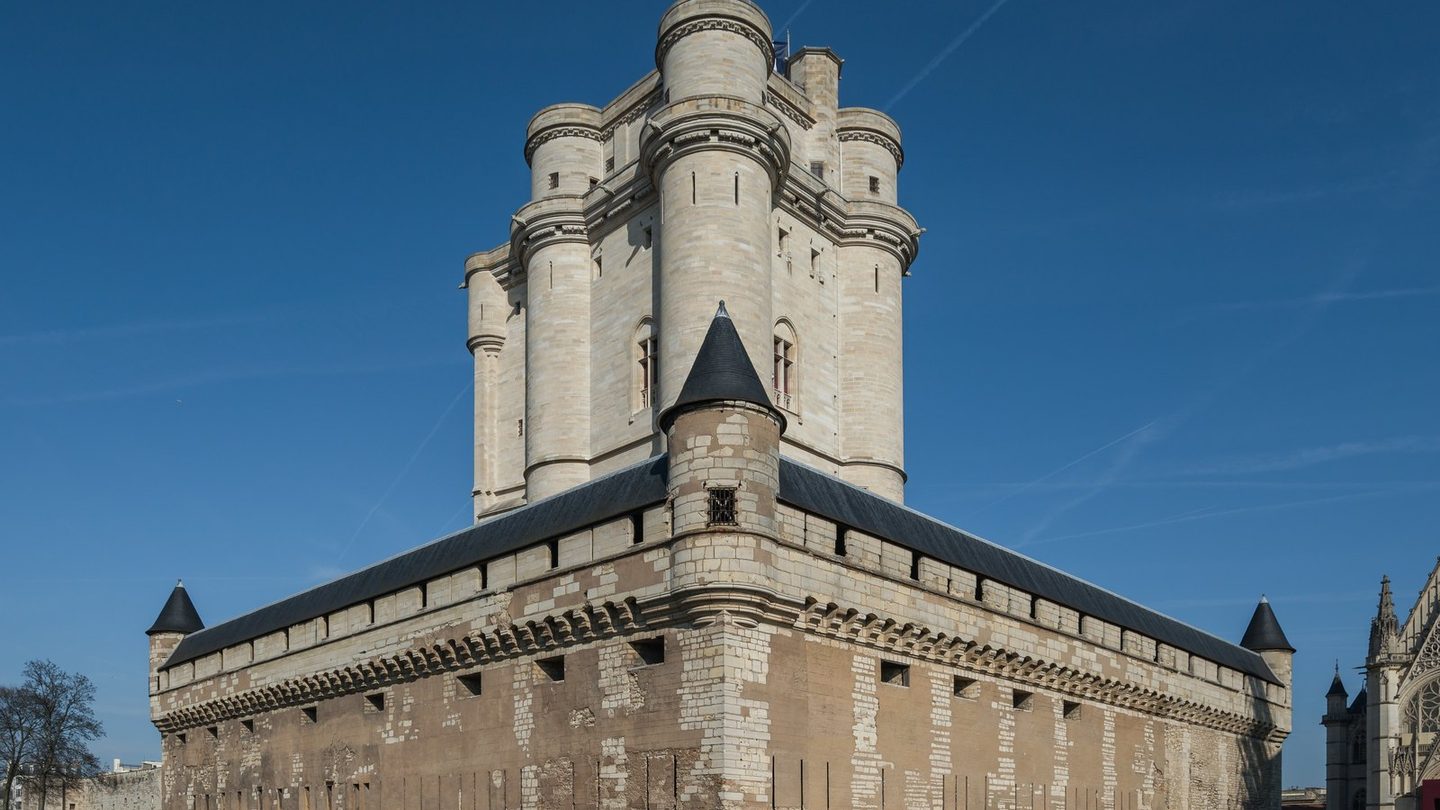
The short answer to how did Henry V die is that he died of disease in a castle, not in action. The victor of Agincourt died in the early hours of 31 August 1422 at the Château de Vincennes, east of Paris, aged 35. The Royal Household's own biography records it in a single sentence: he "died of dysentery in 1422 in Bois de Vincennes, France".
Popular retellings sometimes move the location. Historic UK's page on the king says he died "whilst engaging in a siege at Meaux". Meaux had surrendered on 10 May 1422, more than three months earlier, and by August Henry was at Vincennes, about 35 kilometres away.
The siege is where the illness belongs, and it is the part of the story a one-line answer drops.
Meaux, October 1421 to May 1422
Henry's last campaign was a string of sieges rather than a set of battles. Meaux sat on a loop of the Marne, with the walled town on the north bank and a smaller fortified quarter known as the Marché inside the river bend, connected to the rest of the town by a single bridge. The siege opened on 6 October 1421 and lasted seven months and four days.
The defenders were few and stubborn; the attackers were many and short of supplies. Wikipedia's article on the siege (checked 12 October 2026), drawing on Juliet Barker's Conquest and Dan Jones's 2024 biography of Henry, puts the English force at more than 20,000 men against a garrison of about a thousand, and estimates that one in sixteen of the besiegers died of dysentery and smallpox.
Henry fell ill during the siege and refused to leave before it was over. The town surrendered on 10 May 1422. His son and heir had been born at Windsor on 6 December 1421, while the siege was still running. Medieval sieges of this kind were usually decided by hunger and sickness rather than by assault, which is how the garrison at Kenilworth Castle held out for six months in 1266 and gave in only when starvation and disease forced terms.
After Meaux, Henry marched toward Cosne-sur-Loire. Somewhere on that road he became too ill to ride and was carried to Vincennes, arriving on 10 August. He died three weeks later.
| Date | Event | Source |
|---|---|---|
| 6 October 1421 | Siege of Meaux begins | Wikipedia, "Siege of Meaux" |
| 6 December 1421 | Henry VI born at Windsor | Wikipedia, "Siege of Meaux" |
| 10 May 1422 | Meaux surrenders | Wikipedia, "Siege of Meaux" |
| 10 August 1422 | Henry carried into Vincennes | Wikipedia, "Siege of Meaux" |
| 31 August 1422 | Henry V dies, aged 35 | royal.uk; Wikipedia |
| 21 October 1422 | Charles VI of France dies | Wikipedia, "Henry V of England" |
| 7 November 1422 | Burial at Westminster Abbey | Westminster Abbey |
The Chroniclers Could Not Agree on the Disease
Dysentery is the modern verdict. It was not the only medieval one, and the disagreement is instructive.
The Latin chronicle of Charles VI kept at the abbey of Saint-Denis describes a flux of the belly and glosses the illness with the name the monks used for it, Saint Fiacre's disease. The same passage reads the death as a judgement on the king, who had wanted to move the relics of Saint Fiacre out of France and into England.
Enguerrand de Monstrelet, a Burgundian chronicler writing close to the events, described a burning heat in the bowels which he likened to the sickness known as St Anthony's fire. The nineteenth-century editor of his chronicle added a footnote that the parliamentary history attributed the death to dysentery instead.
Thomas Walsingham, writing in England, recorded an acute fever with severe dysentery.
Those labels point at different things. St Anthony's fire was a catch-all name applied to at least three separate conditions, among them ergotism and erysipelas, according to a review of the eponym in a medical journal. Saint Fiacre's disease meant dysentery. A chronicler who reached for the first was describing a burning illness; one who reached for the second was describing the bloody flux.
Late detail attaches itself to famous deaths, and not only to diagnoses. The knife that supposedly killed Attila the Hun appears in accounts written decades after the event, not in the report of the envoy who had actually visited his court.
Misleading labels outlive the records behind them, and so do misread numbers. Napoleon's five-foot-two rests on a genuine measurement taken at his autopsy in pre-metric French units, converted into English inches as though they were the same thing.
These passages reach modern readers through later printed editions and translations, and the wording shifts between them, so the diagnoses are best read as the labels contemporaries reached for rather than as clinical findings.
| Account | What it says killed him |
|---|---|
| Chronicle of Charles VI, abbey of Saint-Denis | A flux of the belly, given the name Saint Fiacre's disease |
| Enguerrand de Monstrelet | A burning heat in the bowels, likened to St Anthony's fire |
| Thomas Walsingham | An acute fever with severe dysentery |
| Modern histories | Dysentery |
Nobody Recorded When He Was Born
Henry was not close to the throne at birth, so no official record fixed the date, and the uncertainty has never been fully closed.
The date now accepted is 16 September 1386, the feast of Saint Edith; a manuscript in the John Rylands Library carries it. The competing date, 9 August, still appears in older works. Wikipedia treats the September date as the most likely (checked 12 October 2026), noting that every combination of the two days and the two years has had a supporter, and that Tito Livio Frulovisi's life of Henry gives the September date as the feast of Saint Edith.
Other evidence supports 1386. Henry's household was at Monmouth in 1386 but not in 1387, and his younger brother Thomas was born in the autumn of 1387.
The consequence is small and awkward. On the 1386 date, Henry died a little over two weeks short of his thirty-sixth birthday. That is why the age at death is usually given as 35, and why pages carrying the alternative date hedge.
Embalmed, Eviscerated, and Carried Home
Dying in France in August created a practical problem: a corpse that had to cross the Channel in warm weather. The solution recorded for Henry was evisceration followed by embalming. Separating the entrails from the body was an old practice by 1422, and so was the harsher alternative of boiling the corpse until the flesh came away from the bones, which historians call the mos Teutonicus. Pope Boniface VIII tried to stop both in 1299 with the bull Detestande feritatis, which threatened excommunication for dismembering or eviscerating a corpse.
Monstrelet records that Henry's bowels were buried at Saint-Maur-des-Fossés, near Vincennes, and that the body, well embalmed, was placed in a lead coffin. It lay at Rouen Cathedral on the journey north.
Sixty-eight days passed between the death on 31 August and the burial on 7 November 1422, long enough that the r/AskHistorians thread on the subject asks how the body was preserved at all.
The funeral was on a scale the chroniclers noticed. Monstrelet counts fifteen bishops in copes and mitred abbots in the procession. The London Letter Book records the mayor and aldermen meeting the coffin with 300 torches carried by 300 men in white gowns. Henry was buried in Saint Edward the Confessor's chapel at Westminster Abbey, and the chantry chapel built above the tomb dates from between 1437 and 1450.
Seven Weeks Later, the Crown Split in Two
Henry V left a nine-month-old heir. Under the Treaty of Troyes of 1420 he had been recognized as heir to the French throne and had married Catherine of Valois, so the dual monarchy passed to an infant. His brother John, Duke of Bedford, was named regent of France; another brother, Humphrey, Duke of Gloucester, became protector in England.
Then the other half of the arrangement died as well. Charles VI of France followed Henry on 21 October 1422, seven weeks later. For a moment the crowns of England and France were both held by a baby, and the English position in France depended on Bedford holding it together. It held for a while, and then it did not; the French crown Henry had been promised was lost under his son.
What the One-Line Answer Leaves Out
Dysentery is the right answer, and it is also the whole of what most pages say. What the one-liner drops is the siege that produced the illness, the chroniclers who could not agree on a name for it, the birth date nobody wrote down, and the embalming that had to happen before the body could come home.
It also drops the shape of the ending. Henry V died at 35 in a castle he had reached by litter, weeks after the last campaign of his life, with an infant son across the Channel and an inheritance that would come apart in his son's hands.