.jpg)
"The Razor": Made in Manchuria
Tojo's reputation for ruthless efficiency was forged well before he held any cabinet post. Posted to Japan's Kwantung Army in occupied Manchuria, he took command of its Kenpeitai, the military police, in September 1935, and by March 1937 had risen to the army's chief of staff there. Colleagues and biographers nicknamed him Kamisori, "the Razor," for a mind that moved fast, cut cleanly through paperwork, and rarely revisited a decision, according to the biographical account collected by HistoryDefined. The nickname stuck for the rest of his career and captured both his administrative gift and the impatience with dissent that would later define his premiership.
That efficiency translated into results the Imperial Army noticed. As Kwantung Army chief of staff, Tojo oversaw military police operations against anti-Japanese resistance in Manchuria and helped direct Japanese forces during renewed fighting in northern China in 1937, building the administrative track record that would carry him into the war ministry in Tokyo.
Four Jobs, One Man
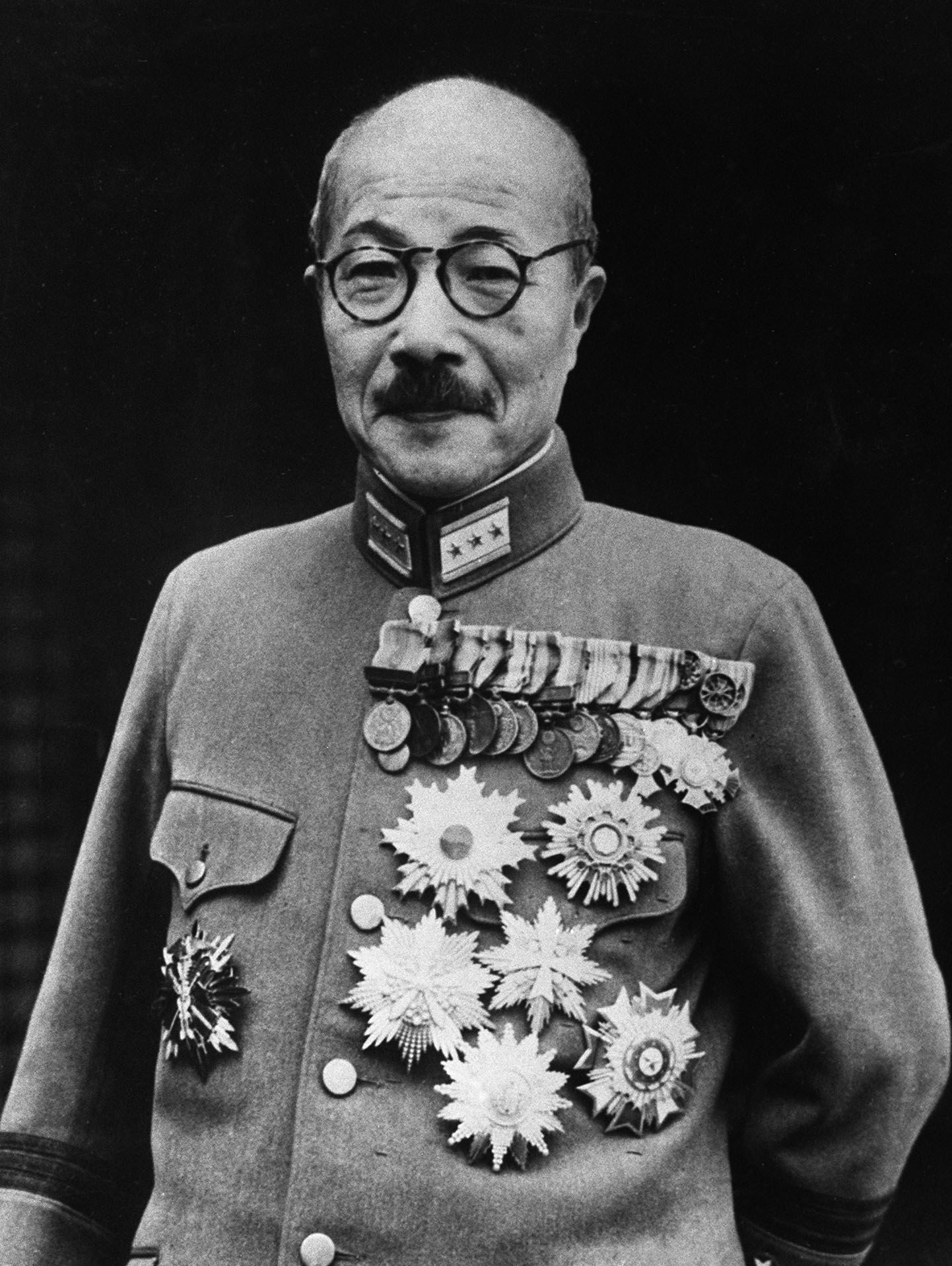
Tojo became Prime Minister on October 17, 1941, replacing Fumimaro Konoe, and kept the Army Ministry portfolio he already held, declining to hand it off to someone else, an unusual move that let him control both the civilian government and the military high command's primary cabinet seat at once. Over the next two and a half years he layered on more: Home Minister until February 1942, a brief stint as Foreign Minister in September 1942, a three-day turn as Education Minister in April 1943, and, from October 8 to November 1, 1943, Minister of Commerce and Industry, according to Encyclopedia.com's Gale-sourced biography and the Tojo cabinet's official record. That Commerce and Industry post lasted barely three weeks under Tojo because on November 1, 1943, it was reorganized into a new Ministry of Munitions, which Tojo took over personally and kept for the rest of his premiership, delegating its day-to-day running to his deputy Nobusuke Kishi. Even the shortest of these, the three-day Education post, meant Tojo was, however briefly, simultaneously running the government, the army, industrial policy, and the national school system, without handing off any one of them, even temporarily, to someone else.
The consolidation peaked on February 21, 1944, when Tojo made himself Chief of the Army General Staff as well, adding direct command of military operations to a portfolio that already spanned the premiership, the Army Ministry, and the Ministry of Munitions, an appointment History.com's account of the day describes as turning him into "a virtual dictator." That characterization needs a caveat historians attach to it: as Herbert Bix has argued, Tojo's authority still ran through the Emperor rather than around him, and his power depended on retaining imperial backing rather than on institutions he fully controlled himself, per HistoryDefined's summary of Bix's analysis. However the power is labeled, the practical result was that one man simultaneously ran the government, the war ministry, war production, and army operational planning, a concentration with no real precedent in modern Japanese cabinet government, and a sharper personal consolidation of power than Ivan IV's creation of Russia's first standing army three and a half centuries earlier, since Ivan built new institutions under the crown rather than absorbing existing ones into a single office.
One Island, One Collapse
The consolidated authority Tojo spent two and a half years assembling did not survive a single strategic reversal. American forces landed on Saipan on June 15, 1944, and secured the island on July 9 after nearly a month of fighting, putting the Mariana Islands, and with them a base for B-29 bombers within range of Tokyo, in Allied hands. The loss discredited the war strategy Tojo's government had staked its authority on, and on July 18, 1944, he and his entire cabinet resigned; the cabinet was formally dissolved four days later, per History.com's account of Tojo's rise and fall. The government that had gathered more offices under one man than any other in the war fell apart within weeks of the military setback that exposed how little the paperwork efficiency that built the Razor's reputation could do against the same industrial air power that had already sunk the battleship entombed at its moorings on December 7, 1941 in the opening hours of the war Tojo's cabinet had launched.
"I Am Very Sorry I Missed My Aim"
Tojo spent the year after his resignation out of power but free, until Japan's surrender in August 1945 put him back in Allied sights. On September 11, 1945, American Counter-Intelligence Corps officers arrived at his home in Setagaya, Tokyo, to place him under arrest. As they broke through the door around 4:21 p.m., Tojo shot himself in the chest with a .32-caliber Colt revolver, aiming just above the heart; the bullet passed through him and lodged in a chair pillow, according to the detailed contemporary account preserved by CBS correspondent Bill Downs's archive.
A Japanese physician who reached him within the hour predicted he would be dead within three hours. He was wrong. American army doctor Captain James B. Johnson arrived, diagnosed a sucking chest wound, sutured both the entry and exit wounds, and stabilized Tojo with plasma and morphine before evacuating him by ambulance. Tojo, still conscious, offered an explanation for his choice of target that became one of the most quoted lines associated with his final years: "I am very sorry I missed my aim," he reportedly said, adding that he had chosen his chest over his head so his body would remain recognizable and prove his identity to the Japanese public.
The Tokyo Trial and the Rope
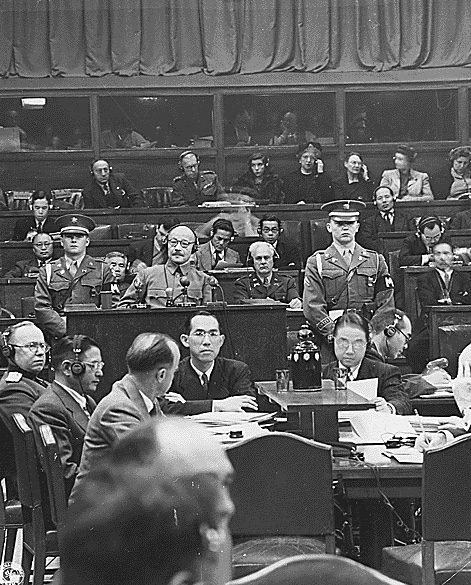
Tojo recovered under American medical care and was formally indicted on April 29, 1946, one of 28 wartime Japanese political and military leaders charged before the International Military Tribunal for the Far East, a court seated with judges from eleven Allied nations that heard the case from May 1946 into November 1948, two and a half years of testimony and argument. Along with the broader conspiracy charge, Tojo was convicted on the specific counts covering the waging of aggressive war against China, the United States, the British Commonwealth, and the Netherlands, spanning the full geographic range of the war he had presided over as Prime Minister, Army Minister, and briefly as the army's own chief of staff.
He was one of seven defendants sentenced to death. Tojo was hanged at Sugamo Prison on December 23, 1948, with members of the Allied Council present as witnesses, according to the National WWII Museum's account of the Tokyo war crimes trial. The man who had once held four government titles at once died holding none of them, three and a half years after the strategic loss of a single island had already ended his hold on power, in the same Pacific theater where the Marines his cabinet fought for years relied on an unbreakable radio code to coordinate the island landings that eventually brought his government down.