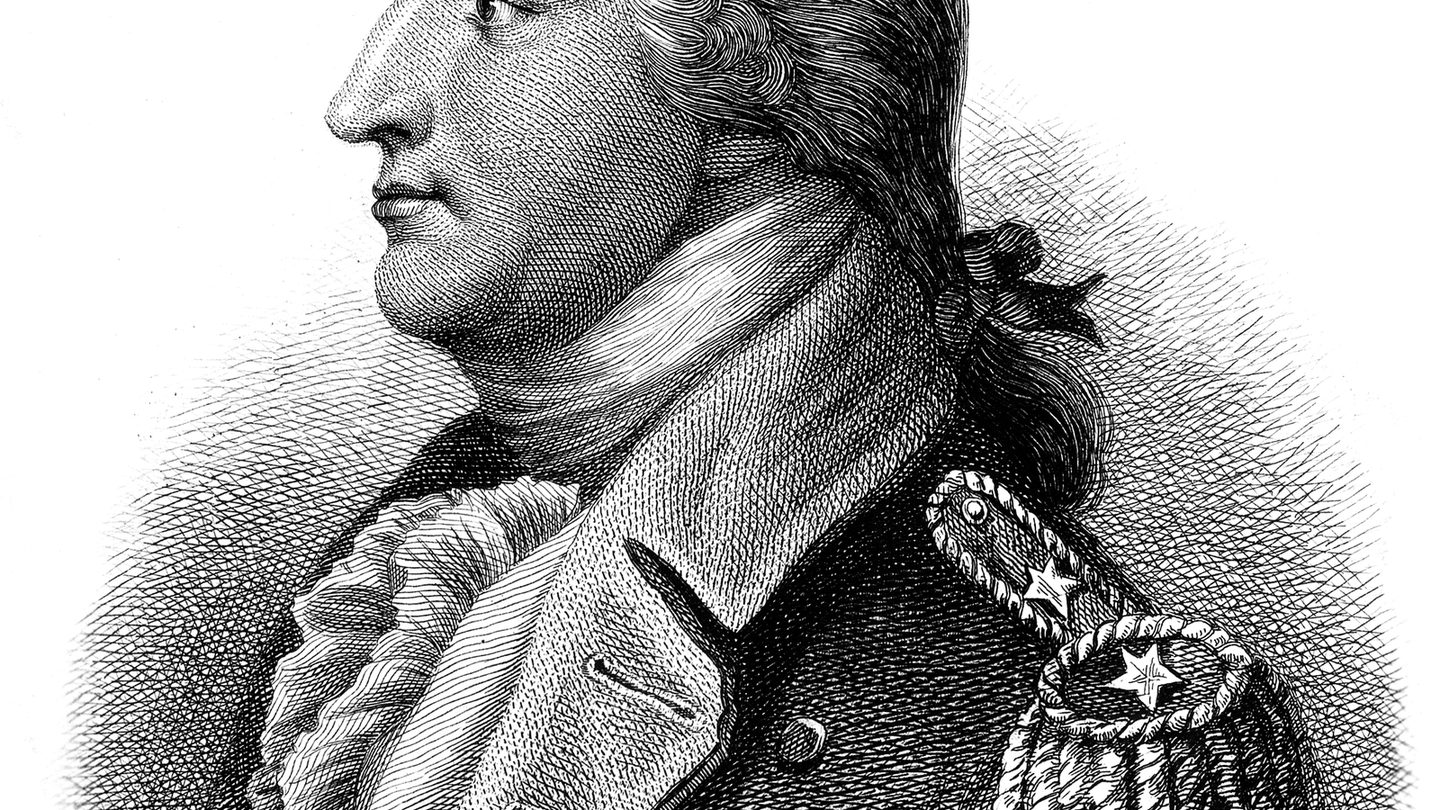

A Cipher With a Price for Failure Built In
The secret correspondence that ended with West Point on the table did not begin with a demand. In early May 1779, Arnold, then serving as military commander of Philadelphia, sent for Joseph Stansbury, a Loyalist merchant who had managed to stay in the city, and told him he was ready to offer his services to the British, either by defecting outright or working secretly from inside the American command. Stansbury, working through a second Loyalist go-between, met on May 10, 1779, with Major John André, aide to British commander-in-chief Sir Henry Clinton, who wrote back the same day laying out a cipher system for future letters. Arnold sent his first coded message on May 21, 1779, according to research compiled by the University of Michigan's Clements Library, which holds much of the surviving Arnold-André correspondence, beginning fourteen months of intermittent, enciphered exchange before West Point ever came up as the specific prize.
By July 15, 1780, with Arnold having maneuvered his way into command of West Point itself two weeks earlier, the terms sharpened into numbers. In a letter written in code and later translated, held today at the University of Michigan's Clements Library, Arnold spelled out his price: £20,000 if he delivered the fort and its garrison into British hands, £10,000 if circumstances forced him to flee to the British side without pulling it off. The second figure is the detail most retellings skip past, since the plot did collapse, and Arnold spent the rest of his life discovering that even a written price for failure was no guarantee the other side would pay it. The cipher itself was a book cipher: each number in a message pointed to a page, line, and word in a shared reference text, usually William Blackstone's "Commentaries on the Laws of England," so the code was only as secure as keeping the specific edition secret, the same underlying vulnerability that let a British naval codebreaking unit crack a very different German cable decades later and again change the course of a war.
The Reprimand Arrived After the Betrayal Was Already Underway
Arnold's grievances against the American cause were real by 1779, and biographers have never had to invent them. Three years earlier he had led the charge that broke the German-held redoubt at the Battle of Saratoga, taking a musket ball in the same leg wounded at Quebec in 1775, a wound serious enough that the leg healed two inches shorter. He believed Congress had passed him over for promotion and shortchanged him on reimbursement for wartime expenses he had covered personally. As military governor of Philadelphia after the British evacuation in 1778, he faced a court-martial on charges including misusing government wagons for private profit; the trial opened June 1, 1779, adjourned for a British raid, resumed that December in Morristown, New Jersey, and on January 26, 1780, cleared him of the most serious counts while sustaining two minor ones.
General Washington issued the resulting reprimand on April 6, 1780, writing in general orders, preserved today by the National Archives' Founders Online project, that "a sense of duty and a regard to candor oblige him to declare that he considers his conduct as imprudent and improper." Casual summaries sometimes compress the sequence into "Washington humiliated him, so he turned traitor," but the dates run the other way: Arnold had already been secretly corresponding with André for eleven months by the time Washington's reprimand was issued, and had married Peggy Shippen, a Philadelphia belle from a prominent Loyalist-leaning family, back in April 1779, weeks before he first reached out to Stansbury. Whatever mix of debt, resentment, and his new wife's connections actually drove him, the official reprimand landed on a betrayal already well past a year old, a public rebuke arriving after the private decision, not before it.
The Plot Collapses, and Britain Pays Less Than Promised
Arnold and André met in person near Haverstraw, New York, on September 21, 1780, to finalize the handover. Two days later, on September 23, militiamen John Paulding, David Williams, and Isaac Van Wart stopped André near Tarrytown and found the West Point plans hidden inside his boot; the three reportedly turned down a bribe to let him go and delivered him to American headquarters instead. Arnold learned of the capture on September 25 and fled down the Hudson to the British warship HMS Vulture before he could be arrested, while André was tried and hanged as a spy at Tappan on October 2, 1780.
Because the fort never actually fell, Arnold had not delivered on either version of his own terms, and Clinton treated the payout accordingly. According to figures compiled by American Heritage magazine from British paymaster records, Clinton paid him roughly £6,000 in cash plus £315 in expenses, a little under a third of the £20,000 success price and still short of the £10,000 Arnold had set for failure, alongside a brigadier general's commission and a £360 annual pension. His two sons later received lifetime British Army commissions on half pay, and on March 17, 1782, King George III granted Peggy a personal pension of £500 a year, with £80 a year for each of her children, a settlement that arrived not as the reward for a completed betrayal but as compensation for one that had already gone wrong.

.jpg)
Britain Wrote Him a Command It Could Take Back Without Telling Him
The distrust did not end with the underpayment. When Clinton sent Arnold to raid Virginia and later Connecticut in 1781, his written instructions, drawn from the Clinton and Cornwallis Papers and analyzed in the Journal of the American Revolution, hedged against Arnold three times over: Arnold was ordered not to undertake anything at all "unless they can be effected without the smallest danger" to his fortified base at Portsmouth, and told to consult two subordinate lieutenant colonels, John Graves Simcoe and Thomas Dundas, before any operation of real consequence. More strikingly, each of those two officers carried a secret blank commission empowering him to assume command outright "in case of the death or incapacity of Brigadier General Arnold to execute the duties of the command which is entrusted to his direction."
In practice, the general Britain had just paid to switch sides was given troops, a rank, and a mission, but not the one thing his own side had taken for granted in every other field command of the war: the assumption that if something happened to him, the chain of authority would run through his own choices rather than a contingency plan drawn up in advance and kept from him. Arnold went on to lead the raids on Richmond and New London, Connecticut, competently enough by most accounts, but he never rose above brigadier general in British service and was never trusted with an independent field army the way he had briefly commanded one, without formal authority, at Saratoga.
London Never Fully Took Him In, and He Died in Debt
Arnold settled permanently in London only after the war, unable to secure a regular commission in the British Army or a post with the East India Company despite his rank and his record of combat leadership on both sides of the Atlantic. According to American Heritage's account of his postwar years, when King George III floated the idea of a more substantial role for him, Edmund Burke warned Parliament against elevating "a man perhaps the most obnoxious to the feelings of the Americans," a line that captures how little upside Britain saw in publicly rewarding a defector once the immediate use of his information had passed. He turned instead to trade and land speculation, including six unprofitable years running a shipping business from Saint John, New Brunswick, where mounting debts and lawsuits eventually drove him back to London for good.
His final years brought no rehabilitation. A privateering venture in the Caribbean nearly got him hanged as a spy himself in 1794, when French authorities in Guadeloupe identified him and he escaped only by sliding down a rope to a raft and rowing out to a waiting British ship. He died in London on June 14, 1801, of complications from gout and dropsy, leaving debts substantial enough that Peggy spent years afterward managing the estate through strict economy until her own death from cancer in 1804. The man who had priced his own betrayal in a coded letter down to the pound spent the two decades after it discovering that the market for a used traitor, on either side of the Atlantic, was thinner than he had bargained for.