
The Bloodiest Day Rome Ever Recorded
His father, Hamilcar, had spent the previous decade rebuilding Carthaginian power from a new base in Spain, after first saving Carthage itself from a mutinous army of its own unpaid mercenaries. On August 2, 216 BCE, near the small town of Cannae in southeastern Italy, Hannibal's Carthaginian army encircled and annihilated a Roman force that heavily outnumbered it. Ancient sources, chiefly Livy and Polybius, and the modern historians who have worked from them put the Roman army at somewhere around 80,000 infantry and cavalry combined, arranged in unusually deep ranks by the consul Gaius Terentius Varro in hopes of overpowering the Carthaginian center through sheer mass. Hannibal, commanding a smaller mixed force of Libyan, Iberian, Gallic, and Numidian troops, let his own center bow inward under the Roman advance while his stronger flanks and cavalry swung around the exposed Roman sides, closing a ring around the entire army before it could break off the fight.
What followed is generally regarded as one of the most complete tactical annihilations in the history of warfare. Ancient and modern estimates of Roman dead range from roughly 50,000 to 70,000 men killed in a single day, against Carthaginian losses ancient tallies put at somewhere between 6,000 and 8,000. Rome had, in effect, lost an entire field army and most of a generation of its eligible fighting-age citizens in an afternoon, a scale of single-day loss that later Western military history rarely approached again.
Five Days to Rome, According to Maharbal
According to Livy's account in Book 22 of his *History of Rome*, in the hours after the battle, Hannibal's cavalry commander Maharbal pressed him to strike immediately at Rome itself, while the city had no army left to defend it and word of the disaster had not yet had time to organize a response. Maharbal reportedly promised Hannibal that, marching hard, the Carthaginian cavalry could be encamped at the city's gates within five days. Hannibal, according to Livy, hesitated, said he needed time to consider it, and ultimately declined. Maharbal's reported response became one of the most quoted lines to come out of the entire Second Punic War: "Vincere scis, Hannibal; victoria uti nescis," rendered in English as "you know how to gain a victory, Hannibal; you know not how to use one."
For most of the two thousand years since, that exchange has been read as the hinge point of the war: the single moment a Carthaginian army came closest to ending Rome outright, and the moment Hannibal's caution, rather than Roman strength, threw the chance away.
A Line Historians Increasingly Doubt Livy Recorded Accurately
Modern classical scholarship has grown considerably more skeptical of the episode's accuracy. In a 2000 paper in the journal Classical Quarterly, titled "Maharbal's Bon Mot: Authenticity and Survival," classicist B. Dexter Hoyos laid out two core objections: there is reason to doubt Maharbal was even present at the exact exchange Livy describes, and Cannae's distance from Rome, roughly 250 miles by the routes available to an ancient army, makes a five-day cavalry dash to the city's gates a considerably harder logistical claim than the line implies. Hoyos treats the whole vignette as characteristic of a recognizable pattern in Roman historiography: a dramatic, quotable moment of might-have-been catastrophe, constructed after the fact to heighten the stakes of Rome's eventual survival, not a verbatim record of what was actually said on the battlefield.
That reading does not mean historians dismiss the underlying strategic question. Even scholars skeptical of the Maharbal anecdote's literal accuracy generally agree the broader question it dramatizes, whether Hannibal had a real opportunity to end the war at Rome's gates in 216 BCE, is a genuine and still-debated one. What Hoyos's argument challenges is the idea that a specific cavalry officer said a specific, quotable sentence to Hannibal on the afternoon of the battle, not the deeper strategic dilemma the story stands in for.
The Army That Would Have Had to Make the March
Separately from the authenticity question, historian John F. Shean's 1996 study in the journal Historia, "Hannibal's Mules: The Logistical Limitations of Hannibal's Army and the Battle of Cannae, 216 B.C.," examined what a march on Rome would actually have required from the army Hannibal had left. Cannae had cost Hannibal roughly 6,000 to 8,000 dead outright, and battlefield wounds are generally understood to have left a further several thousand unfit to march quickly, leaving Shean and other historians to put Hannibal's combat-ready strength immediately after the battle at closer to 25,000 men, not the force that had started the campaign. That army was carrying no siege train, having crossed the Alps and campaigned across Italy without the heavy equipment a walled, defended city the size of Rome would have required to take by force, the same kind of cart-mounted siege engines Rome would later standardize one per century of every legion.
Shean's broader argument is that Hannibal's decisions throughout the Italian campaign, not just at Cannae, were repeatedly shaped by what his army could actually feed itself on foreign soil rather than by strategic timidity. A 250-mile march through hostile or uncommitted territory, without a secured supply line and without the equipment to force Rome's walls even after arriving exhausted, is, in this reading, less a lost opportunity than a march that could plausibly have destroyed the very army that had just won Rome's worst single-day defeat.
The Elephants, and What Was Actually Left of Them
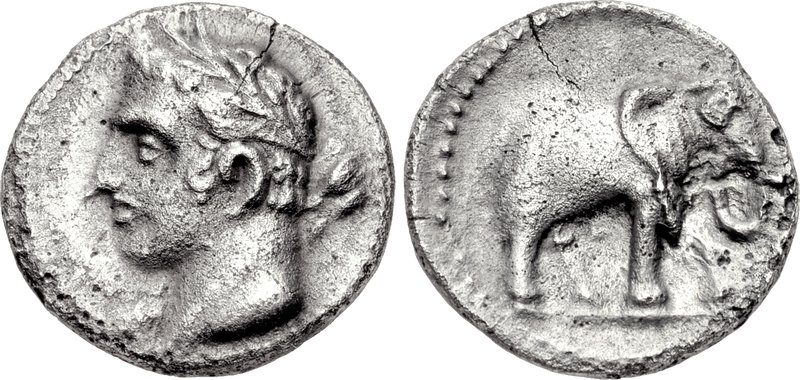
Hannibal is popularly remembered as the general who crossed the Alps with a corps of war elephants, but by the time of Cannae, two years and roughly 1,200 miles of campaigning after the crossing, that image no longer matched his army. Of the 37 elephants that made the Alpine crossing into Italy in 218 BCE, historians researching the animals' fate generally agree that around 30 survived the mountains themselves; it was the harsh Italian winter that followed, not the Alps, that killed most of them over the following months. By the time Hannibal's army neared Rome's own territory, only one elephant, an Asian animal named Surus that Hannibal reportedly rode himself, is recorded as still alive, and it does not appear in accounts of Cannae at all. The elephants that made Hannibal's crossing famous were functionally gone from his army roughly a year and a half before his most famous battlefield victory.

The Strategy He Chose, and Why It Failed
Hannibal did not march on Rome. He instead pursued a strategy of isolating the city by detaching its Italian allies, betting that a decisive enough battlefield defeat would convince Rome's confederacy of allied and subject cities to abandon it rather than keep supplying men and material for a losing war. The wealthy city of Capua defected to Hannibal within weeks of Cannae, the single biggest strategic gain the approach produced. But most of Rome's central Italian allies did not follow Capua's lead, and Rome itself refused to negotiate even after losing an entire field army, instead adopting the cautious, battle-avoiding strategy associated with the dictator Quintus Fabius Maximus, a pattern of tactical brilliance failing to convert into strategic victory not unlike a Scottish commander who broke an English army at a river crossing only to be routed by longbowmen less than a year later and never again hold field command. Hannibal spent the following decade campaigning in Italy without another victory on Cannae's scale, was recalled to defend Carthage itself in 203 BCE, and lost the war outright at the Battle of Zama in 202 BCE against the Roman general Publius Cornelius Scipio.
The gap between Hannibal's battlefield reputation and Rome's actual assessment of him did not close after his defeat. He spent his final years in exile advising foreign kings against Rome, and Roman writers built his memory into something closer to legend than history, much the way a twentieth-century German general's reputation for battlefield genius was amplified largely by the side that kept losing to him, rather than by his own government's telling of events.
A Name Rome Used to Frighten Its Own Children
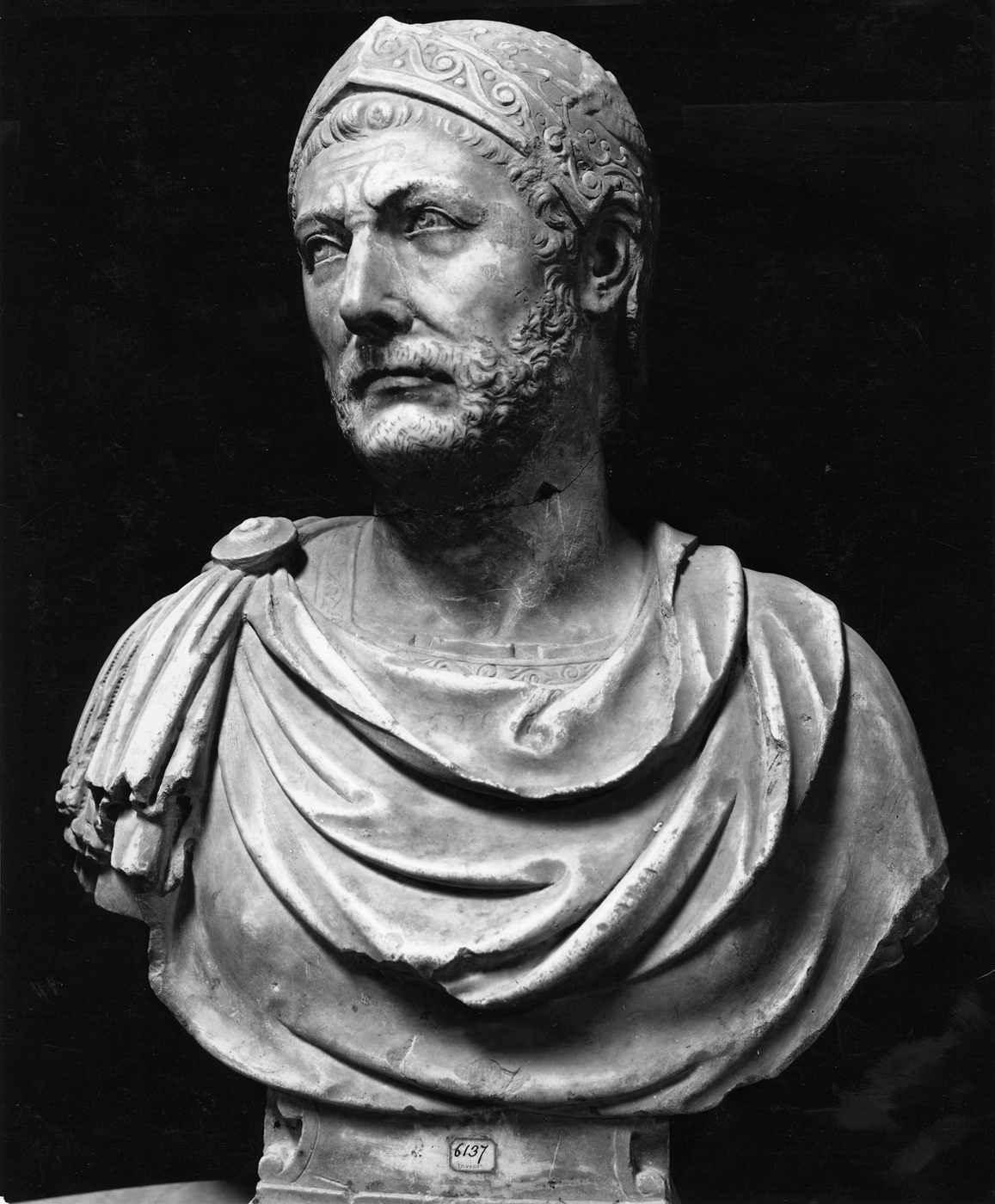
Hannibal's memory outlived his career by centuries. The Roman orator Cicero, writing more than a hundred years after Cannae in his First Philippic, used the phrase "Hannibal ad portas," Hannibal at the gates, as a byword for national emergency, and the phrase went on to become a stock warning Roman parents reportedly invoked to frighten unruly children into behaving, a kind of ancient bogeyman reference that persisted long after Carthage itself had ceased to exist as a threat to Rome. Even the best-known surviving image traditionally identified as Hannibal, a marble bust discovered at Capua in 1667 and now held in Rome's Quirinal Palace, carries its own authenticity dispute: the same B. Dexter Hoyos who questioned the Maharbal anecdote has argued the bust more likely dates to the Renaissance than to antiquity, since no inscription or excavation record ever confirmed the identification.
Hannibal did not outlive Rome's determination to see him dead. After Zama, he went into exile, eventually reaching the court of King Prusias of Bithynia. Around 183 BCE, with Rome demanding through the envoy Titus Quinctius Flamininus that Prusias hand him over, Hannibal chose poison over capture, dying at his fortress at Libyssa. He was in his sixties, roughly four decades removed from the five days to Rome he had chosen not to take.