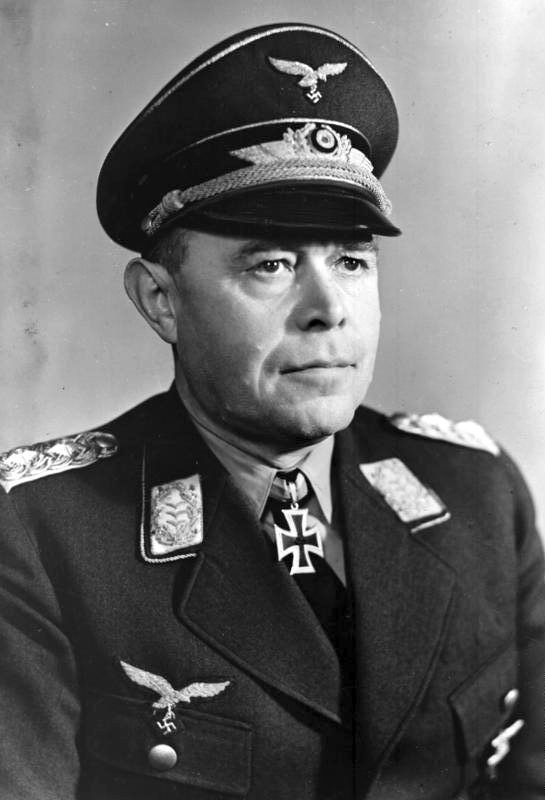

An Enemy His Opponents Called Clean
Albert Kesselring spent the Second World War rising through commands few German officers held twice: Luftwaffe chief during the Battle of Britain, air and logistics coordinator over the Mediterranean, and by late 1943 the general responsible for keeping the Allies out of most of Italy. He did that last job well enough that Field Marshal Harold Alexander, the British commander who spent nearly two years trying to dislodge him, wrote in his own 1961 memoirs that Kesselring "showed great skill in extricating himself from the desperate situations into which his faulty intelligence had led him." Winston Churchill, in the final volume of his history of the war, called him simply "a good general, with a competent staff."
That reputation survived a real disagreement with a more famous colleague. After Mussolini's ouster in July 1943 raised the prospect of an Italian surrender, Adolf Hitler, acting on advice from Erwin Rommel and the German high command, decided the peninsula could not be held without Italian help and ordered Kesselring to withdraw his forces north to consolidate under Rommel's command in the Po Valley; Kesselring himself was slated for a posting to Norway. He submitted his resignation in protest on August 14, 1943, and stayed in Italy only because SS-Obergruppenführer Karl Wolff intervened with Hitler on his behalf, arguing Kesselring's presence in the south was needed to head off an early Italian defection. Italy surrendered on September 8, and by November, Kesselring's more optimistic read of the campaign, that his forces could hold the Allies south of Rome on the Gustav Line and keep them out of the Northern Apennines for at least six months, had won out. Rommel and his Army Group B headquarters were sent to France to prepare the Atlantic Wall instead, and Kesselring took full command in Italy. Hitler later admitted the bet had paid off: at an August 1944 conference, he told his staff that "events have proved Rommel wrong, and I have been justified in my decision to leave Field Marshal Kesselring there."
Thirty-Three Dead, and a Ratio Set That Night
That reputation for competence collided with something else on March 23, 1944, when twelve partisans from the Communist-aligned Gruppo d'Azione Patriottica detonated a bomb hidden inside a rubbish cart on Rome's Via Rasella, timed to catch a marching column of the SS Police Regiment Bozen. The blast and the gunfire that followed killed 28 of the German policemen immediately; the toll climbed to 32 by the next morning and reached 33 within days as more died of their wounds. All twelve partisans escaped into the crowd.
Herbert Kappler, the SS officer in charge of Rome's security police, met that evening with the city's German military commandant, Kurt Mälzer, who wanted reprisals carried out. The two settled on executing ten Italians for every policeman killed, a ratio Mälzer forwarded to General Eberhard von Mackensen, commander of the Fourteenth Army and the officer responsible for Rome. Mackensen endorsed it, the recommendation reached Hitler's high command that same night, and Hitler authorized the reprisal before morning on condition it happen within 24 hours. Kesselring, as Commander-in-Chief South, treated Hitler's order as binding and understood it to call for executing Italians already condemned to death. Kappler told him there were enough.
Short by Nearly Two Hundred, Then Five Too Many
There were not. Kappler's prison at the German Embassy on Via Tasso held only four men under sentence of death, plus 17 more serving long terms and 167 he judged "worthy of death" without a formal sentence behind the label. His superior, Wilhelm Harster, suggested filling the gap with 57 Jewish prisoners already in German custody. Rome's Fascist police chief, Pietro Caruso, added names pulled from Regina Coeli prison, among them Maurizio Giglio, one of Caruso's lieutenants until he was unmasked as a double agent for American intelligence. By noon on March 24, Kappler had a list of 271 names, each with a stated crime beside it except the Jewish prisoners, who were marked only "Jew."
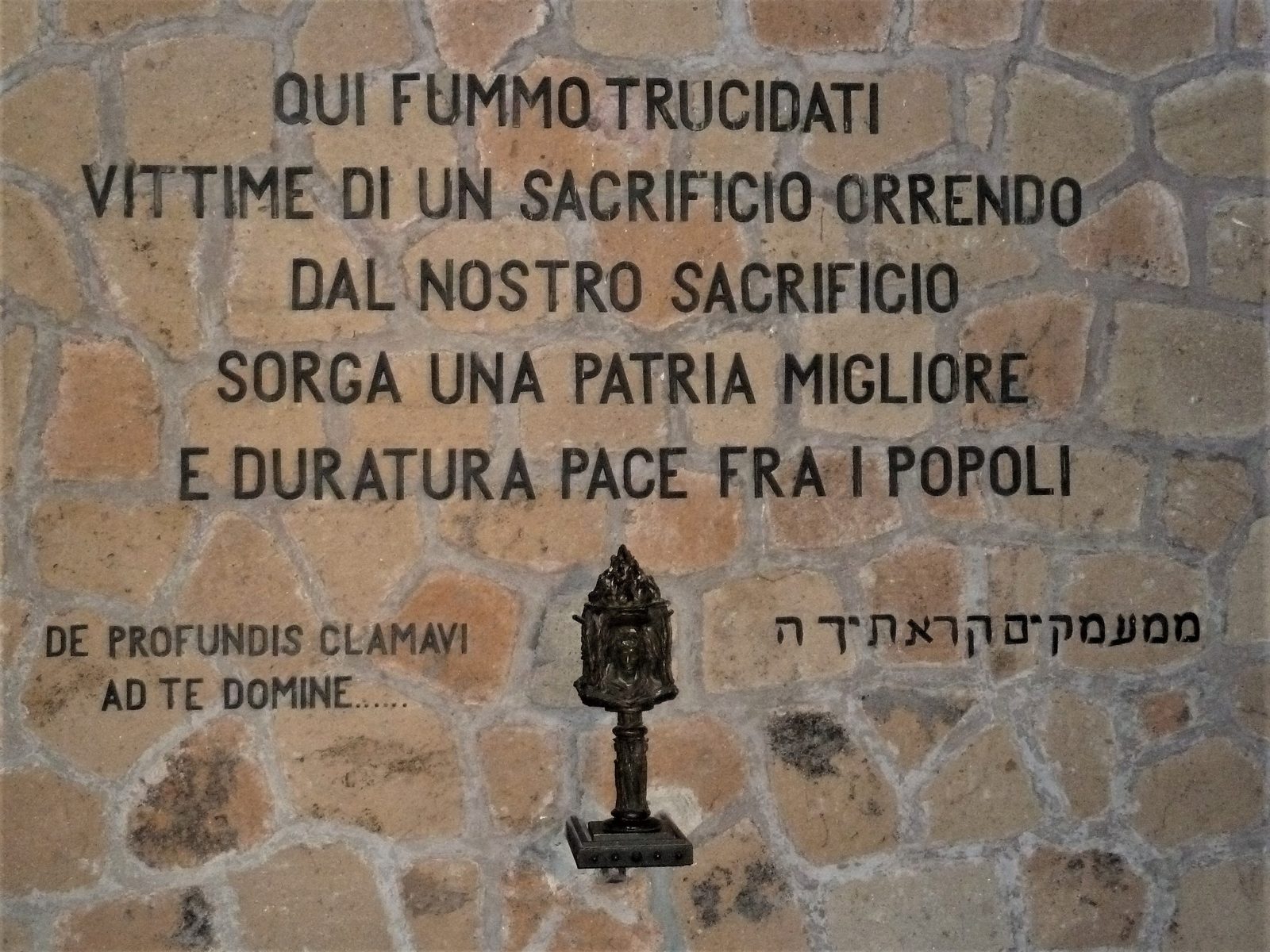
The list still came up short, and then wrong in the other direction: when trucks delivered the prisoners to a set of disused quarry tunnels off the Via Ardeatina, they held 335 men, five more than the math of 33 times ten required. The surplus was discovered only after the killing had begun, and officers decided to shoot the five extra prisoners anyway rather than let the location of the execution site become known. Twenty-six of the dead were Jewish Romans betrayed to German police by an informer, Celeste Di Porto. Because most of the killing squad had never shot anyone before, Kappler had cases of cognac brought to the caves to steady their nerves; the policemen of the Bozen regiment, offered the chance to avenge their own dead by carrying out the executions themselves, turned it down.

A Death Sentence, Then a Quiet Reprieve
Kesselring stood trial before a British military court in Venice starting February 17, 1947, on two charges: the shooting of the 335 Italians at the Ardeatine caves, and a broader charge of ordering troops under his command to kill civilians in reprisals throughout the Italian campaign. He did not deny giving the order. His defense, given under oath, was that executing ten Italian civilians for every German soldier killed by partisans had been "just and lawful." The court disagreed on May 6, 1947, convicting him on both charges and sentencing him to death by firing squad, a method it considered more honorable than hanging.
The sentence did not last. Italy's incoming constitution was due to abolish the death penalty in January 1948, and the Italian government, despite having pushed for these trials in the first place, refused to carry out any of the executions still pending. Lieutenant General John Harding, who had succeeded Alexander as the senior British commander in the Mediterranean, commuted the death sentences of Kesselring, Mackensen, and Mälzer to life imprisonment on July 4, 1947. Mälzer died in prison in February 1952. Kesselring was released that October, after doctors diagnosed a cancerous growth in his throat, and Mackensen was freed the same month. On the other side of the war, Marshal Georgy Zhukov faced a postwar reckoning of his own, a Bonapartism charge that failed in 1946 and succeeded in 1957.
The Committee That Wanted Him Free
Kesselring's death sentence had already provoked an outcry in Britain before Harding commuted it. Alexander cabled Prime Minister Clement Attlee to say, "As his old opponent on the battlefield, I have no complaints against him. Kesselring and his soldiers fought against us hard but clean." General Oliver Leese, who had commanded the Eighth Army against Kesselring in Italy, told an interviewer in May 1947 that he was "very sad" to see "British victor's justice" imposed on "an extremely gallant soldier who had fought his battles fairly and squarely."
Once Kesselring reached Werl Prison in Westphalia, an organized British campaign for his release formed around Lord Hankey and came to include politicians Lord de L'Isle and Richard Stokes, Admiral of the Fleet the Earl of Cork and Orrery, Alexander himself, and two military historians, J. F. C. Fuller and Basil Liddell Hart. Liddell Hart's involvement was not an isolated favor; around the same years, he was performing a comparable service in print for another German field marshal, drafting the passage crediting himself with shaping German tank doctrine that appeared, nearly word for word, in the 1952 English translation of Heinz Guderian's memoir. When Winston Churchill returned as prime minister in 1951, he was, by contemporary accounts, closely tied to Hankey's group and made releasing the German officers still in British custody a priority.
Kesselring did not stay quiet after his release. He told reporters he had saved millions of Italian lives by disobeying orders and that Italy ought to build him a monument. The remark reached an Italian public already angry about his release, and it drew a written answer from Piero Calamandrei, a jurist and former resistance leader, whose poem "Lapide ad ignominia" replied that if Kesselring ever returned, he would find a monument after all, built not of stone but of the resistance fighters he had fought. Calamandrei's poem is inscribed today on monuments in three Italian towns, including Sant'Anna di Stazzema, the site of a separate 1944 massacre of civilians.
A Verdict Historians Widened
Kesselring's trial charged him with a single day's massacre and a general reprisal policy. It never charged him over an earlier episode that, set beside it, looks harder to treat as separate. By September 24, 1943, Kappler had learned Berlin wanted Rome's Jewish population rounded up and deported. Kappler himself proposed a way out to German diplomat Eitel Möllhausen: use the Jews as forced labor on the city's fortifications instead, a solution he had already applied to Jews in Tunisia, and the two men took the idea to Kesselring within the hour. Kesselring, according to Möllhausen's own postwar account, said he could not spare a single soldier for the roundup and approved using Jewish prisoners as the labor force instead. Berlin overruled the diversion by October 9. By October 16, 1,259 Jews had been rounded up in Rome; 1,007 were deported to Auschwitz, all but 196 of them gassed on arrival, and only 15 survived the war. Kesselring did not intervene again.
Historian Andrew Sangster, in a 2015 study framed around the question of whether Kesselring was a great commander or a war criminal, writes that Kesselring never took an active part in the Holocaust but "must have known of these crimes," and concludes his guilt lay "in his unquestioning support of Hitler who had made the Holocaust a priority." Kerstin von Lingen's 2009 study of the trial and its aftermath goes further, tracing how the campaign to rehabilitate Kesselring's reputation, built partly on genuine wartime respect between old enemies, became entangled with Cold War pressure to rearm West Germany and hand its returning officers a usable past. The number the court convicted him over was an accident of arithmetic, five bodies more than the ratio required. What historians have added since is not a bigger number so much as a wider picture of what that number left out.