
A Reservation Break, and a War That Wouldn't End
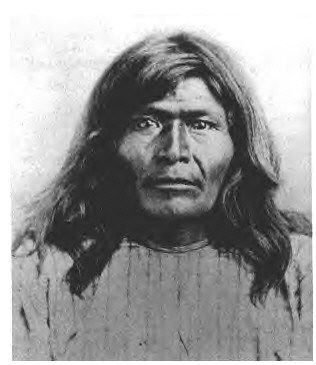
Victorio led the Chihenne, or Warm Springs, band of Chiricahua Apache from a reservation at Ojo Caliente, New Mexico, land his people considered a permanent home. In 1879 the United States ordered the Chihenne moved to the San Carlos Apache Indian Reservation in Arizona, a transfer Apache accounts describe as overcrowded, short on grazing land and game, and poorly managed by corrupt agents. On August 21, 1879, Victorio, 80 warriors, and their families slipped away from the reservation and refused the transfer. Other bands joined him over the following months, mostly Mescalero Apache, and his combined force grew to as many as 200 warriors at its peak, an unusually large number for a single Apache leader to hold together.
For fourteen months Victorio fought a running war across southern New Mexico, western Texas, and northern Mexico, winning most of the individual engagements against thousands of pursuing American and Mexican soldiers and Indian scouts. A rare defeat came not from the army but from other Apaches: in May 1880, scouts working for the United States beat his band at the Palomas River near Chloride, New Mexico. Victorio pulled back into Mexico, gathered a large herd of stolen livestock, and headed for west Texas that July, hoping to trade the animals to the Mescalero Reservation for ammunition.
That plan ran into Colonel Benjamin Grierson, commander of the 10th Cavalry's Black soldiers, later known as Buffalo Soldiers. Grierson broke with his predecessors' habit of chasing Victorio across open desert; instead, he guarded the springs, river crossings, and mountain passes Victorio needed to reach New Mexico, and coordinated with Mexican troops who had crossed into Texas for the same hunt. Grierson never beat Victorio in a direct fight, but he cut him off from resupply. By mid-August 1880, retreating into Mexico again, Victorio's force was shrinking through desertion, and he was running low on the one resource a guerrilla campaign cannot do without: ammunition.
A Colonel Who Wanted No Company
Victorio broke his own habit of retreating to mountain strongholds and chose to rest at Tres Castillos, "Three Castles," a remote plain in Chihuahua marked by three low rock hills and a small seasonal lake. He told his followers the choice was deliberate: his enemies would search the mountains, not the open desert. He sent his lieutenant, Nana, out with a raiding party to find ammunition and settled the rest of his diminished band at the oasis in early October 1880.
Mexican forces were also converging. Colonel Joaquin Terrazas, commander of Mexican forces in Chihuahua, assembled roughly 350 men at Tres Patos Lake, about 120 miles northwest of Tres Castillos, in late September. When his scouts turned up Victorio's trail, Terrazas thinned his force to 260, dismissing 90 men he judged unfit for the pursuit and turning down an offer of help from 13 Texas Rangers under George W. Baylor who had crossed the border. Ten companies of the U.S. 10th Cavalry that had entered Mexico around the same time got the same answer once Terrazas located his target: go home. He wanted the credit, and the bounty payments the Mexican government offered for Apache scalps, kept inside his command.
Terrazas found him only because a scout in his ranks read the signs on October 8 and pointed the way, still 43 miles off. Local knowledge would prove decisive again eighteen years later, when deserters gave a French captain the location that ended Samori Ture's sixteen-year resistance to French expansion in West Africa. Terrazas reached Tres Castillos on October 13 and began circling the hills the following day.
The Battle, and the Sister Who Wasn't There
Victorio's people spotted Terrazas's advance while he was still roughly 1,100 yards off and sent thirty warriors to slow him down. They killed a Tarahumara scout before falling back into the rocks as the size of the approaching force became clear. Terrazas and his second in command, Juan Mata Ortiz, seized the Apache horse herd and pinned the band onto the southernmost of the three hills. Overnight, some Apaches who had not been trapped lit a decoy fire to draw the Mexicans away; a thirty-man patrol investigated, skirmished briefly, and let them escape into the dark.
Inside the encirclement, Victorio's people built rock defenses and fought through the night into the morning of October 15, the last two warriors holding a cave for two hours before they were killed around 10 a.m. A single spent cartridge was later found in that cave, a sign of how little ammunition remained. Terrazas reported 62 warriors killed, some of them boys, along with 16 women and children; he took 68 more women and children prisoner, later sold into slavery in Mexico. Only three of his own men died. Historian Dan L. Thrapp called Tres Castillos "a massacre, rather than a battle," given how outgunned Victorio's people were by the end. Mass killings meant to erase a rival claim outright were not unique to the Apache wars: three centuries earlier, Hideyoshi had 39 members of his own heir's household executed once a newborn son gave him a different plan for the succession.
Victorio himself died somewhere in that fighting, and how remains disputed. Some Apache accounts hold that he stabbed himself rather than be taken alive. Other accounts credit a Tarahumara sharpshooter serving with Terrazas, Mauricio Corredor, with the kill. Historian Kathleen Chamberlain, whose 2007 biography of Victorio is considered the standard modern account, writes that Terrazas's men were never fully certain which of the dead was Victorio. Pirate history has its own version of an ending nobody can pin down: chroniclers still disagree among themselves over the pirate Edward Low's actual fate.
One person who might have changed the outcome was many miles away by then. Victorio's sister, Lozen, a warrior the Apache regarded as having the power to sense an enemy's direction, had left the band days earlier to escort a young pregnant woman who wanted to reach the Mescalero Reservation. Lozen hid her charge in a wash as an army patrol passed nearby, stood guard through a birth given in silence, and then walked mother and newborn toward Mescalero on a three-day supply of food. She was still traveling when Tres Castillos fell. Some Apache who survived the battle believed that had Lozen been present, Terrazas would never have found the camp undetected in the first place.

A Parade in Chihuahua, and a Debt Collected Twice
Chihuahua City celebrated. Terrazas, Mata Ortiz, and Corredor were feted with a parade that put the captives and the scalps of Victorio and his followers on public display. The children captured that day lost their mothers immediately, parceled out as servants to leading families in Chihuahua City. Officers choosing to override objections grounded in the laws of war were not confined to nineteenth-century Mexico: eight decades later, German field marshal Wilhelm Keitel personally wrote the reply overruling Canaris's objection to an order he knew broke international law.
The Apaches who had been away from camp did not let it go. Nana, who had left days earlier on a raid with 17 men, returned to find his people slaughtered and quickly led an ambush that killed nine Mexican soldiers. It would not be the last time a single contested killing pulled a colonial power into a longer reckoning than it expected: roughly two centuries earlier, the execution of a Wampanoag interpreter on testimony that broke Plymouth's own two-witness rule for capital cases had set off the opening raids of King Philip's War within sixteen days of the hangings. Nana led the Tres Castillos survivors into the Sierra Madre and, in 1881, carried out a long raid back across the border into the United States that killed dozens more before he too eventually surrendered.
The men who won at Tres Castillos did not all outlive their victory comfortably. Mata Ortiz, Terrazas's second in command, was killed in an ambush by the Apache leader Juh two years later, in November 1882. Terrazas himself died in bed in 1901, and Chihuahua City raised a monument to him and the battle in 1910. Corredor did not enjoy his role as Victorio's killer for long. In January 1886, not quite six years after Tres Castillos, he was among a Mexican militia unit that opened fire on a party of American soldiers deep in Sonora, an incident remembered as the Crawford affair. The Americans, led by an officer named Emmet Crawford and traveling with close to 100 Apache scouts, were pursuing Geronimo when the Mexican militia, believing they had found a rival scouting party, opened fire without warning. Crawford climbed atop a rock waving a white handkerchief and shouting that they were American soldiers; a bullet found him anyway, and he died of the wound eight days later. Four of the Mexican militiamen were killed and five wounded in the return volley from the furious Apache scouts. Whether Corredor himself lived through that exchange is another point where the record splits: some accounts count him among the wounded, others say the man who killed Victorio died the same way, at the end of an Apache rifle.