
Three Orders, Not Two
Most pages that take up the Teutonic Knights vs Templars question stop at two orders. The Templars and the Teutonic Knights were certainly the two that loomed largest in western Europe, but they were two of three large military orders founded during the crusades, and the third was both the oldest of them and the one with the longest continuous history.
| Knights Templar | Knights Hospitaller | Teutonic Order | |
|---|---|---|---|
| recognized | Council of Troyes, 1128 or 1129 | Papal bull Pie postulatio voluntatis, 15 February 1113 | Hospital founded at Acre in 1190; papal recognition in 1192 |
| Started as | A band of knights led by Hugues de Payens | A pilgrim hospital run by merchants from Amalfi | A field hospital for German crusaders |
| Main theatre | The crusader states of the Levant | The Levant, then Rhodes (1310 to 1522), then Malta (1530 to 1798) | The Baltic: Prussia, Livonia and the Polish and Lithuanian frontier |
| Power base | Banking and estates across Europe, with no territory of its own | Landed estates, and later two island states | A territorial state ruled by its own grand master |
| Ended | Dissolved by papal decree on 22 March 1312; last grand master burned in 1314 | Never dissolved; expelled from Malta in 1798 | Lost Prussia in 1525; last German holdings dissolved in 1809 |
| Today | Does not exist | Sovereign Military Order of Malta, based in Rome | Deutscher Orden, a Catholic religious order based in Vienna |
The last two rows are where the familiar story goes wrong. All three orders lost their original purpose, and two of them lost their lands outright. Only one of the three was ever abolished as an institution, and it was the one that never held territory of its own.
The Two That Began as Hospitals
Two of the three orders started in a hospital, and that shape survives in their formal names. The Hospitallers take theirs from a hospital named for St John the Baptist in Jerusalem, which merchants from the maritime republic of Amalfi built under a license from the Caliph of Egypt so that pilgrims arriving from the sea had somewhere to be cared for. The order itself dates its community to roughly the second half of the eleventh century and treats 15 February 1113 as the date it became an institution, when Pope Paschal II recognized it in the bull Pie postulatio voluntatis, which its own account says placed the order "under the protection of the Church" and granted it "the right to freely elect its superiors, without interference from other lay or religious authorities." Its first master was Blessed Gerard, and its second, Raymond du Puy, wrote the rule somewhere between 1145 and 1153.
The Teutonic Order followed the same route a lifetime later and further north. Merchants from Lübeck and Bremen set up a field hospital during the siege of Acre, which ran from 1189 to 1191, and Pope Celestine III recognized the community in 1192 by granting it the Augustinian rule. Six years after that it became a military order. The order's own German-language history puts its founding at "1190 in Acre, first as a hospital brotherhood and, from 1198, also as a knightly community to protect pilgrims in the Holy Land," and ranks itself as the third of the great crusading orders. Moving from nursing to fighting took the Hospitallers decades longer, since it only hired knights in the 1120s and 1130s.
The Templars were the odd ones out. They were never a hospital. They began as a group of knights and their military purpose was there from the start, which is part of why they fit so neatly into later legends. Papal investigators had cleared the Knights Templar of heresy back in 1308, four years before the order was dissolved, and the record of that absolution sat misfiled in the Vatican archives until 2001.
Was the Teutonic Order Created by the Templars?
No, and the confusion is easy to see where it comes from. The Teutonic Order was founded at Acre in 1190 by German merchants and crusaders as a hospital, recognized in 1192 under the Augustinian rule, and converted into a military order only in 1198. It adopted the Templars' model at that point, which is a statement about borrowing a template, not about parentage. The two orders were separate bodies with separate masters, separate lands and separate accounts.
The borrowing was substantial all the same. The Teutonic Knights took the shape of their rule from the Templars, and their black cross on a white mantle is a deliberate echo of the Templars' red cross on the same white ground. Its own account says so directly: "Following the model of the Templars, the white mantle was adopted; the red cross was replaced by the black one." Both orders were also, in the same period, fighting in the same war for the same reasons, which is why medieval chroniclers and modern readers alike tend to run them together.
A third order is the one usually left out of that sentence. The Varangian Guard is the exception that shows how differently these bodies could be built: it was a bodyguard of foreign troops who served the Byzantine emperors and never became a religious order at all.
Why Only One of the Three Was Dissolved
The Templars fell to a king who owed them money. On Friday 13 October 1307, Philip IV of France had the order's grand master, Jacques de Molay, arrested in a single morning along with dozens of other French Templars, and confessions were taken under torture. Pope Clement V came under pressure and issued the bull Pastoralis praeeminentiae on 22 November 1307, instructing monarchs across Europe to arrest the order's members and seize its property. When the general council opened at Vienne on 16 October 1311, most of those present wanted the order kept; Clement settled on abolishing it by decree rather than by convicting it of anything.
That decree was Vox in excelso, issued on 22 March 1312. The 1913 Catholic Encyclopedia describes what Clement settled on as a compromise: he "decreed the dissolution, not the condemnation of the order, and not by penal sentence, but by an Apostolic Decree." The stated grounds were the scandal the confessions had caused. The bull itself, in the English rendering carried on the document's Wikipedia article (checked 16 October 2026), reads the way a legal document reads when its author knows the case is thin: it abolishes "the aforesaid Order of the Temple, and its constitution, habit and name, by an irrevocable and perpetually valid decree," and does so "not without bitterness and sadness of heart." A companion bull, Ad providam, handed most of the Templars' property to the Hospitallers, who had spent the previous two decades as their rivals rather than their allies. In Portugal and Aragon the assets went instead to two new orders, the Order of Christ and the Order of Montesa. Jacques de Molay was burned at the stake in Paris in 1314.
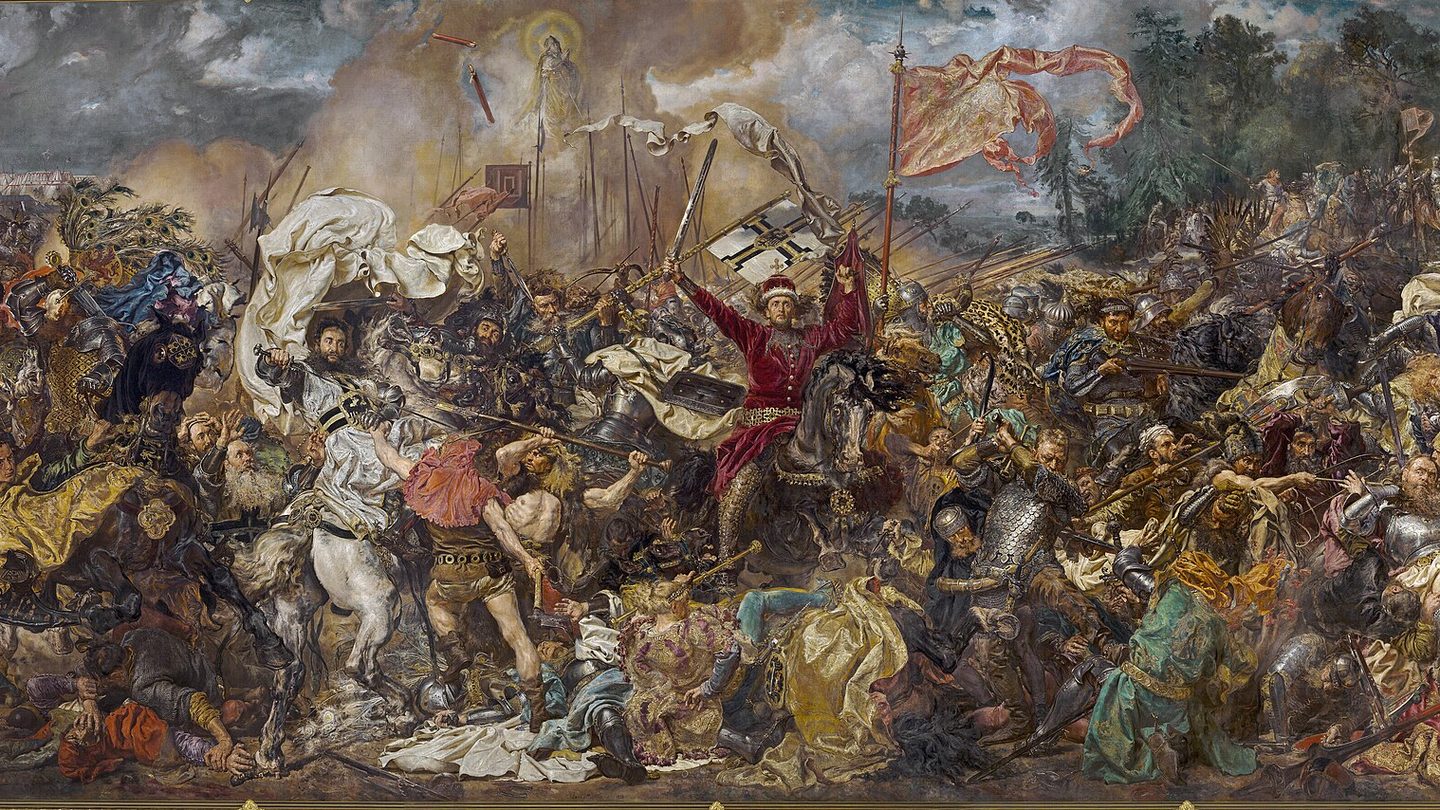
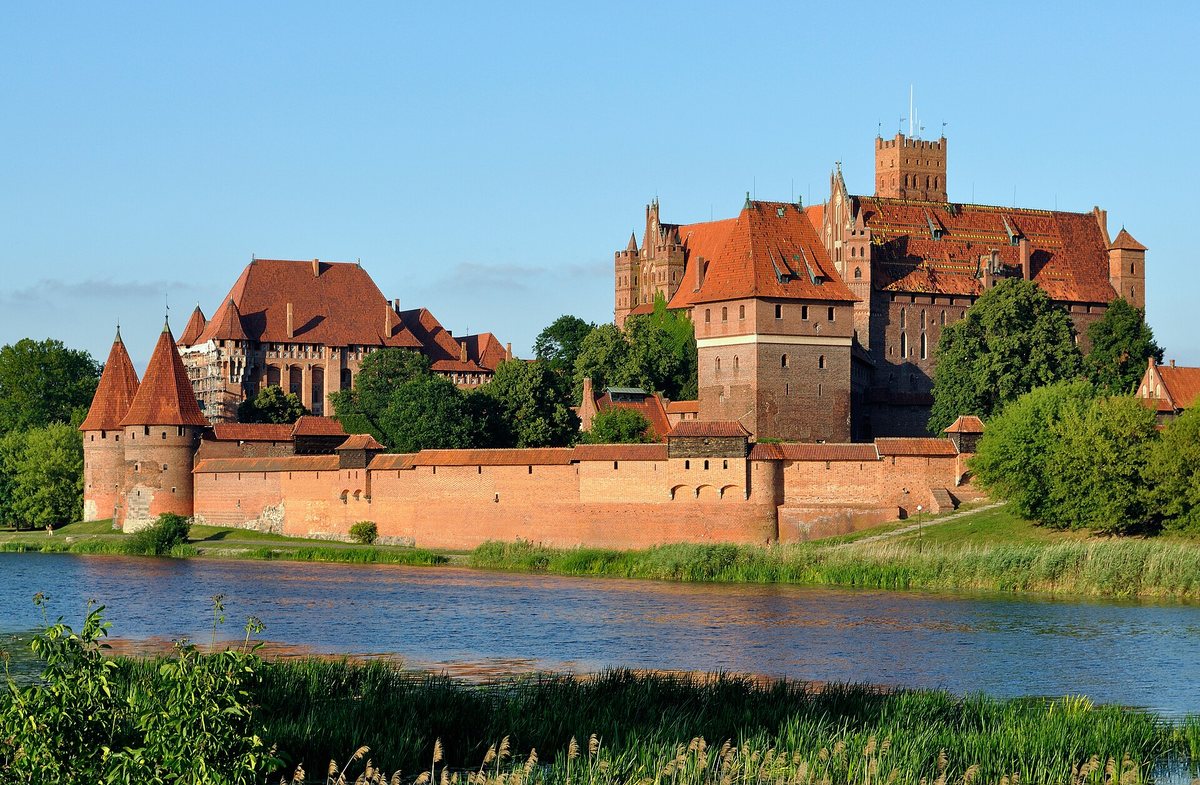
The other two orders survived the same century's disasters because they had somewhere to go. When the last crusader strongholds fell in 1291 the Hospitallers simply moved, to Cyprus and then to Rhodes, and when Suleiman's army took Rhodes in 1522 they moved again, to Malta, which they held until Napoleon's forces arrived in 1798. The Teutonic Order's reversal was slower and more internal. Its army was broken at Grunwald in 1410, though the capital at Marienburg held out afterwards, and the Second Peace of Thorn in 1466 forced it to give up its claims to Gdańsk Pomerania and the Chełmno Land. The end came in 1525, when Grand Master Albert of Brandenburg converted to Lutheranism, resigned his office and took the remaining Prussian territory as a duchy under the Polish crown. What was left of the order withdrew to its holdings inside the Holy Roman Empire, and administered them from Mergentheim until 1809.

What Still Exists Today, and What Does Not
The Knights Hospitaller became the Sovereign Military Order of Malta, and the name changed with the address rather than the institution. From its headquarters in Rome it runs hospitals, medical centres and disaster relief, keeps up diplomatic relations with 118 countries, and counts the present grand master as the eighty-first in a line that runs back to Blessed Gerard. Its own site calls it "one of the oldest institutions of Western and Christian civilisation" and counts 970 years of history.
The Teutonic Order took a quieter path. Renamed simply the Deutscher Orden, it was reduced to a Catholic religious order and still works out of Vienna, where its treasury and archive are open to visitors. It has a grand master, Frank Bayard, and its membership runs into the hundreds, most of them priests and nuns, spread across five provinces. It was outlawed in Nazi Germany in 1938 and re-established in 1945. There is a museum in its former castle at Bad Mergentheim, Germany, which held the order's seat from 1525 to 1809.
The Templars have no equivalent descendant. The Order of Christ in Portugal and the Order of Montesa in Aragon were given its former assets, but they are separate institutions founded in the decade of its dissolution, not the same body under a new name. Modern groups that use the Templar name, including the masonic degrees that borrow it, are not continuations of the medieval order and do not claim a line of grand masters running back to de Molay.
The Dates the Sources Do Not Agree On
Three dates in this story are quoted differently depending on which source you read, and the differences are worth knowing before repeating any of them as settled.
The Council of Troyes, where the Templars received their rule, is dated 1129 in modern reference works and 1128 in the Catholic Encyclopedia of 1913. Both dates appear in print today. The order's founding is usually given as 1118, the year Hugues de Payens and eight companions took their vows before the Patriarch of Jerusalem, though many accounts say 1119 instead, and some give a range covering both.
For the Hospitallers, the date most often quoted, 1113, is the year of papal recognition rather than of foundation. Its published history places the beginnings in the second half of the eleventh century, which means the commonly cited figure is nearly half a century late for the community itself and exact for the institution.
One date is not in dispute. The Templars were abolished on 22 March 1312, the day Vox in excelso was issued, and no rival reading of that has gained any ground.